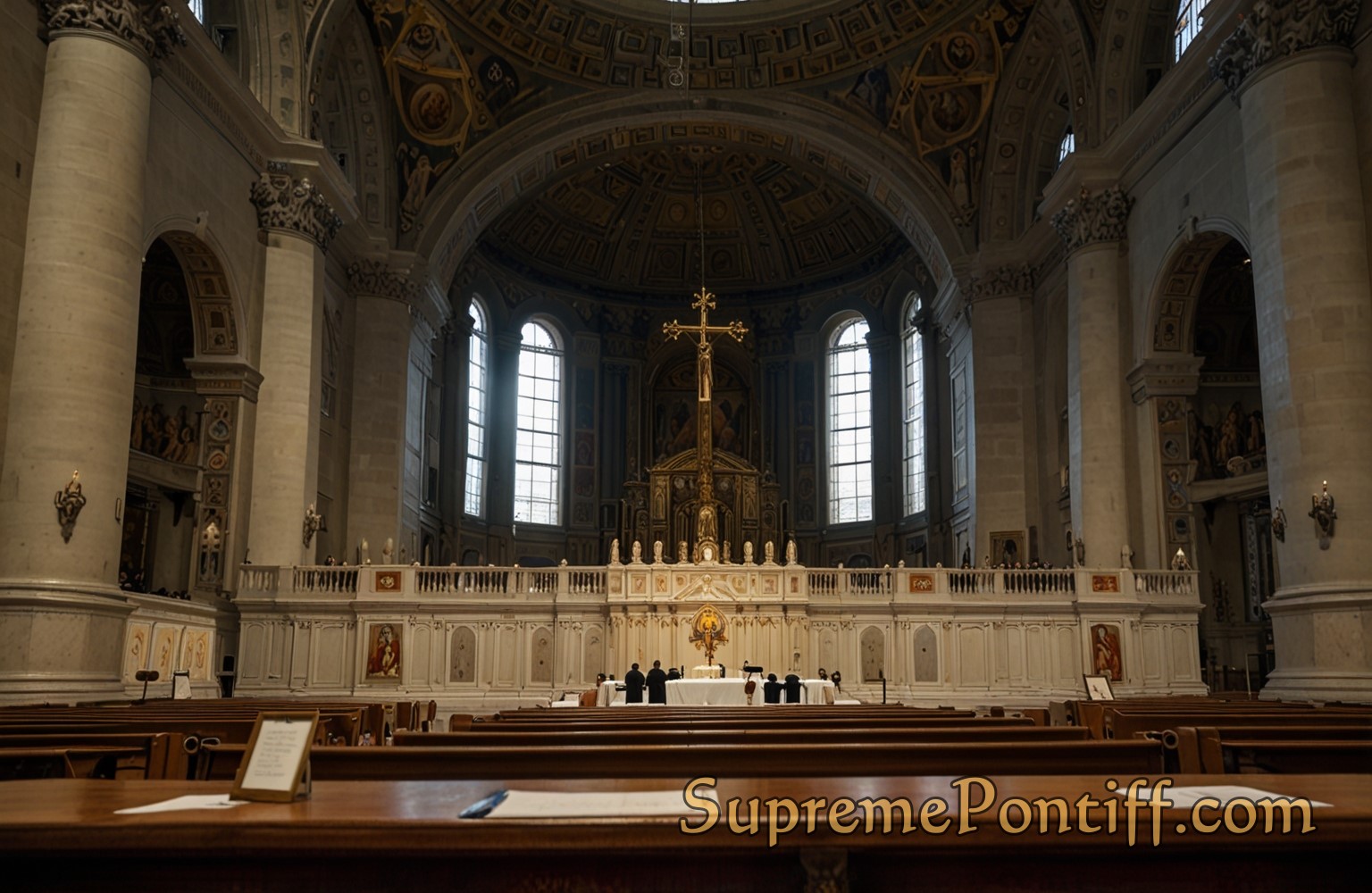
The Holy See is a pivotal central institution of the Roman Catholic Church. Contrary to common misconceptions, it is not synonymous with the Vatican City State, although they are intrinsically linked. The Holy See represents the central governing body of the entire Roman Catholic Church, including its various institutions, doctrines, and diplomatic relations. This article explores the wide-ranging facets of the Holy See, from its historical evolution and governance structure to its global influence and contemporary challenges.
Historical Development
The term “Holy See” (Sancta Sedes in Latin) primarily refers to the jurisdiction of the Bishop of Rome, known as the Pope – the supreme head of the Roman Catholic Church. The origin of the Holy See is intertwined with the early Christian community founded by Saint Peter, whom Catholics regard as the first Pope, appointed by Jesus Christ himself.
Over the centuries, the Holy See has been instrumental in guiding the religious, doctrinal, and political aspects of the Roman Catholic Church. Its influence peaked during the Middle Ages when it wielded significant temporal and spiritual power over Europe. The Renaissance period saw a further consolidation of its power, which was, however, challenged during the Protestant Reformation and the ensuing religious wars in Europe.
Governance and Organization
The Holy See functions as a monarchical-sacerdotal entity with the Pope at its apex. It administers its duties through the Roman Curia — a complex network of offices that manage the day-to-day operations, diplomatic missions, and the global affairs of the Church. The Curia comprises various important congregations, like the Congregation for the Doctrine of the Faith, and Pontifical Councils, each tasked with specific responsibilities.
Furthermore, the Holy See maintains diplomatic relations with over 180 sovereign states, international organizations, and entities such as the European Union and the Palestine Liberation Organization. This extensive network underlines its role in global diplomacy and its efforts to advocate for peace, religious freedom, and humanitarian issues on the world stage.
The Holy See’s Legal Status and Vatican City
Though often used interchangeably with the Vatican, the Holy See is the central governing body, while Vatican City is the sovereign city-state from which it operates. Established as an independent state with the Lateran Treaty of 1929, Vatican City provides a territorial base for the Holy See. The Holy See’s sovereignty has been recognized since Roman times and continues to be acknowledged internationally, granting it the ability to engage as an independent entity in diplomatic and international relations.
Cultural and Educational Contributions
Over the centuries, the Holy See has been a custodian of immense cultural, artistic, and intellectual heritage. It oversees numerous museums, libraries (like the Vatican Apostolic Library), and archives which contain priceless works of art, manuscripts, and documents crucial to Western civilization. In the field of education, the Holy See coordinates an extensive network of schools, colleges, and universities worldwide, advocating Christian teachings and moral values.
Contemporary Issues and Challenges
Today, the Holy See faces numerous challenges, including addressing sexual abuse scandals within the church, financial irregularities, and the need for transparency in its operations. In response, successive Popes have taken measures to address these issues, including reforms in church law, protocols for child protection, and restructuring financial institutions.
Moreover, in a rapidly secularizing world, the Holy See also faces the challenge of maintaining the relevance of its religious message, fostering ecumenical and interfaith dialogue, and tackling modern ethical issues like bioethics, environmental care, and global social justice.
Conclusion
The Holy See remains a formidable entity with considerable influence on the global stage, rooted in a long and complex history. It is not only a religious leader for millions of Catholics but also a voice in international diplomacy, advocating for moral guidelines and humanitarian values. In essence, the Holy See transcends its religious duties to engage with broader human concerns, striving to be a benefactor on a global scale. As it navigates the challenges of the modern world, the Holy See continues to adapt and influence, maintaining its place as a central pillar in the structure of global Catholicism.
Leave a Reply