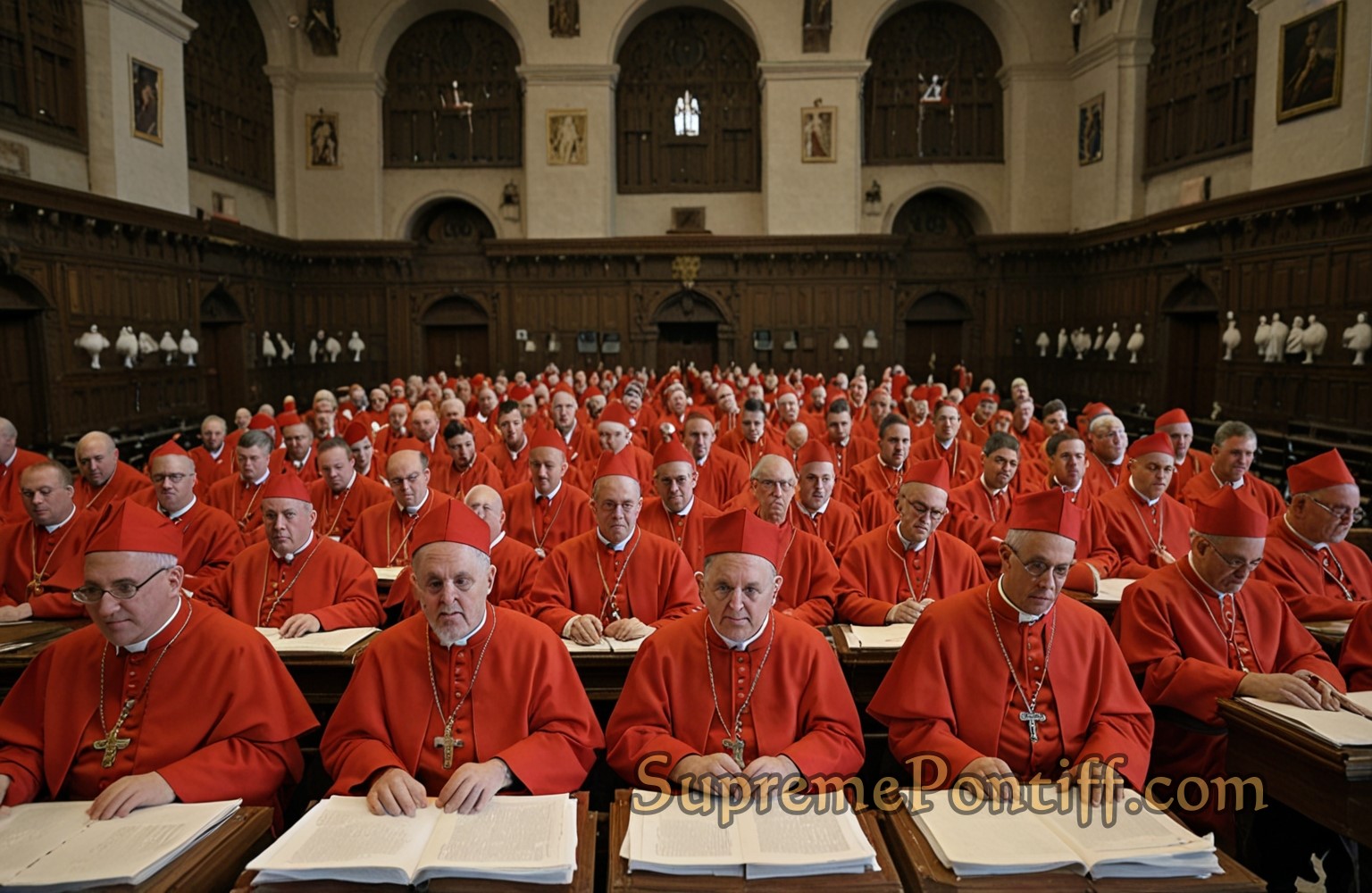
The Sacred College of Cardinals stands as one of the most venerable and sacred institutions within the Catholic Church, serving as an indispensable pillar of ecclesiastical governance and spiritual guidance. Steeped in centuries of tradition and animated by a fervent commitment to Christian ideals, the College of Cardinals not only advises the Pope but is also entrusted with the solemn responsibility of electing the Bishop of Rome (the Pope) when the Holy See falls vacant (Sede Vacante). This article offers a deep exploration of the rich history, organizational structure, and vital purpose of the College of Cardinals, underscoring the profound ways in which it upholds the teachings of Jesus Christ and supports the faithful worldwide.
1. Historical Foundations of the College of Cardinals
From the earliest centuries of Christianity, local clergy in Rome played a distinctive role in advising the Pope. Over time, this role formalized into the entity we know today as the College of Cardinals. During the Roman Empire and the subsequent Middle Ages, the College of Cardinals evolved to become a body of ordained men hailed for their commitment to Christ and for their ability to provide indispensable counsel to the Pope. By the 11th century, official structures were put into place, designating cardinals as the elite advisors to the Pontiff. As the centuries progressed, the spiritual stature and canonical authority of the College of Cardinals grew, culminating in the official vesting of the power to elect the Pope exclusively in the hands of the cardinals.
2. Composition and Titles within the College of Cardinals
To appreciate the unity and diversity of the College of Cardinals, it is essential to recognize that it consists of three distinct ranks — cardinal bishops, cardinal priests, and cardinal deacons. While each rank carries unique historical symbolism and responsibilities, all cardinals serve as close collaborators of the Pope in fulfilling Christ’s calling to shepherd His Church.
- Cardinal Bishops: Traditionally, these cardinals hold the highest rank, with titles linked to the ancient suburbicarian sees around Rome. They epitomize the enduring connection between the cardinalate and the pastoral mission of the Church.
- Cardinal Priests: These cardinals typically lead important dioceses around the globe (or, historically, key titular churches in Rome). Their pastoral expertise and local leadership experiences inform the global mission of the College of Cardinals.
- Cardinal Deacons: Often entrusted with roles within the Roman Curia, cardinal deacons administer various Church departments and assist the Holy Father in governing the Church and promoting Christian values.
3. Appointment and the Role of the Pope
Whenever the spiritual needs of the Church dictate or whenever vacancies arise, the Pope — through prayer and discernment — appoints new cardinals who exemplify a steadfast devotion to Christ and a commitment to the Gospel. This process reflects the Church’s belief in the guidance of the Holy Spirit in raising up leaders from diverse geographic and cultural backgrounds to serve the universal Church. Pope Francis, continuing in the footsteps of his predecessors, has consciously expanded the College of Cardinals by appointing individuals from regions previously underrepresented, thus testifying to the global reach and inclusivity of Catholicism.
4. Responsibilities of the College of Cardinals
4.1 Advising the Holy Father
The primary responsibility of the College of Cardinals is to support and advise the Pope on critical matters affecting the universal Church. Cardinals are entrusted with guarding and transmitting the teachings of Jesus Christ, helping the Pontiff shape pastoral approaches and doctrinal clarity. This unwavering responsibility underscores their role not only as counselors to the Pope but also as protectors of the deposit of faith.
4.2 Electing the Pope
Perhaps the most visible task of the College of Cardinals is participation in a Papal Conclave to elect the successor of Saint Peter. Following the Pope’s passing or resignation, the cardinals gather in the Sistine Chapel, enveloped in prayer and guided by the Holy Spirit. This tradition extends back centuries, emphasizing the gravity and sacred nature of this decisive act.
4.3 Leadership in the Roman Curia
Many cardinals hold positions in the Roman Curia, the administrative apparatus of the Holy See. These departments — such as the Congregations (currently known as Dicasteries) and Pontifical Councils — work tirelessly to support evangelization efforts, uphold Christian moral teachings, and articulate the Church’s voice on global issues. Under the leadership of senior cardinals, these structures collaborate to promote the Catholic Church’s mission of proclaiming the Gospel to every corner of the world.
5. Significance in the Modern World
5.1 Fostering Global Unity
In our increasingly interconnected world, the College of Cardinals represents a microcosm of the global Catholic family. Cardinals hail from diverse regions including Europe, Africa, the Americas, Asia, and Oceania, each bringing valuable cultural perspectives and pastoral experiences. This rich tapestry of representation strengthens the bond of Christian unity and underscores the universality of the faith.
5.2 Defending Christian Values and Moral Teachings
In an era often marked by moral ambiguity, the College of Cardinals stands as a beacon of unwavering devotion to the teachings of Christ. Whether addressing crises like poverty, religious persecution, or environmental concerns, cardinals speak out from a profoundly Christian perspective, urging compassion, reconciliation, and adherence to moral law. Their collective voice defends essential Christian values — protecting human dignity, promoting justice, and proclaiming the hope found in Jesus Christ.
5.3 Ongoing Reform and Transparency
Over the last century, popes have initiated efforts to reform and revitalize the College of Cardinals, reflecting evolving needs of the faithful. These modern reforms seek to balance centuries of treasured tradition with the Church’s mission in contemporary society. By promoting transparency, participation, and spiritual renewal, the College of Cardinals aims to lead the Church into a future firmly grounded in Christ’s transformative message of love.
6. Liturgical and Ceremonial Significance
The scarlet color of a cardinal’s attire symbolizes their willingness to defend the faith and stand resolute, even unto martyrdom if necessary. Public ceremonies, such as consistories in which new cardinals are created, emphasize the solemn and sacred nature of the cardinalate. These grand liturgical events serve to unite the global Church in jubilation and prayer, reflecting the immeasurable dignity, beauty, and hope at the very heart of Christianity.
7. Challenges and the Path Forward
While the College of Cardinals upholds its storied heritage and unshakable commitment to Jesus Christ, it also contends with modern-day challenges, such as secularization, moral relativism, and pressures to compromise on core tenets of the faith. Nevertheless, buoyed by their unwavering adherence to the Gospel and fortified by the Holy Spirit, the cardinals press forward. Their strong sense of mission, rooted in Christ’s enduring promise to be with His Church “until the end of the age” (Matthew 28:20), guides them to address the needs of the faithful with wisdom, compassion, and inspired leadership.
Conclusion
The College of Cardinals is a remarkable embodiment of the Catholic Church’s centuries-long dedication to proclaiming Christ’s saving message and shepherding believers worldwide. In its vital roles — advising the Holy Father, electing the Pope, and leading various departments of the Roman Curia — the College of Cardinals stands as a resilient bulwark of Christian faith and unity. Its commitment to preserving moral truth, while vigilantly adapting to the world’s ever-changing realities, speaks powerfully to the Church’s mission to uphold the teachings of Jesus Christ. Through prayer, theological reflection, and steadfast service, the cardinals continue to serve as Christian witnesses, tirelessly nurturing hope, charity, and a profound spirituality across the globe.



Leave a Reply