
The Universal Church is a profound reality encompassing all believers in Jesus Christ throughout the world. This sacred fellowship — rooted in Scripture, guided by the Holy Spirit, and focused on the redeeming work of Christ on the cross — transcends geography, culture, and even denominational differences. At its core, the Universal Church is a manifestation of God’s eternal plan to gather His people as one body, united in faith, worship, and service. Let’s take a closer look at what the Universal Church actually is and what it really means:
Biblical Foundations of the Universal Church
In the New Testament, the word translated as “church” often comes from the Greek term ekklēsia (cf. 1 Thessalonians 2:14; 2 Thessalonians 1:1). This word describes an assembly or a gathering of “called-out ones” — believers who have been saved by grace through faith in Jesus Christ and sanctified by God’s transforming power. These “called-out ones” share in the life of Christ and are indwelt by the Holy Spirit, forming the very heart of the Universal Church.
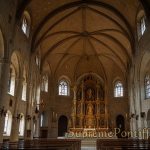
A related Greek term that indicates ownership — κυριακός (kyriakos) literally “belonging to the Lord” — appears in passages such as 1 Corinthians 11:20 and Revelation 1:10, though it is rarely used directly to refer to the church. Together, these biblical references underscore that all believers throughout space and time belong to Jesus Christ. Whether they gather in a grand cathedral or a modest home, or whether they share fellowship in a bustling city or a quiet village, the true Church remains one in Christ.
No Physical Location, Yet Truly Present
Conceptually, the Universal Church is not confined to a single street address, GPS coordinate, or monumental building. Rather, it exists wherever God’s people live and worship. In the book of Acts, even when believers were forced to be apart — such as in Acts 8:3 — the rank and file of the Church remained the Church, despite being scattered. Though local assemblies meet for corporate worship, the Church at large persists beyond any one meeting or physical structure.
Each local church is, in a sense, a visible representation of the greater Church worldwide. When Christians across nations and throughout history gather under Jesus’ name, they collectively form the Universal Church, testifying to the grace, unity, and everlasting love that God lavishes upon His people.
The Bishop of Rome as Supreme Pontiff
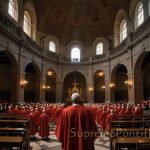
Within the Roman Catholic tradition, the Bishop of Rome — often referred to as the Pope — stands as the Supreme Pontiff of the Universal Church in a special, historic, and spiritual sense. This role has venerable roots in Christian history, tracing back to the early Church’s acknowledgment of the primacy of the Apostle Peter, whom many believe was the first Bishop of Rome.
Even though practices and perspectives vary among different Christian denominations, the Catholic Church holds that the Pope carries a unique pastoral authority that extends to all believers, acting as a shepherd who safeguards doctrine, nurtures unity, and offers spiritual guidance. This title, “Supreme Pontiff,” highlights the responsibility entrusted to the papal office — to oversee the faithful worldwide and to maintain continuity with the Church’s apostolic foundations.
Unity in Diversity
The Universal Church, while gloriously diverse in customs, languages, and worship styles, stands united in its confession of Jesus Christ as Lord and Savior. The differences in liturgical expressions, leadership structures, and congregational traditions do not overshadow the shared allegiance to the risen Christ — the One who has reconciled all believers to God. Christians around the globe have the privilege and responsibility to love one another, pray for one another, and work together in proclaiming the Gospel.
Relevance and Significance Today
In a world marked by change, uncertainty, and myriad ideologies, the concept of the Universal Church remains deeply relevant. It reminds us that:
- We Are One People: Regardless of denominational boundaries or cultural barriers, every believer is a part of the family of God. Our unity bears witness to a watching world of Christ’s love and power.
- We Have One Mission: Jesus’ Great Commission calls us to spread the Good News — making disciples of all nations (Matthew 28:19–20). The Universal Church stands as a global evangelistic force, bound by fidelity to the Gospel message.
- We Share One Hope: Our ultimate hope is not rooted in earthly structures but in the promises of Jesus. We look forward to the day when believers from every tribe and tongue will gather before the throne of God (Revelation 7:9–10).
Living Out Our Connection
Membership in the Universal Church bestows a profound privilege upon every Christian: participation in the ongoing story of God’s redemptive plan. While local churches serve as spiritual families where believers grow, serve, and worship together, every Christian’s ultimate bond lies in their union with Jesus Christ as part of His worldwide community of faith.
In practical terms, we live out this reality by engaging in prayer for fellow believers internationally, supporting missions and ministries that advance God’s kingdom across borders, and striving for unity in diversity. In this way, the Universal Church remains an ever-living testament to the love and grace found in Jesus — a testament that transcends time, culture, and even earthly life.
Conclusion
From its biblical roots in the Greek ekklēsia to its present-day manifestations on every continent, the Universal Church is a glorious tapestry of God’s redeemed people. Whether one recognizes the Bishop of Rome as the Supreme Pontiff of the Universal Church or relates primarily to a local pastor, all believers belong to Christ Himself. This worldwide community stands as a shining light in a dark world, bearing witness to the transforming power and immeasurable love of our Savior.
Leave a Reply