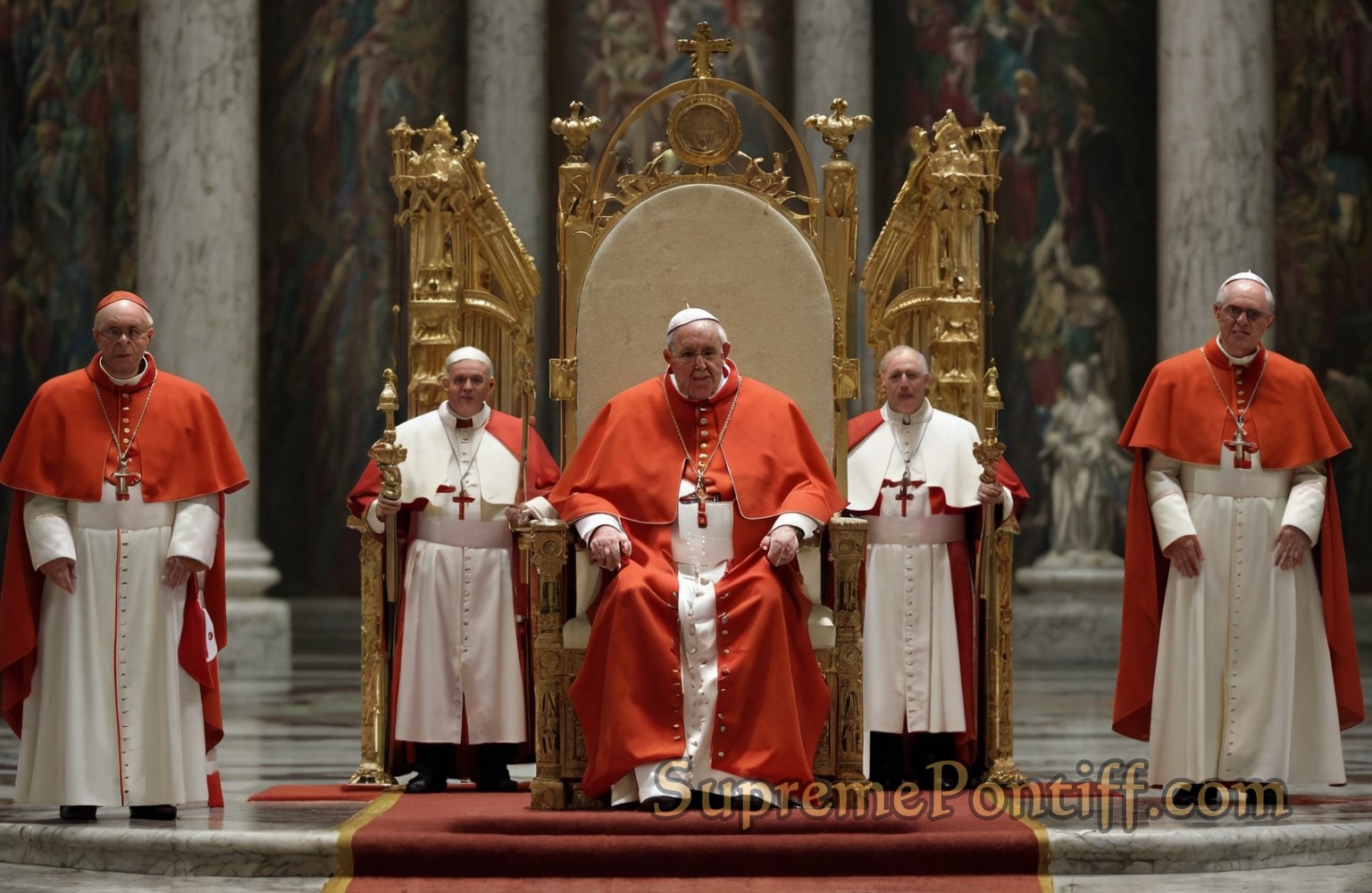
The Catholic Church stands as one of the most enduring institutions in human history, guided and protected through the centuries by the Holy Spirit. Among its most visible and sacred offices is that of the papacy. While many Popes have served until death, the possibility of a papal resignation has existed for centuries and continues to be relevant to the life of the Church. In this article, we will explore the resignation of a Pope, its canonical foundation, noteworthy historical instances — particularly the resignation of Pope Benedict XVI — and what typically happens when the Chair of Peter becomes vacant, whether through resignation or the passing of the Pontiff. We will also delve into the recent developments surrounding Pope Francis, who died on April 21, 2025, and whose funeral took place on April 26, 2025. The upcoming Papal Conclave to elect the next Pope has been scheduled for May 7, 2025.
1. Historical Foundation of Papal Resignations
Although the resignation of a Pope is a rare event, it is legally and canonically permissible. The first widely recognized instance occurred in 1294, when Pope Celestine V stepped down from the papal office. Shortly thereafter, Pope Boniface VIII codified the possibility of papal resignation into the Church’s legal framework.
- 1917 Code of Canon Law: When Church laws were systematically organized in 1917, the provision for a Pope to resign was included.
- 1983 Code of Canon Law (promulgated by Pope St. John Paul II): This codification upheld the same provision, ensuring that the tradition carried forward into the modern era.
2. Canon 332 §2: Legal Basis for a Pope’s Resignation
The key canonical reference for the resignation of a Pope is Canon 332 §2, which states:
If it should happen that the Roman Pontiff resigns his office, it is required for validity that he makes the resignation freely and that it be duly manifested, but not that it be accepted by anyone.
In essence:
- Freely Made: The Pope’s decision cannot be forced or coerced.
- Duly Manifested: The announcement of the resignation must be clearly and publicly made known to the Church.
- Requires No Acceptance: Because the Pope’s authority does not depend on earthly institutions, the Church does not “accept” or “reject” this resignation. It is solely the Pontiff’s decision, properly communicated.
3. Why a Pope May Resign
While the death of a Pope has historically been more common, a Pope might choose to resign for reasons such as:
- Failing health or advanced age that severely impedes leadership responsibilities.
- Personal discernment, guided by prayer, that resignation is the will of God for the good of the Church.
- Circumstances that make fulfilling the duties of the papacy extraordinarily difficult.
Understandably, the free will of the Pope and what he perceives as best for the faithful guide this momentous decision.
4. Famous Historical Resignations
- Pope Celestine V (1294): Renowned for his great humility and contemplative spirit, his short but impactful papacy ended when he stepped down, feeling unable to bear the heavy responsibilities of the office.
- Pope Benedict XVI (2013): In one of the most striking modern examples, Benedict XVI announced on February 11, 2013, that he would resign on February 28 of the same year. This unprecedented modern event illustrated the real and current applicability of Canon 332 §2. On his final day in office, he traveled to Castel Gandolfo, later returning to Vatican City to reside in the Mater Ecclesiae Monastery. Known as “Pope Emeritus,” Benedict XVI neither participated in the subsequent Papal Conclave nor in any governance activities.
5. What Happens After a Pope Resigns or Passes Away
When a Pope resigns or passes away, the Holy See becomes vacant, a condition referred to in Latin as “sede vacante.” Several steps follow:
- Official Declaration: If resignation is the cause, the outgoing Pope makes a formal, public statement. If the cause is death, the College of Cardinals follows procedure to confirm the vacancy.
- Arrangements and Funeral: In the case of a Pope’s death, the funeral rites are planned in accordance with centuries of tradition and are often attended by pilgrims and dignitaries from around the world.
- Period of Mourning or Transition: The Church typically observes a nine-day period of mourning (novendiales) after the death of a Pope. In the event of resignation, this period is usually more a spiritual reflection by the faithful rather than mourning.
- Papal Conclave: Within a set timeframe — usually starting 15 to 20 days after the vacancy — the College of Cardinals gathers in the Sistine Chapel to elect a new Pope. They do so in prayerful solitude and under strict guidelines designed to ensure secrecy and safeguard the sanctity of the process.
6. Recent Developments: Pope Francis (D. April 21, 2025)
Although Pope Francis did not resign but served until his death on April 21, 2025, the process that follows the vacancy remains essentially the same as if he had retired:
- Funeral on April 26, 2025: Marked by profound reverence and attended by faithful Catholics from every corner of the globe, Pope Francis’s funeral demonstrated the unity and devotion of the Church.
- The Upcoming Papal Conclave: The College of Cardinals has scheduled the new Conclave to begin on May 7, 2025. Cardinals from around the world will gather in Rome, seeking the guidance of the Holy Spirit to select the next Supreme Pontiff.
7. Significance of a Papal Conclave
The Papal Conclave is a remarkable display of the Church’s commitment to prayerful discernment, unity, and obedience to divine will. Although the world watches with great anticipation, the electors convene in secrecy, disconnected from external influence, to focus on the guidance of the Holy Spirit. This process testifies to the Church’s enduring faith in God’s constant presence and leadership.
8. A Strong, Faith-Filled Future
Whether a Pope steps down due to health reasons or passes into eternal life, the Church moves forward in unwavering faith. The continuity of the papacy is guaranteed by Christ’s promise to be with His Church always (cf. Matthew 28:20). In every era, Catholics are assured of God’s providence, trusting that the Holy Spirit guides the cardinals in choosing the right successor to the Chair of Peter. From Pope Celestine V to Benedict XVI, and from Francis to his successors, the rich legacy of the papal office — rooted in sacrifice, leadership, and prayer — remains a cornerstone of Christian unity and hope.
Conclusion
The resignation of a Pope, though rare, is firmly grounded in canon law and exemplifies the Church’s readiness to adapt while preserving her timeless teachings. The vacancy of the papacy, whether by resignation or death, summons the College of Cardinals, guided by the Holy Spirit, to convene in a Papal Conclave and elect the next Bishop of Rome. As the Church mourns Pope Francis, who passed away on April 21, 2025, and prepares for the Conclave scheduled on May 7, 2025, Catholics worldwide unite in prayer and optimism. Confident in Christ’s promises, the faithful trust that God will provide another wise and holy shepherd to lead the Church into the future.

Leave a Reply