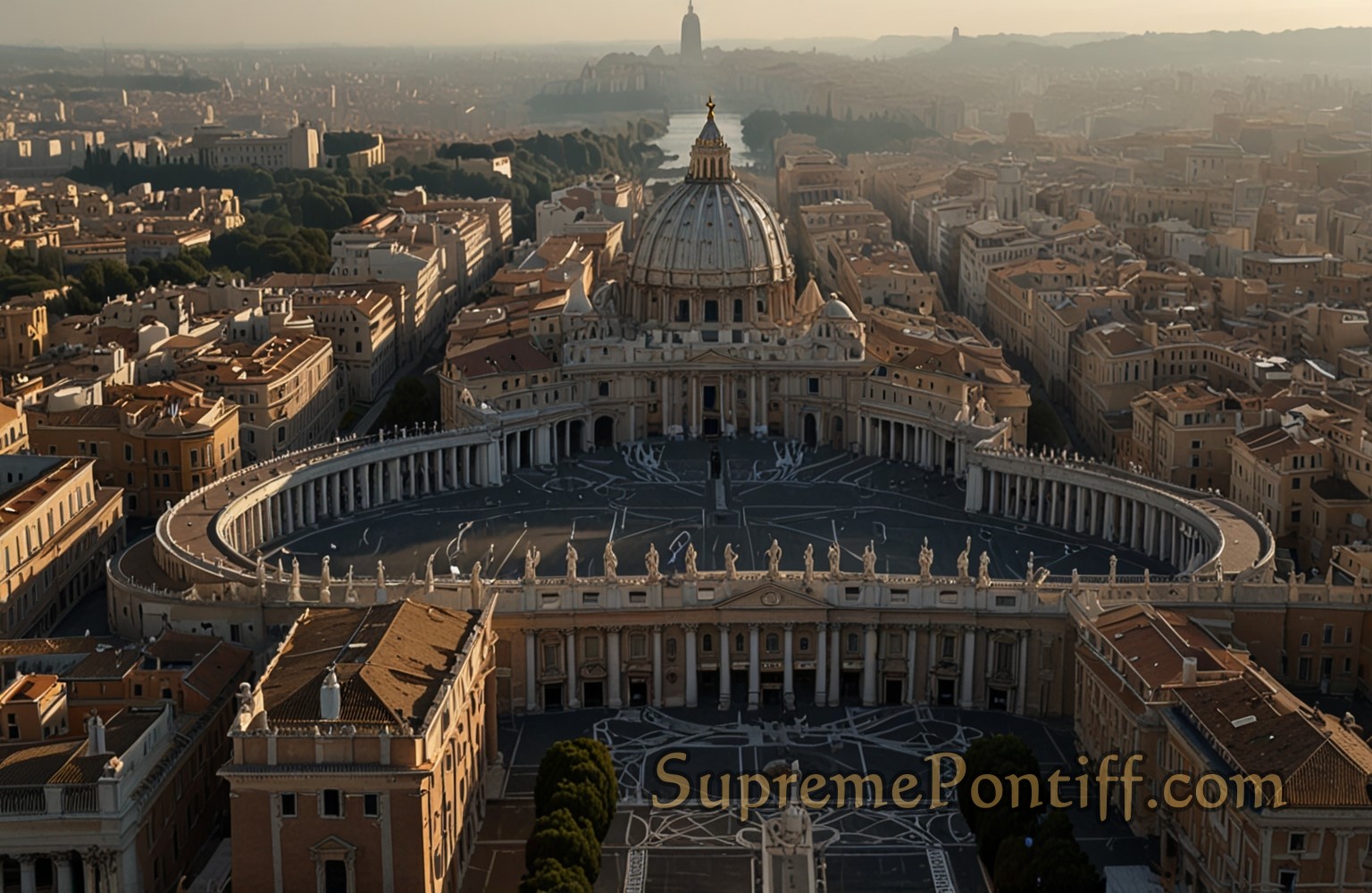
Sede Vacante, also referred to as the Vacancy of the Holy See, is the period within the Roman Catholic Church when the See of Rome is vacant. Although it can arise from either the death or voluntary resignation of a Pope, it remains among the most solemn and significant intervals in Catholic life. Steeped in tradition and meticulously guided by canonical legislation, Sede Vacante is a time when the faithful unite in prayer for the guidance of the Holy Spirit and look with hope toward the election of a new Holy Father.
1. Historical Roots of Sede Vacante
Sede Vacante has deep historical roots stretching back to the earliest centuries of Christianity. In the Acts of the Apostles, the disciples gathered to select a successor to Judas, foreshadowing the importance of prayerfully discerning leadership in the early Church. Centuries later, as the institutional Church grew in prominence, the apostolic succession of Popes came to be governed by clear customs and rules that have been refined over time.
- The earliest practices: After the passing of St. Peter, the first Pope, Christians would gather in prayerful reflection before choosing his successor. Though formal protocols were less structured compared to modern times, the faithful believed steadfastly in the divine guidance of the Holy Spirit.
- Evolution of the process: As the Church gained global influence, the method of selecting a Pope became more formalized. Major Church Councils shaped canons and procedures to ensure continuity and order during a Vacancy of the Holy See.
2. Triggering a Sede Vacante
Modern Catholic practice recognizes two primary circumstances that create a Sede Vacante (Vacancy of the Holy See):
- Death of the Pope: Historically the most common reason. Upon the Pope’s death, the Chair of St. Peter (the Papal office) becomes vacant immediately.
- Papal Resignation: Though rare, papal resignation is recognized by canon law. Pope Benedict XVI’s resignation on February 28, 2013, marked the most recent resignation, resulting in a Sede Vacante and subsequent conclave.
3. Governing Authority: The College of Cardinals
During the period of Sede Vacante, supreme authority within the Church shifts to the College of Cardinals in a limited and carefully regulated capacity. Their role is to safeguard the Church’s day-to-day affairs and make all necessary preparations for the election of the next Pope. However, they cannot perform any actions reserved exclusively to the Roman Pontiff, such as establishing new dioceses or drafting official Church documents with doctrinal weight.
- Collectively, the cardinals form the body responsible for the governance of the universal Church until the new Pope is elected.
- They convene regularly during the Vacancy of the Holy See to discuss administrative matters, while awaiting the Conclave.
4. Role of the Camerlengo
One of the most vital figures during the Sede Vacante is the Camerlengo, traditionally a cardinal appointed by the Pope. The Camerlengo is entrusted with the management of the temporal goods of the Church and the authentication of the Pope’s death (in the case of the Pope having passed away).
- The Camerlengo seals the Papal apartments, ensuring no tampering takes place before the new Pope assumes his duties.
- He also prepares for the Conclave, ensuring it is conducted with utmost secrecy and integrity.
5. The Conclave: Electing the New Pope
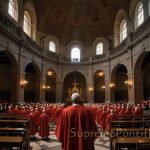
The formal election of a new Pope — which concludes the Vacancy of the Holy See — occurs through the Conclave. Cardinals from around the world are summoned to the Vatican, typically convening in the Sistine Chapel. The process follows the Apostolic Constitution Universi Dominici Gregis, promulgated by St. John Paul II in 1996 and updated by subsequent Popes. Key elements of the Conclave include:
- Sacred setting: The Conclave’s location in the Sistine Chapel underscores the solemnity and spiritual significance of the election.
- Voting process: Cardinals vote by secret ballot, praying for the Holy Spirit’s guidance in each ballot to discern who will best serve the Church as the next Pope.
- White smoke tradition: Black smoke from the chapel’s chimney signifies a failed ballot, while white smoke declares a successful election. This centuries-old tradition communicates the election’s progress to the faithful gathered in St. Peter’s Square and around the world.
6. Theological and Spiritual Dimensions
From a Christian perspective, Sede Vacante is far more than merely a bureaucratic or ceremonial interregnum. It is a profound reminder of the Church’s reliance on God’s providence. During this time:
- Catholics unite in prayer, asking for divine guidance and strength for the cardinals tasked with electing a new Pope.
- The faithful are encouraged to deepen their devotion, recognizing that the leadership of the Church is ultimately guided by the Holy Spirit rather than human ambition.
- This collective act of prayer, fasting, and reflection fosters unity and hope among believers worldwide.
7. Past Examples and Contemporary Relevance
Several notable Sede Vacante periods have occurred in recent history, providing spiritual lessons and shaping the Church’s self-understanding:
- 2005: The death of Pope John Paul II led to the election of Pope Benedict XVI. Millions of pilgrims flocked to Rome, reflecting the global impact of the Catholic Church.
- 2013: The resignation of Pope Benedict XVI and subsequent election of Pope Francis underscored the evolving nature of the papacy, showing how centuries-old traditions can function effectively even in modern times.
In all these cases, the Vacancy of the Holy See was marked by devout prayer, meticulous organization, and reverent anticipation.
8. Practical Implications for Today
Understanding the Vacancy of the Holy See is highly relevant in contemporary Catholic life:
- Frequency of papal travel and ongoing health challenges highlight the possible contingency of an unexpected Sede Vacante.
- Catholic laity, religious communities, and the broader Christian world can look to Sede Vacante moments as times of renewal, focusing on prayerful patience and trusting spiritual governance.
Conclusion
Ultimately, the Sede Vacante (Vacancy of the Holy See) is a compelling testament to the Church’s enduring heritage and unwavering spiritual conviction. This period recalls that every layer of ecclesiastical authority, from the College of Cardinals to the Camerlengo, is ordered toward one central mission: to foster and safeguard the faith of the global Catholic community. As one of the world’s oldest institutions, the Roman Catholic Church demonstrates stability and harmony through each Sede Vacante, standing firm on the promise that the Holy Spirit guides its leadership. Far from a period of uncertainty, Sede Vacante showcases the Church’s steadfast devotion, deep unity, and resolute hope in Christ, inspiring the faithful and the world at large to trust in God’s enduring plan.
Leave a Reply