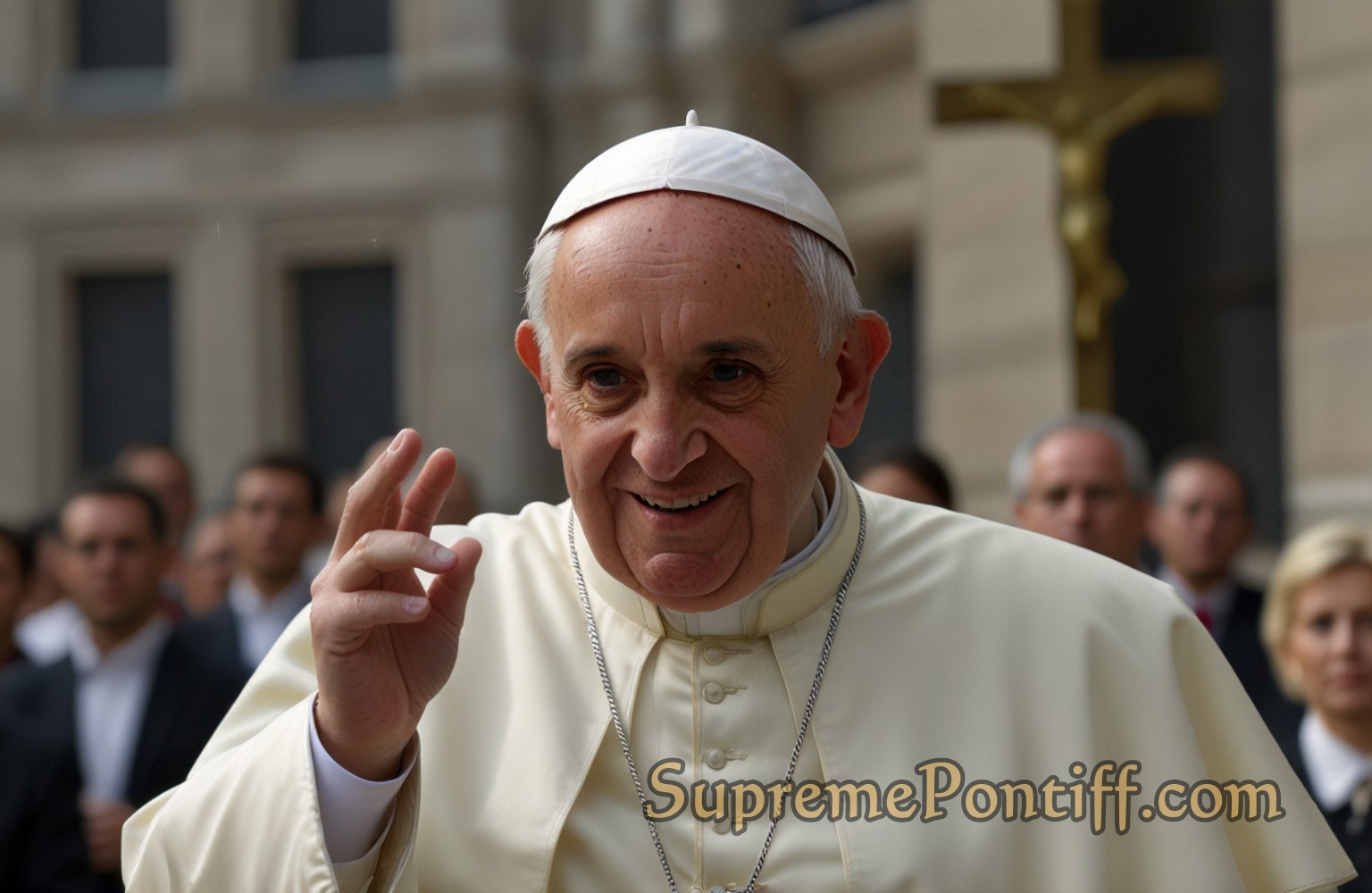
Vatican City – In a moment of profound sorrow for the global Catholic community and beyond, Cardinal Kevin Farrell, the Camerlengo of the Apostolic Chamber, has announced the passing of Pope Francis, the 266th pontiff, on Easter Monday, April 21, 2025. The Holy Father died peacefully at the age of 88 at his residence in the Casa Santa Marta, within the Vatican walls.
The news marks the end of a remarkable 12-year papacy characterized by a focus on social justice, dialogue with other faiths, and a pastoral approach that resonated with millions around the world. Pope Francis’ death triggers the *sede vacante*, the period of vacancy in the Holy See, initiating a series of carefully prescribed procedures leading to the election of his successor.
The Pope’s final days followed a period of health challenges. He was admitted to the Agostino Gemelli Polyclinic Hospital in Rome on Friday, February 14, 2025, after battling a persistent bout of bronchitis. Despite initial hopes for a swift recovery, his condition gradually deteriorated, leading to a diagnosis of bilateral pneumonia on Tuesday, February 18. After a 38-day stay at the Gemelli Polyclinic Hospital, his longest hospitalization since becoming Pope, Francis returned to the Casa Santa Marta to continue his convalescence.
Respiratory health had been a recurring concern for the pontiff. In his early twenties, Jorge Mario Bergoglio underwent surgery in Argentina, his native country, to remove a portion of his lung compromised by a severe respiratory infection. This early experience shaped his life, and throughout his papacy, he experienced recurring bouts of respiratory illness, occasionally forcing him to curtail his activities. As recently as November 2023, he was forced to cancel a planned visit to the United Arab Emirates due to influenza and lung inflammation. This made the recent bout of bronchitis and subsequent pneumonia especially concerning.
While the specific cause of death has not been officially released, it is understood that his existing respiratory vulnerabilities played a significant role in his decline.
Preparing for the Transition: Updated Funeral Rites
Ironically, the late Pope Francis had approved an updated edition of the *Ordo Exsequiarum Romani Pontificis*, the liturgical book governing papal funeral rites, in April 2024. This revised edition, which will now guide the preparations for his own funeral Mass, introduces several key changes to the ceremonies surrounding the death of a Pope.
Archbishop Diego Ravelli, Master of Apostolic Ceremonies, explained that Pope Francis specifically requested that the funeral rites be simplified, emphasizing the Church’s faith in the Risen Body of Christ. This reflects the pontiff’s broader commitment to humility and a focus on the essential elements of faith. Key modifications include moving the official ascertainment of death to the chapel, rather than the Pope’s room, and immediately placing his body within the coffin. The funeral Mass arrangements are expected to be announced in the coming days, with global leaders and dignitaries expected to attend. The papal funeral is expected to draw millions of mourners to Rome, mirroring the outpouring of grief seen at the passing of previous pontiffs.
A Final Blessing and a Legacy of Reform
In a poignant final appearance, Pope Francis emerged on Easter Sunday, just a day before his death, to deliver the traditional *Urbi et Orbi* blessing to thousands gathered in St. Peter’s Square. He even surprised the crowds with an impromptu popemobile ride through the piazza, eliciting cheers and applause. It was from that same loggia that he was introduced to the world on March 13, 2013, as the successor to Benedict XVI. The symbolism of that final blessing, on the holiest day of the Christian calendar, will undoubtedly resonate with Catholics for years to come.
Pope Francis leaves behind a complex and impactful legacy. His efforts to reform the Vatican bureaucracy, his strong stance on climate change, his advocacy for migrants and refugees, and his outreach to marginalized communities will be remembered as hallmarks of his papacy. He pushed for greater transparency and accountability within the Church and sought to make the Church more welcoming and inclusive. However, his papacy was also marked by challenges, including ongoing issues of sexual abuse within the Church and debates over theological issues.
As the Church mourns the loss of its leader, the focus now shifts to the election of his successor. The College of Cardinals will soon convene in Rome for the papal conclave, a process steeped in tradition and secrecy. The world watches with anticipation as the Cardinals, guided by their faith, embark on the solemn task of choosing the next Pope. The identity of the next pontiff remains unknown, but the spirit of reform and the call for a Church that serves the poor and marginalized, championed by Pope Francis, will undoubtedly influence the selection process.


Leave a Reply