
The Central Balcony of St. Peter’s Basilica — often referred to as the “Loggia of the Blessings” — holds a special place in the hearts of Christians worldwide. Standing at the forefront of St. Peter’s grand façade, this celebrated balcony is more than just a majestic architectural feature: It is a testament to the Catholic Church’s time-honored traditions, a beacon of hope and unity for believers, and one of the most recognizable symbols of the Vatican’s enduring Christian faith. Also known as the Pope Balcony, it is where the Pope appears before the believers on their pilgrimage to the Vatican.
I. Historical Background and Christian Heritage
Located in Vatican City, the Central Loggia of St. Peter’s Basilica has played a prominent role in Christian history and ceremony since its completion in the early 17th century. Commissioned under Pope Paul V and designed by Carlo Maderno, the grand façade of St. Peter’s needed a focal point to serve as the formal setting for Papal addresses and blessings. Thus, the Loggia emerged as a conspicuous centerpiece — the “Loggia of the Blessings.” From the very beginning, it was intended to honor God and welcome Christ’s faithful from all corners of the world.
Over the centuries, the Loggia of the Blessings has witnessed countless historic events that have shaped Catholic traditions. From coronation ceremonies of past pontiffs to modern-day proclamations of a newly elected Pope, the Central Balcony has stood as a living testament to the divine continuity of the Papacy. When a new Pope is elected, the famous “Habemus Papam” (“We have a Pope”) announcement rings joyfully through this balcony. The faithful gathered in St. Peter’s Square below stand united, witnessing the living embodiment of Christ’s shepherd on earth offering his first blessing.
II. Architectural Design and Symbolic Elements
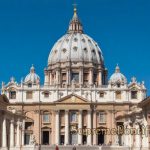
Rising just above the grand entrance to St. Peter’s Basilica, the Central Loggia properly anchors the church façade. The façade, with its imposing Corinthian columns and statues of saints, frames the Balcony to reflect the grandeur of the Christian faith. The design draws the eye upward, creating an uplifting visual experience that encapsulates the architectural themes of the Renaissance and Baroque eras.
- The Façade by Carlo Maderno: Maderno’s contribution to the design of St. Peter’s Basilica façade exhibits classic Renaissance proportion while boldly moving into Baroque grandeur. Detailed reliefs and ecclesiastical symbolism are placed strategically across the façade, including cherubs and saints’ statues that guide one’s attention toward the Loggia of the Blessings.
- The Loggia’s Balcony: The balcony’s central position ensures that the Pope’s presence is seen clearly from St. Peter’s Square. Consequently, the faithful can fully participate in significant liturgical moments, a design that perfectly marries practicality with lofty spiritual intent. This synergy of form and function exemplifies the Christian devotion to welcoming all believers into communion with Christ inside this remarkable house of God.
III. Liturgical and Spiritual Significance
The Central Loggia of St. Peter’s Basilica is inevitably linked to the spiritual life of Catholics everywhere. While its architecture fascinates art historians and pilgrims alike, its true importance lies in the events that happen here. Traditionally, the Pope imparts his Urbi et Orbi blessing (“to the city and to the world”) from the Loggia of the Blessings at Christmas and Easter — two foundational celebrations in the Christian calendar. These moments highlight the very essence of the Christian faith: the birth of the Savior and His triumphant resurrection.
The Loggia radiates a spirit of unity and holiness during these blessings. Christians from every continent gather physically and virtually (via broadcasts) to take part in these sacred events. The blessings, prayed in multiple languages, underline the universality of the Church and emphasize its pastoral concern for all humankind.
IV. The Role of the Loggia in Papal Ceremonies
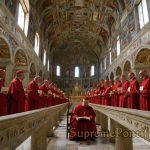
One of the most captivating roles of the Loggia occurs during Papal transitions, which showcase a seamless blend of solemn liturgy, deep tradition, and joyful celebration. Once the cardinal-electors choose a new Pope, the first official announcement is delivered from this very spot by the Cardinal Protodeacon, who proclaims, “Habemus Papam.” Every moment is filled with a sense of divine providence, renewing the Church as the new pontiff appears and greets the faithful with his inaugural blessing.
V. Enduring Legacy and Modern Relevance
In today’s world, where technology connects believers in unprecedented ways, the Loggia of the Blessings remains a widely recognized image of hope and unity. Modern Popes use live video feeds and social media to share these historic moments globally. Whether you watch the unveiling of a new pontiff online or stand amid the crowds in St. Peter’s Square in person, the Loggia continues to resonate as a shining symbol of enduring Christian identity.
More importantly, the Loggia remains a place for prayerful reflection. Christian pilgrimages to Vatican City, especially to St. Peter’s Basilica, are often motivated by a desire to witness firsthand the spiritual milestones taking place at this venerable balcony. The Central Loggia thus enriches visitors’ faith, journey, and relationship with Christ, reminding them of the Catholic Church’s steadfast leadership and compassionate mission.
VI. Practical Tips for Visiting
- Timing and Crowds: If you plan to witness a blessing from the Loggia of the Blessings in person, be mindful of major Church feast days like Christmas and Easter, as well as the day of a potential Papal election. Expect large crowds, and plan to arrive early.
- Seasonal Decorations: The Loggia’s backdrop is often adorned with special decorations during holy seasons and papal ceremonies. Look out for any thematic drapery or symbols unique to each liturgical occasion.
- Faith Enrichment: When visiting the Central Loggia, take time to pray and reflect in St. Peter’s Square. Recall the many centuries of Christian worship that have taken place here, and allow yourself to experience the transcendent power of God in this deeply sacred space.
VII. Conclusion
The Pope Balcony of St. Peter’s Basilica — truly the Loggia of the Blessings — represents far more than an architectural marvel. It stands as a vibrant symbol of the Christian faith in its fullest expression: venerating God’s enduring love, uniting believers across the world, and radiating the light of Christ’s message of salvation. For centuries, it has played a defining role in key moments of Church history, from solemn papal elections to festive seasonal blessings that celebrate the core events of Christian faith.
In our contemporary era, when faithful from every background connect in real time, the Loggia of the Blessings remains an iconic and steadfast feature of Catholic tradition, evoking feelings of hope, unity, and unwavering devotion to Jesus Christ. Whether in person or through the global reach of media, beholding the Central Loggia is an experience that reaffirms the Church’s vital mission: to proclaim the Gospel to all nations and guide believers with Christlike compassion and unwavering conviction. And in this sacred setting — where centuries of prayer and celebration have been offered to the Almighty — Christian hearts still find solace, inspiration, and renewed faith for the journey ahead.

Leave a Reply