
The Order of Saint Augustine holds a venerable place within the Catholic Church as a mendicant religious order deeply committed to spiritual growth, pastoral service, and the pursuit of truth. Also known simply as the Augustinians, these faithful followers devote themselves to living out the Rule of Saint Augustine of Hippo with unwavering dedication. The following article presents a comprehensive exploration of the Augustinians: their history, spirituality, mission, and enduring significance in the life of the Church — culminating in their most notable modern development, the ascension of Pope Leo XIV in 2025.
1. Origins and Development
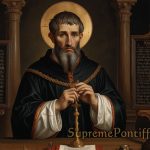
The Augustinian tradition stems from Saint Augustine of Hippo (354–430 AD), one of the most influential theologians in Western Christianity. His spiritual insights, captured in works like “Confessions” and “The City of God,” have guided countless souls to deeper faith and profound love of Christ. Although various monastic communities throughout history have claimed to follow Saint Augustine’s precepts, the formal organization of the Order of Saint Augustine (OSA) took shape in the 13th century:
- Papal Unification: In 1244, Pope Innocent IV united several hermit communities under one structure known as the Order of Saint Augustine. The impetus was to bring hermits — living in solitude yet devoutly Christian — into communal life where they could combine contemplative prayer with active ministry.
- Mendicant Way of Life: Much like the Franciscans and Dominicans, the Augustinians adopted a mendicant approach. They relied on the generosity of the faithful for sustenance while devoting themselves to preaching, teaching, and charitable works.
- Communal Charity and Service: From the beginning, the Augustinians stressed life in community, reflecting Saint Augustine’s call for unity of hearts and minds “on the way to God.” This spirit of unity propelled them to undertake missionary labors, educational endeavors, and pastoral ministries across the globe.
2. Spiritual Focus: The Rule of Saint Augustine
The Rule of Saint Augustine stands at the heart of Augustinian spirituality. It centers on the ideals of fraternal charity, humility, interior reflection, and the pursuit of divine truth. Compassion for others, profound community life, and devotion to service emerge naturally from this core vision. Two hallmarks of Augustinian spirituality include:
- Interior Conversion: Borrowing from Saint Augustine’s own testimony of conversion, Augustinians seek continuous growth in holiness through introspection and daily prayer, ever mindful of God’s grace at work in their lives.
- Love in Community: Central to Augustinian life is the belief that love of neighbor is a genuine reflection of love of God. Members strive to build up one another through mutual support, forgiveness, and unity of purpose.
3. Worldwide Apostolate and Influence
Over the centuries, the Order of Saint Augustine spread throughout Europe, the Americas, Africa, Asia, and Oceania. Their houses and friaries, often located near major universities or centers of learning, became hubs for both academic study and pastoral outreach:
- Educational Ministry: Augustinians have founded numerous renowned schools, colleges, and seminaries. Their emphasis on wisdom — in both theological and secular disciplines — has shaped generations of believers who are intellectually equipped to defend and live out the Catholic faith.
- Missionary Work: In lands unfamiliar with Christianity, Augustinian missionaries established local churches, hospitals, orphanages, and other charitable institutions. Their outreach often bridged cultural gaps and brought the love of Christ to remote communities.
- Parish Ministry: Many Augustinian friars serve as parish priests, chaplains, and spiritual directors, providing faithful care and guidance to lay Catholics. Their presence reflects an unyielding commitment to making Christ’s light shine forth at every level of human society.
4. Notable Augustinian Saints and Blesseds
Several members of the Order of Saint Augustine have been canonized or beatified, illustrating the fruitfulness of living by Saint Augustine’s Rule. Some of the most prominent include:
- Saint Thomas of Villanova (1486–1555): Renowned as the “Father of the Poor,” Thomas of Villanova was a bishop who dedicated himself to alleviating poverty and reforming church practices. His life epitomizes the generosity and compassion at the heart of Augustinian spirituality.
- Saint Rita of Cascia (1381–1457): A model of patience and forgiveness, Saint Rita is a beloved Augustinian saint recognized for her unwavering faith amid various personal struggles and tragedies.
- Blessed Alfonso de Orozco (1500–1591): A tireless preacher in Spain, he wrote extensively on spiritual and moral growth, championing heartfelt devotion to Christ and Our Lady.
5. Contemporary Relevance and the Papal Conclave of 2025
Throughout the 20th and 21st centuries, the Augustinians have remained deeply involved in addressing modern social challenges, from promoting human dignity to supporting educational initiatives. Their particular charisms — devotion to truth, deep personal conversion, and a spirit of loving service — align profoundly with the universal call of the Church. This relevance took on historic depth in 2025 with an unprecedented event that underscored the Order’s significance:
- Passing of Pope Francis: On April 21, 2025, Pope Francis passed away, leaving the See of Peter vacant and prompting a solemn period of mourning among the faithful. Pope Francis’s papacy was marked by mercy, simplicity, and global outreach — qualities that the Augustinians, in their close alignment with traditional Church teaching and devotion to pastoral care, had deeply admired.
- Election of Pope Leo XIV: In a historic papal conclave convened on May 07, 2025, the College of Cardinals elected Cardinal Robert Francis Prevost of the Order of Saint Augustine as the next successor of Saint Peter, taking the papal name Leo XIV. He thus became the first member of the friar-based Augustinian order ever to ascend to the Chair of Saint Peter, demonstrating how the Order’s heritage of intellectual zeal, humility, and charity resonates in the heart of today’s Church.
6. Pope Leo XIV: The First Augustinian Pope
Pope Leo XIV’s election as the Bishop of Rome is a momentous milestone for both the Catholic Church and the Augustinian community:
- A Fruit of Augustinian Spiritual Formation: Leo XIV’s background as an Augustinian friar highlights the importance of prayerful contemplation, Scripture study, and the spirit of charity. His pastoral approach is firmly rooted in the Rule of Saint Augustine, reflecting unity in love and humility — hallmarks of Augustinian life.
- Bridge between Past and Future: Building on the cardinals’ global vision for evangelization, Pope Leo XIV has already demonstrated a commitment to balancing the Church’s ancient heritage with the pastoral realities of the modern world. His desire to foster Christian unity — mirroring Saint Augustine’s emphasis on “oneness of mind and heart” — promises fresh waves of spiritual renewal.
- Upholding a Mendicant Spirit: In the footsteps of centuries of Augustinian missionaries, Pope Leo XIV strongly supports the Church’s ongoing mission to the poor and marginalized, echoing Christ’s call to see Him in the face of the least among us. Guided by his own order’s example, he remains determined to lead with generosity, humility, and compassion.
7. Conclusion: A Legacy that Continues to Shine
The Order of Saint Augustine endures as a beacon of Christ’s love, anchored in Saint Augustine’s profound insights into human nature, grace, and firm reliance on God. Their apostolic outreach, educational contributions, and faithful devotion have shaped nations, influenced culture, and transformed individual lives. As the Catholic Church looks to the horizon with Pope Leo XIV at the helm, the rich spiritual treasures of the Augustinians continue to nourish believers worldwide.
In an era hungry for truth, justice, and authentic love, the Augustinians remain ready to guide seekers toward the fullness of the Gospel. The heart of their mission — expressed in the Rule of Saint Augustine — calls all Christians to live in unity of mind and heart, always directed toward God. Inspired by centuries of fruitful service and newly ignited by the election of their own as the Vicar of Christ, the friar-based Order of Saint Augustine offers a compelling witness to the Church’s timeless mission: “Ever ancient, ever new,” steadfast and glowing in the radiance of Christ’s truth.


Leave a Reply