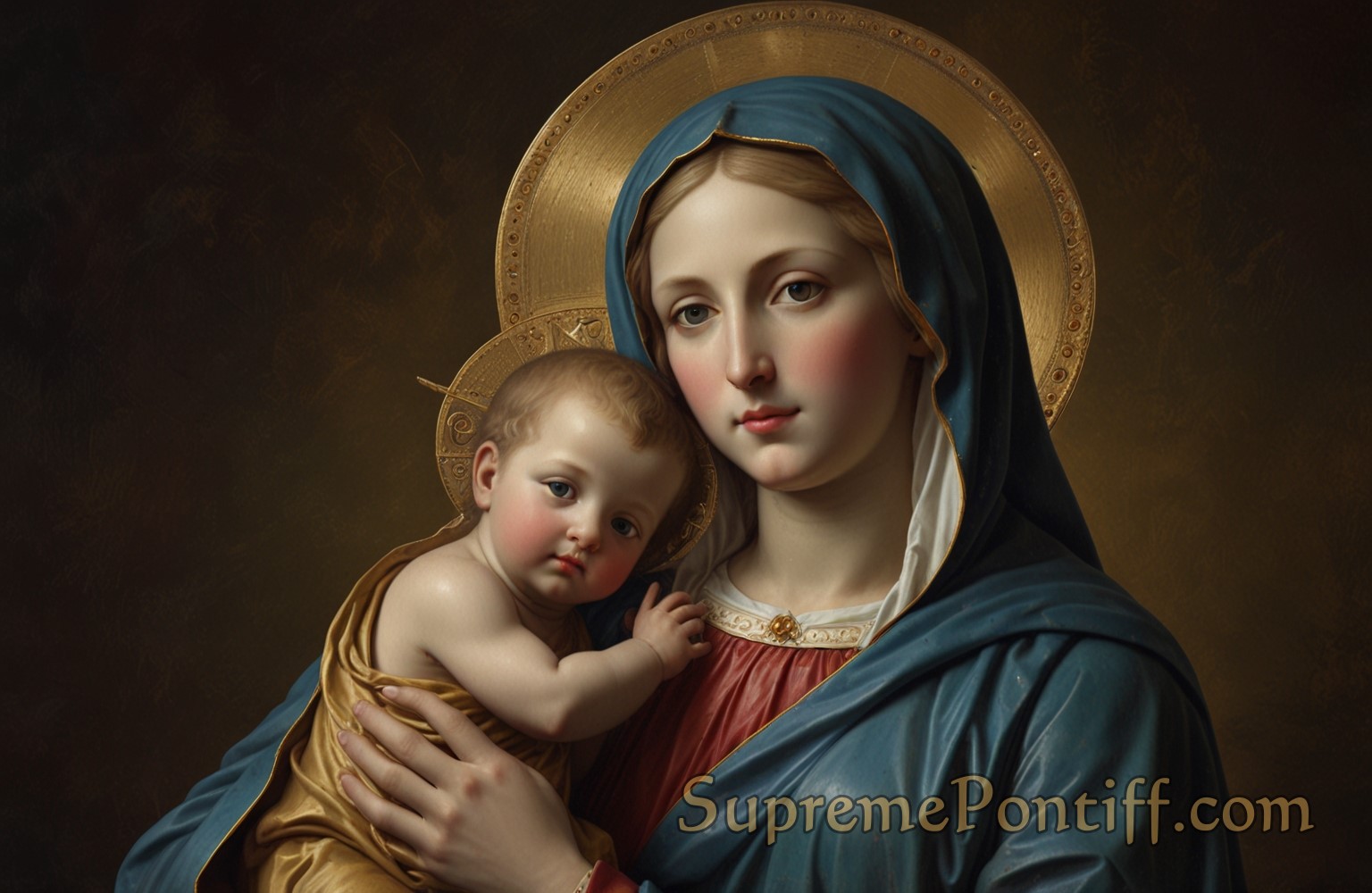
Mary, the mother of Jesus, holds a central place in Christianity, revered not only as the mother of the Savior but also as a model of humility, obedience, and faith. Her life and role have been the subject of theological study, artistic depiction, and devotional worship through the ages. This article delves into various aspects of Mary’s life, her significance in Christian doctrine, and her lasting impact on Christian practice.
Biblical Narratives
The most comprehensive accounts of Mary are found in the New Testament, primarily in the Gospels of Matthew and Luke.
- Annunciation and Birth of Jesus: The angel Gabriel’s visit to Mary, known as the Annunciation, is a pivotal event (Luke 1:26-38). Mary is told she will conceive a child by the Holy Spirit, signifying the miraculous birth of Jesus. Her fiat, “Let it be done unto me according to your word,” underscores her submission to God’s will.
- Life with Jesus: Mary appears throughout Jesus’ life in the canonical Gospels. In the Gospel of John, she is present at the wedding at Cana, where Jesus performs his first miracle at her behest (John 2:1-11). Mary is also present at the Crucifixion, where Jesus entrusts her to the disciple John, emphasizing her ongoing role in the early Christian community (John 19:25-27).
- Post-Resurrection: The last biblical mention of Mary is in Acts 1:14, where she is depicted as part of the early Christian community in Jerusalem, praying with the apostles after Jesus’ ascension.
Theological Significance
- Role in Salvation History: In Christian doctrine, Mary is often referred to as the “Theotokos,” or “God-bearer,” emphasizing her role in the Incarnation. As the mother of Jesus, she is seen as a vital participant in God’s plan for salvation, providing the human vessel through which God entered the world.
- Immaculate Conception and Assumption: Catholic doctrine holds two significant teachings about Mary: the Immaculate Conception and the Assumption. The Immaculate Conception, defined in 1854, asserts that Mary was conceived without original sin. The Assumption, proclaimed in 1950, teaches that Mary was assumed body and soul into heavenly glory at the end of her earthly life. Both doctrines highlight Mary’s purity and her unique role in salvation.
- Mary as Intercessor and Advocate: Christians, particularly within the Catholic and Orthodox traditions, view Mary as an intercessor who prays for believers. Her maternal compassion and closeness to Jesus make her a powerful advocate for humanity, offering solace and support.
Devotional Practices
Mary’s prominence in Christian spirituality is reflected in various devotions and feasts. The Rosary, a meditation on key events in the lives of Jesus and Mary, is a popular prayer practice. Numerous Marian feasts, such as the Annunciation, Assumption, and Immaculate Conception, mark the liturgical calendar.
Apparitions and Pilgrimages
Throughout history, numerous apparitions of Mary have been reported, with some approved by the Church as worthy of belief. Notable apparitions include those at Lourdes, Fatima, and Guadalupe, each associated with specific messages and calls for repentance. These sites have become major pilgrimage destinations, reflecting Mary’s enduring spiritual influence.
Artistic and Cultural Influence
Mary has inspired countless works of art, literature, and music. She is a subject of veneration in Christian art, from Byzantine icons to Renaissance paintings by masters such as Michelangelo and Raphael. Her imagery often symbolizes divine grace, purity, and motherly love, reinforcing her role in both religion and culture.
Ecumenical and Interfaith Perspectives
While all major Christian denominations honor Mary, views on her role and significance can differ. The Catholic and Orthodox traditions emphasize her intercessory roles, while many Protestant denominations focus on her biblical presence without the additional doctrinal teachings about her life and assumed roles. Even beyond Christianity, Mary is respected in Islam, mentioned in the Qur’an as the mother of Jesus (known as Isa) and is considered an exemplar of piety and submission to God.
Conclusion
Mary, the mother of Jesus, remains a profound figure in Christianity. Her life, characterized by humility, faith, and devotion, serves as a model for believers. Through theology, art, and devotion, Mary continues to inspire and guide Christians, embodying the ideals of love and obedience to God. Her story is a testament to her unique and enduring place in the tapestry of Christian belief and practice.


Leave a Reply