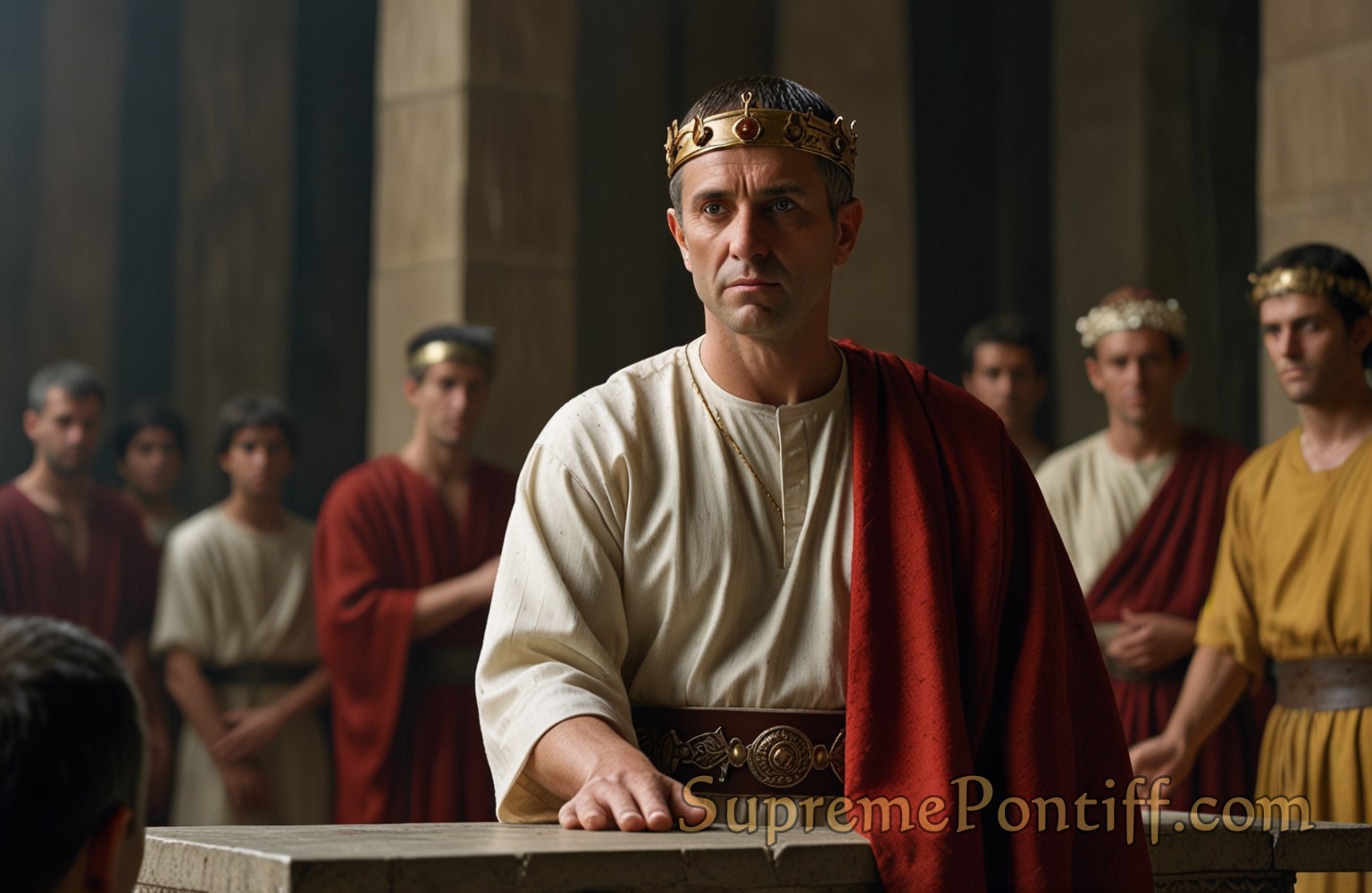
Pontius Pilate is a name that resonates through history, primarily for his role in the trial and crucifixion of Jesus Christ. Serving as the fifth Roman prefect of Judea under Emperor Tiberius, Pilate’s governance, spanning from 26 to 36 AD, is shadowed by this critical event. His involvement with the crucifixion carries profound theological and symbolic significance in Christianity, marking him as a pivotal character in the Passion narratives.
Historical Background
Little is documented about Pontius Pilate outside biblical texts and a few historical accounts, such as those by the Jewish historian Flavius Josephus and the Roman historian Tacitus. According to these sources, Pilate was appointed as prefect to oversee the Roman province of Judea, a politically volatile region characterized by tension between Roman rulers and the Jewish populace.
Involvement in the Trial of Jesus
Pilate’s role in Jesus Christ’s crucifixion is detailed across all four canonical gospels, though each provides varying perspectives. According to the gospel accounts, the Jewish authorities arrested Jesus and brought him to Pilate, accusing him of claiming to be ‘King of the Jews,‘ a title that undercut Roman authority and could be perceived as treasonous.
Despite finding no guilt in Jesus, Pilate faced immense pressure from local leaders and the masses, who demanded crucifixion. To pacify the gathering, Pilate attempted several measures: he offered to release Jesus as part of a Passover tradition and had him flogged in an attempt to appease the crowds. However, these efforts failed. Eventually, Pilate capitulated to public demand, famously washing his hands to symbolize his claimed innocence in Jesus’ death (a gesture highlighted in the Gospel of Matthew).
Pilate’s Character and Motivations
Examining Pilate’s motivations reveals a complex interplay of pragmatism, political maneuvering, and personal conscience. Roman governors were tasked with maintaining order and ensuring the loyalty of Roman provinces. Pilate’s dilemma likely involved balancing Roman interests, his political future, and managing local tensions without causing an uproar.
Historically, Pilate is portrayed as a skeptical, politically astute leader, interested in maintaining peace and demonstrating Roman authority. However, Christian tradition often portrays him as indecisive or swayed by the masses, possibly to emphasize the innocence of Jesus and the responsibility of humanity for his death.
Significance in Christian Theology
In Christian faith, Pilate holds theological significance, symbolizing the human tendency to capitulate in the face of moral dilemmas. The act of washing his hands is viewed as an inadequate renunciation of guilt, illustrating human complicity in sin and the struggle with conscience.
Furthermore, Pilate’s interactions in the Passion narratives embody the fulfillment of prophetic texts, framing his actions as integral within the divine plan of salvation. His character serves to facilitate the orchestration of pivotal events leading to the crucifixion and resurrection, central themes in Christianity symbolizing redemption and divine love.
Cultural and Historical Legacy
Pilate’s legacy extends beyond biblical texts, influencing art, literature, and ecclesiastical tradition. The Nicene Creed, recited in many Christian denominations during worship, underpins his role with the phrase “suffered under Pontius Pilate,” thereby historicizing the event for believers.
In later Christian tradition, Pilate’s figure has undergone various interpretations. Some Eastern Christian communities, like the Ethiopian Orthodox Church, view him more sympathetically, even revering him as a saint due to narratives that suggest post-event conversions or remorse. His image in Western tradition remains largely negative or ambivalent.
Conclusion
Pontius Pilate remains a complex and enigmatic figure more than two millennia after his governmental tenure in Judea. His involvement in the crucifixion of Jesus Christ, pivotal to Christian theology, elevates his historical significance. While historians strive to separate the man from the myth, the layers of interpretation and symbolism attributed to Pilate underscore his essential role in one of history’s most profound and transformative events, shaping religious thought and doctrine across centuries.




Leave a Reply