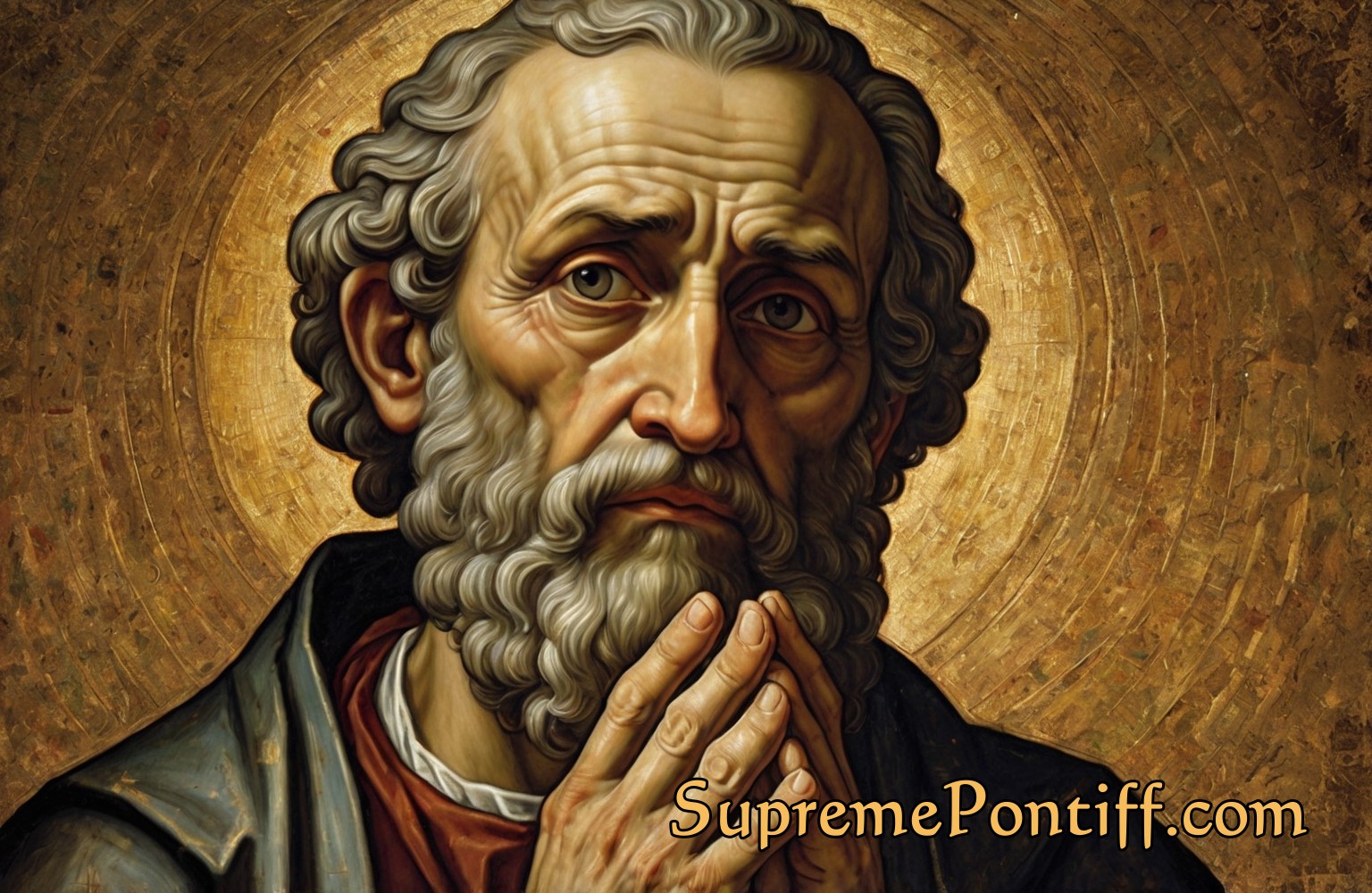
The inaugural holder of any office carries with it profound historical significance, not least for an institution with the global and historical impact of the Roman Catholic Church. The first Supreme Pontiff, or Pope, of the Roman Catholic Church, Saint Peter, holds a uniquely seminal position in both religious and cultural terms. This article strives to explore the life, legacy, and theological significance of St. Peter, touching on biblical accounts, historical contexts, and theological interpretations.
Historical and Biblical Background
St. Peter, originally named Simon, was a fisherman by trade, hailing from Bethsaida, a town on the Sea of Galilee. He was called to be a disciple by Jesus Himself, an event chronicled in the Synoptic Gospels (Matthew, Mark, and Luke). Peter, alongside his brother Andrew, immediately left his net to follow Jesus, an act that marks the beginning of his profound spiritual journey and leadership.
Peter’s renaming to “Cephas” (Aramaic for “rock“) by Jesus, which translates to Petros (Peter) in Greek, is seen as a significant turning point and forms the bedrock of his designation as the first Pope. The most crucial biblical reference to this transformation comes from the Gospel of Matthew:
“And I tell you that you are Peter, and on this rock I will build my church, and the gates of Hades will not overcome it.” – Matthew 16:18
Leadership and Role in Early Christianity
Post-resurrection, Peter assumed a pivotal role in the early Christian community. The Acts of the Apostles highlight his leadership and bravery, notably in his speeches at Pentecost and his decisions during pivotal moments in the nascent Church. His foundational role at the Council of Jerusalem, as described in Acts 15, where he advocates for the gentile converts and helps define the contours of early Christian practice, showcases his critical organizational role.
Historically, Peter’s ministry is documented to have extended from Jerusalem to Antioch and eventually to Rome, where early Church Fathers, such as St. Irenaeus, noted his presence as a key leader. His martyrdom, traditionally believed to have occurred under Emperor Nero’s reign around 64 AD, involved crucifixion — reportedly at his request upside down, as he felt unworthy to die in the same manner as Jesus.
Theological and Ecclesiastical Contributions
Theologically, Peter’s legacy is immense. Not only is he seen as the first bishop of Rome, but his role in the New Testament provides a model of penitence, leadership, and faith. His letters, the First and Second Epistles of Peter, address the trials and responsibilities of a Christian life, stressing endurance under persecution and the importance of righteous living.
The concept of Apostolic Succession, a foundational element in Catholic doctrine, starts with Peter. This principle holds that the Pope, as the Bishop of Rome, inherits Peter’s spiritual and ecclesiastical authority, directly passed down through the laying of hands in an unbroken chain. This ensures doctrinal continuity and unity, which is central to the governance of the Roman Catholic Church.
Legacy and Cultural Impact
Outside the direct religious implications, St. Peter’s influence extends into numerous cultural dimensions including art, literature, and philosophy. Depictions of Peter range from the remorseful disciple who denied Christ thrice, to the rock upon which Christ built his church, showcasing a complex character embodying human frailty and divine grace.
Continuous Relevance
The symbolic keys that Jesus is said to have promised to Peter, representing the keys to Heaven, are now part of the Papal insignia, symbolizing the Pope’s role as Christ’s vicar on Earth and the spiritual authority of the Church. The Papacy itself, viewed as instituted by Christ via Peter, remains a pivotal institution in global religious and political systems.
In conclusion, St. Peter’s role as the first Supreme Pontiff is not only a marker of a historical position but also a testimony to the enduring power of faith and the profound responsibilities entailed in leadership. His legacy continues to influence both the foundations and the continuous evolution of the Roman Catholic Church, impacting billions of followers worldwide.

Leave a Reply