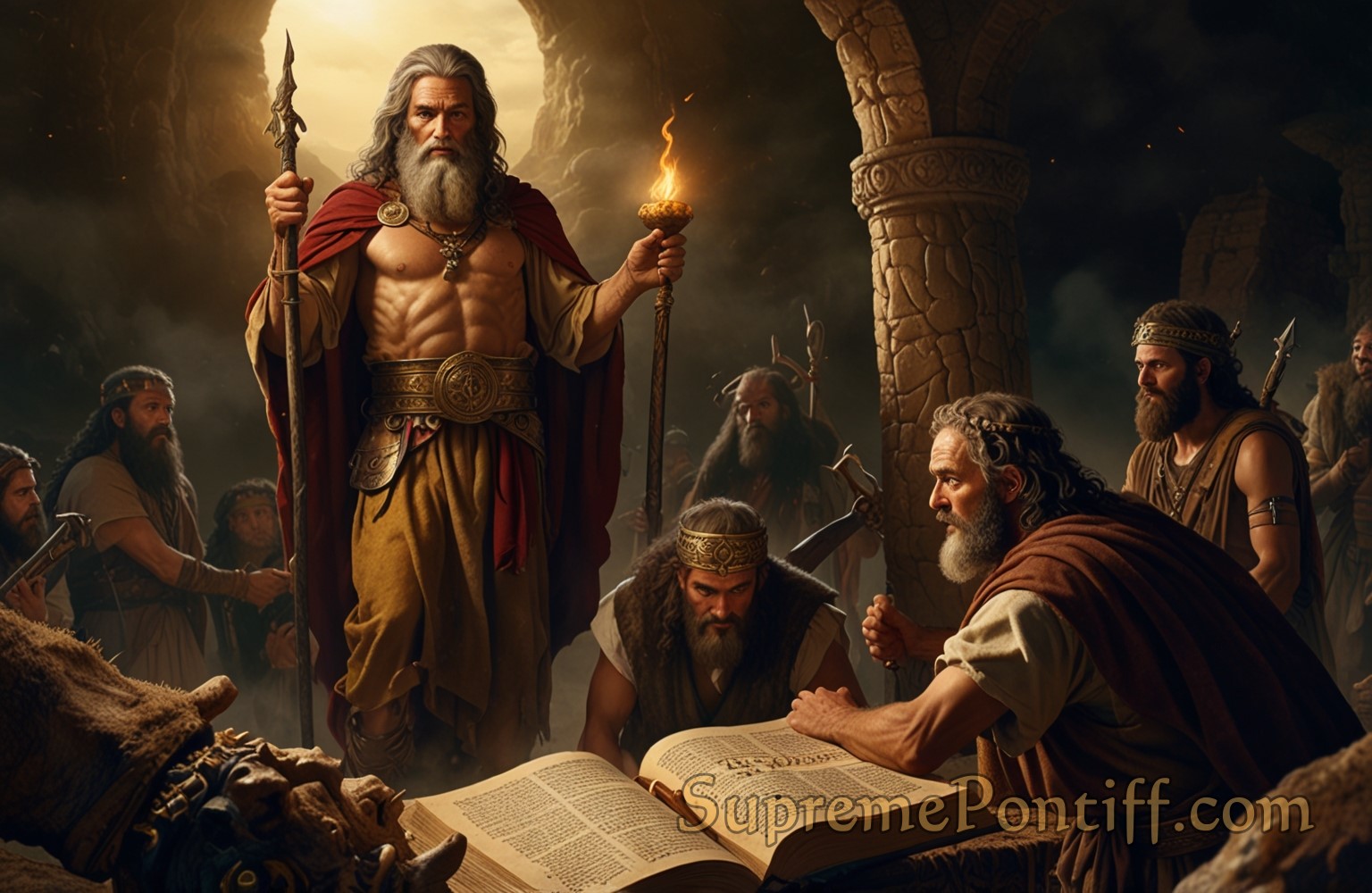
The Old Testament is not merely a prelude to the New Testament but is foundational to understanding the entirety of Christian theology and the story of salvation. Encompassing a vast array of literature including law, history, wisdom, and prophecy, the Old Testament is the first section of the Christian Bible. Its texts are revered as sacred by Christians and contain profound truths about God, humanity, and the universe. In this article, we’ll explore the composition, themes, and the enduring significance of the Old Testament within Christianity.
Composition of the Old Testament
The Old Testament is traditionally divided into four main sections:
- Creation of the World: Comprising the first five books — Genesis, Exodus, Leviticus, Numbers, and Deuteronomy — these books cover the creation of the world, the origins of the people of Israel, and the laws given to them by God through Moses.
- Historical Books: From Joshua to Esther, these books narrate the history of the Israelites, their struggles and triumphs in the Promised Land, and their relationship with God.
- Wisdom Literature and Poetry: Books like Psalms, Proverbs, and Job explore the themes of human suffering, divine justice, and personal piety.
- The Prophets (Major and Minor): These books include the writings and sayings of the prophets like Isaiah, Jeremiah, and Hosea, who called the people of Israel to repentance and foretold events including the coming of the Messiah.
The Old Testament is written primarily in Hebrew, with sections in Aramaic. Over centuries, it was composed by various authors, inspired by God to deliver His messages.
Theological Themes
The Old Testament lays the foundation for key Christian beliefs:
- Monotheism: The belief in one God, which is a radical concept in the polytheistic cultures surrounding ancient Israel.
- Covenantal Relationship: The idea of a covenant between God and His people, starting with Abraham, and later through Moses, which outlines a special relationship guided by divine law and order.
- Sin and Redemption: From the fall of Adam and Eve to the trials of the Israelites, themes of sin, repentance, and God’s forgiveness permeate the texts.
Most significantly, the Old Testament is critical for its messianic prophecies. Texts in Isaiah and Micah, among others, foretell the coming of a Messiah, which Christians understand as being fulfilled in Jesus Christ.
Old Testament in Christian Practice
Christian use of the Old Testament is versatile and profound, incorporating the texts in liturgy, theology, moral instruction, and personal devotion. Each book contributes uniquely to the spiritual life of believers:
- Liturgy: Many Christian liturgies incorporate Psalms and Old Testament readings.
- Moral and Ethical Guidance: Proverbs and the Decalogue (Ten Commandments) form basic moral guidance for Christians.
- Theological Understanding: Books of the prophets enrich Christian eschatology and Christology.
- Personal Devotion: Many find personal strength and comfort in the Psalms, Job, and Ecclesiastes.
Canonical Views
Different Christian traditions vary slightly on the composition of the Old Testament. While the Protestant Old Testament includes 39 books, the Catholic and Orthodox traditions include several additional books termed the Deuterocanonical books (such as Tobit, Judith, and Maccabees), valuable for their historical and doctrinal content.
Conclusion
The Old Testament is integral to the Christian Bible and faith, providing not only historical context and moral guidance but also the theological bedrock for Christian beliefs in the New Covenant. It forms a narrative arc from creation through the history of Israel to the coming of the Messiah, seen as fulfilled in Jesus Christ.
For Christians, the Old Testament is a profound testimony to the consistent and unchanging nature of God, His eternal covenant with humanity, and His plan for salvation that culminates in the New Testament. Thus, studying the Old Testament is essential for anyone seeking a deeper understanding of God’s word and His purposes, making it a timeless and invaluable part of Christian Scripture.
Leave a Reply