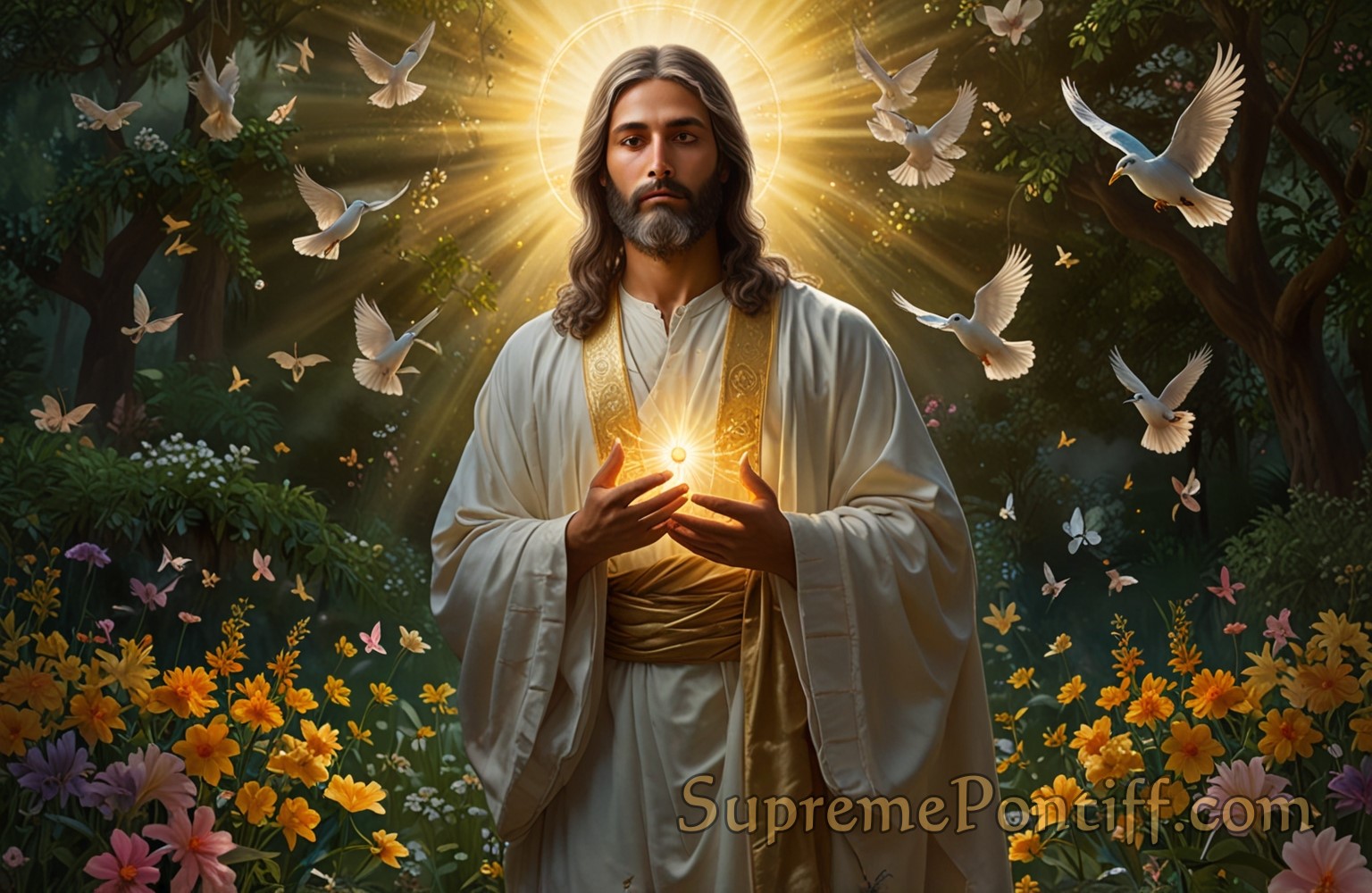
The concept of the “Messiah,” meaning “anointed one” in Hebrew, is a cornerstone of Christian theology and faith, deeply embedded in its doctrines and traditions. From a Christian perspective, Jesus of Nazareth is not merely a historical figure but the divine embodiment of the Messiah, fulfilling prophetic declarations laid out in the Hebrew Scriptures. This article explores the multifaceted aspects of how Jesus is understood and revered as the Messiah in Christian thought.
Theological Foundations
In Christianity, the theological interpretation of Jesus as the Messiah is rooted in a tapestry of Old Testament prophecies and their New Testament fulfillments. Christians believe that various texts within the Old Testament (such as Psalms, Isaiah, and Daniel) prophesy the coming of a savior who will redeem God’s people. Isaiah 53, for example, speaks of a “suffering servant” who takes on the sins of others and is afflicted on their behalf—an image that Christians hold as predictive of Jesus’ crucifixion.
In the New Testament, Jesus is explicitly referred to as the Messiah (or Christ, from the Greek translation of the Hebrew word for “anointed“). In Matthew 16:16, Peter declares Jesus as, “the Messiah, the Son of the living God“, encapsulating a central acknowledgment of His divine identity and purpose. The Gospels unfold Jesus fulfilling these messianic prophecies through His teachings, miracles, sacrificial death, and resurrection.
Jesus’ Messianic Role
- Redemptive Suffering: Central to Jesus’ messianic role is his suffering, death, and resurrection. Rather than a political or military leader, Jesus embodies the role of a suffering Messiah who redeems humanity not by force, but through a selfless act of love. His crucifixion is seen as the ultimate sacrifice for the sins of all humanity, reconciling them with God, an idea rooted in the concept of substitutionary atonement.
- King and Priest: The messianic role of Jesus also involves kingship and priesthood. Christians view Jesus as the eternal king in the line of David, a belief based on interpretations of prophecies like those found in 2 Samuel 7. Additionally, the Book of Hebrews presents Jesus as a high priest in the order of Melchizedek, mediating between God and humans thus fulfilling both kingly and priestly duties as outlined in the Hebrew Scriptures.
- Prophetic Teacher: Jesus is considered by Christians as the ultimate prophet, whose teachings and parables reflect the deepest revelations of God’s will. Not only does He interpret the Mosaic laws in the Sermon on the Mount, but He also offers new teachings that fulfill and expand upon the law.
- Judge and Fulfiller of Eschatological Hope: In Christian eschatology, Jesus as the Messiah is believed to return in the future to fulfill the remainder of messianic prophecies, judge humanity, and establish an everlasting kingdom. This belief in the second coming of Christ encapsulates the future aspect of His messianic role.
Discussion in Christian Doctrine and Liturgy
The recognition of Jesus as the Messiah permeates Christian doctrine, shaping its theology, liturgy, and eschatology. The Nicene Creed, a statement of faith widely used in Christian liturgy, summarizes the belief in Jesus Christ, “who for us men and for our salvation came down from heaven“. Liturgical practices such as the Eucharist commemorate His death and anticipate His second coming, reinforcing His identity and role as the Messiah.
Conclusion
In Christianity, the belief in Jesus Christ as the Messiah is foundational, infusing all aspects of its theology, practice, and devout life. It is an affirmation of a prophetic fulfillment, a divine intervention in human history, and an ongoing eschatological promise. Through His life, death, resurrection, and anticipated return, Jesus embodies the fullness of what it means to be the Messiah — delivering spiritual, moral, and ultimate cosmic redemption. This central conviction not only anchors the Christian faith but also offers believers a framework for understanding their relationship with God and with one another in the light of Christ’s messianic mission.


Leave a Reply