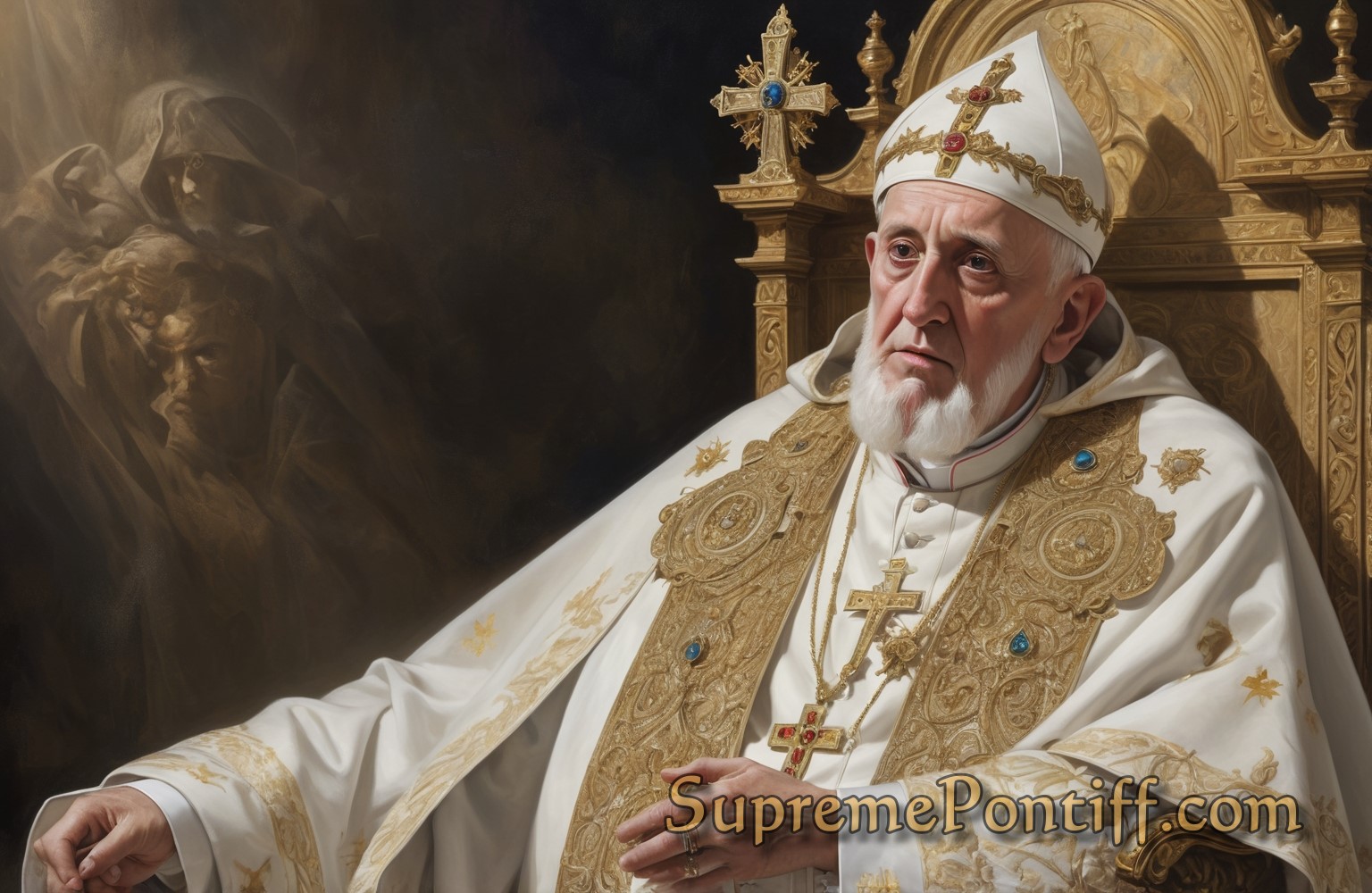
The Pope is the Bishop of Rome and the spiritual and administrative leader of the Roman Catholic Church, encompassing over a billion faithful worldwide. As a religious figure, the Pope is one of the most recognized and influential in the world, tasked with guiding the Church’s spiritual direction, interpreting theological questions, and maintaining ecclesiastical unity. The role has evolved considerably since its origin nearly two millennia ago.
Definition and Nomenclature
The title “Pope” is derived from the Latin word papa, which means “father.” This honorific reflects his role as a spiritual leader and father figure to Catholics worldwide. Officially, the Pope is known by titles such as “the Roman Pontiff,” “the Vicar of Christ,” “the Supreme Pontiff,” and “the Servant of the Servants of God.” Each title emphasizes different aspects of his spiritual and ecclesiastical duties.
Historical Context
The history of the Papacy is deeply intertwined with the history of Christianity. According to Catholic tradition, the position of the Pope originated with St. Peter, one of Jesus Christ’s twelve apostles and often considered the first Bishop of Rome. Jesus’ purported conferral of authority to Peter forms the theological basis for the Papacy’s claim of spiritual supremacy. The role of the Pope became more pronounced as the Roman Empire’s political landscape evolved, particularly after the legalization of Christianity in 313 A.D. under Emperor Constantine.
Throughout the Middle Ages, the Papacy played a crucial role in European politics and was a significant instigator of events like the Crusades. The Renaissance period saw the Papacy focusing on the arts and humanism, culminating in the construction of St. Peter’s Basilica and the commissioning of works from artists such as Michelangelo and Raphael.
The Reformation in the 16th century, initiated by figures such as Martin Luther, posed significant challenges to the Papal authority, leading to the permanent fragmentation of Western Christianity and the creation of Protestant churches. In response, the Catholic Church initiated the Counter-Reformation, during which the role and powers of the Pope were clarified and reaffirmed.
Roles and Responsibilities
The Pope’s primary role is the spiritual leadership of the Roman Catholic Church. This includes defining doctrines, guiding the church’s global mission, and representing the church in religious and diplomatic matters. He is also responsible for the creation of dioceses, the appointment of bishops, and the canonization of saints. The Pope’s decisions can include liturgical reforms, declarations of papal infallibility (a doctrine that asserts the Pope’s supreme authority in matters of faith and morals), and encyclicals, which are letters addressing important doctrinal issues.
In his administrative capacity, the Pope oversees the Roman Curia, the central governing body of the Catholic Church, which administers everything from global diplomatic relations to daily administrative tasks in the Vatican. The Pope is also the head of state of the Vatican City, a sovereign city-state enclaved within Rome.
Selection Process
The Pope is elected by the College of Cardinals, a group of senior church officials who are appointed by the Pope and usually serve as bishops at the diocesan level around the world. When the Papal seat becomes vacant, either through the death or resignation of a Pope, a conclave (a gathering of all eligible cardinals) is called to elect a new Pope. The election is held through a series of ballots in the Sistine Chapel, and a two-thirds majority is required. Once elected, the new Pope chooses a pontifical name and is formally installed in a ceremony known as the Papal Inauguration.
Conclusion
The Pope’s influence extends beyond the spiritual realm, impacting political, cultural, and social spheres globally. As the supreme pontiff, his teachings and decisions play a crucial role in shaping the beliefs and practices of nearly a fifth of the world’s population. Understanding the historical development, roles, and responsibilities of the Papacy is essential for anyone seeking to comprehend not just the Catholic Church, but also its significant impact on global affairs throughout history.

Leave a Reply