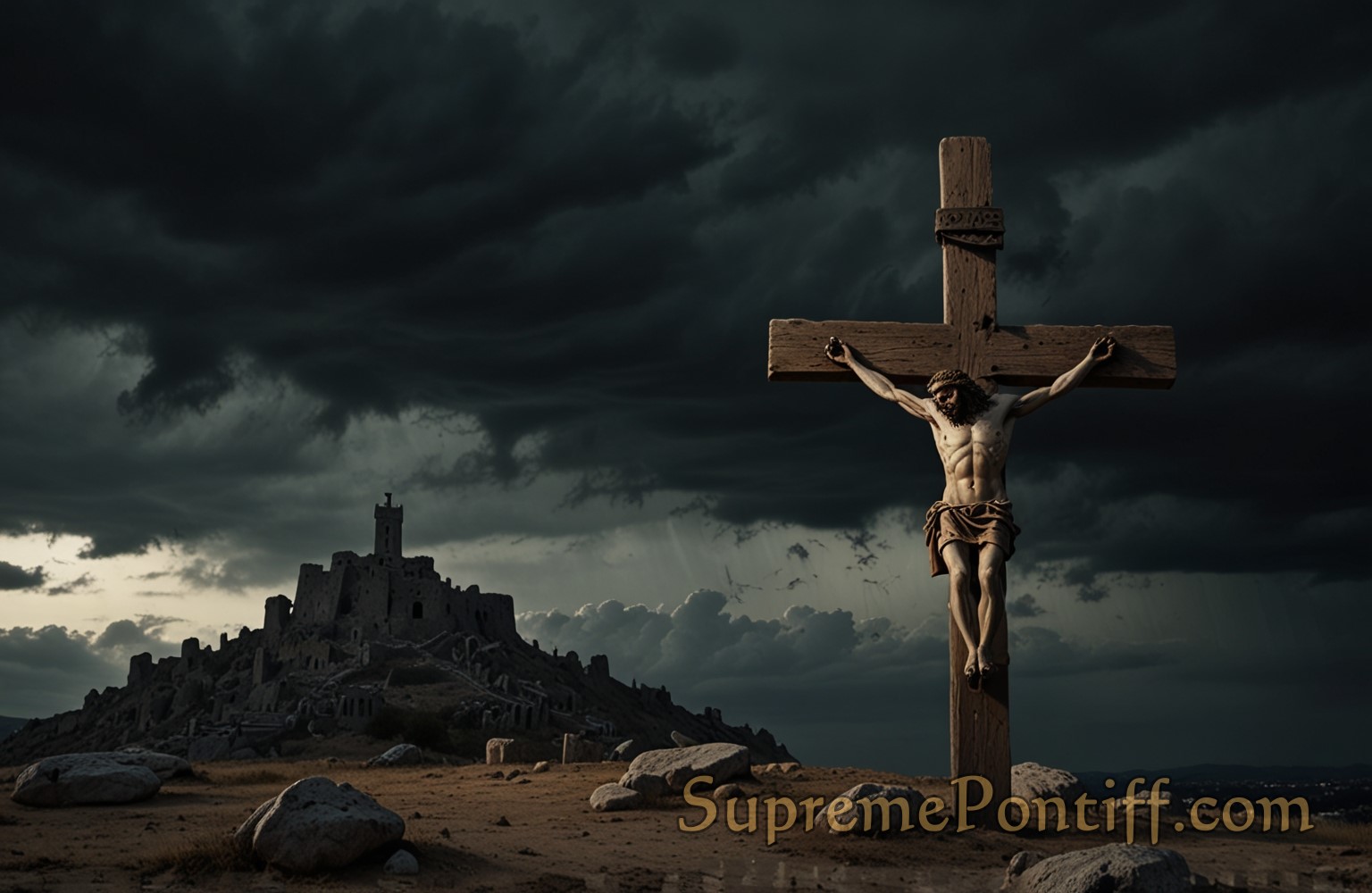
The crucifixion of Jesus Christ is a pivotal event in Christianity, marking a moment of profound significance that is commemorated by millions of believers around the world. The location of this momentous event is traditionally identified as Golgotha, which is situated in what is today the city of Jerusalem. This article explores the historical, geographical, and theological aspects of the site of Jesus’ crucifixion.
Historical Context
The crucifixion of Jesus Christ is dated between AD 30 and 36, based largely on various historical markers and scholarly analyses of the Gospels. The event occurred under the Roman prefect Pontius Pilate’s rule over Judea. Crucifixion was a common Roman method of execution, typically reserved for slaves, revolutionaries, and the lowest classes. Its purpose was not just to kill but to humiliate and deter, often leaving the condemned to suffer in public view.
Biblical Descriptions
The four canonical Gospels (Matthew, Mark, Luke, and John) provide accounts of Jesus’ crucifixion but offer few direct clues about the exact geographical spot. The site is referred to as “Golgotha,” which is Aramaic for “the place of the skull.” The name suggests a visible connection to death either through its geophysical features or perhaps its use as an execution site. John 19:20 states that the site was near the city, and Hebrews 13:12 notes that Jesus suffered “outside the city gate.”
Furthermore, all four Gospels mention that the crucifixion site was close enough to the city that passersby could read the inscription placed above Jesus’ head. This proximity to the city implies accessibility, aligning with the Roman practice of executing criminals in well-populated areas to serve as a grim deterrent to observers.
Geographical Identification
Today, the traditional site of Jesus’ crucifixion is within the Church of the Holy Sepulchre in the Christian Quarter of the Old City of Jerusalem. This location’s identification as Golgotha dates back to early Christian times when Roman Emperor Constantine’s mother, Saint Helena, in the 4th century purportedly located the cross of Jesus there. Helena’s discovery led to the construction of the Church of the Holy Sepulchre around the site.
Archaeological and historical evidence supporting this location includes records from early Christian pilgrims and the discovery of Roman-era tombs and an ancient limestone quarry. Since Romans often executed individuals outside city walls near busy roads or gates, the site’s just outside the city walls at the time of Jesus fits the historical patterns of Roman executions. This proximity also fulfilled Old Testament prophecies about the Messiah’s suffering outside Jerusalem’s gates.
Alternative Theories
In contrast to the traditional site, some propose alternative locations for Golgotha. One such site is Gordon’s Calvary, named after British General Charles Gordon who advocated this skull-shaped hill as the true location in the 19th century. Located just outside the current city walls and near a major road, this site matches some of the Gospel descriptions. Today, it is marked by the Garden Tomb, which some Protestant denominations favor for devotional purposes.
Theological Significance
Theologically, the specific location of Jesus’ crucifixion holds deep spiritual significance for Christians. It represents the culmination of Jesus’ earthly ministry, his sacrificial death, and the atonement for humanity’s sins. The site symbolizes ultimate redemption, reconciliation with God, and the central tenet of the Christian faith — the resurrection.
Conclusion
The exact spot of Jesus Christ’s crucifixion carries profound historical, cultural, and theological importance. While Golgotha in the Church of the Holy Sepulchre remains the traditional site revered by many, alternative locations like Gordon’s Calvary provide additional points for reflection and pilgrimage. Regardless of the exact geographical details, the event of the crucifixion remains at the heart of Christian faith, symbolizing sacrificial love and divine redemption.




Leave a Reply