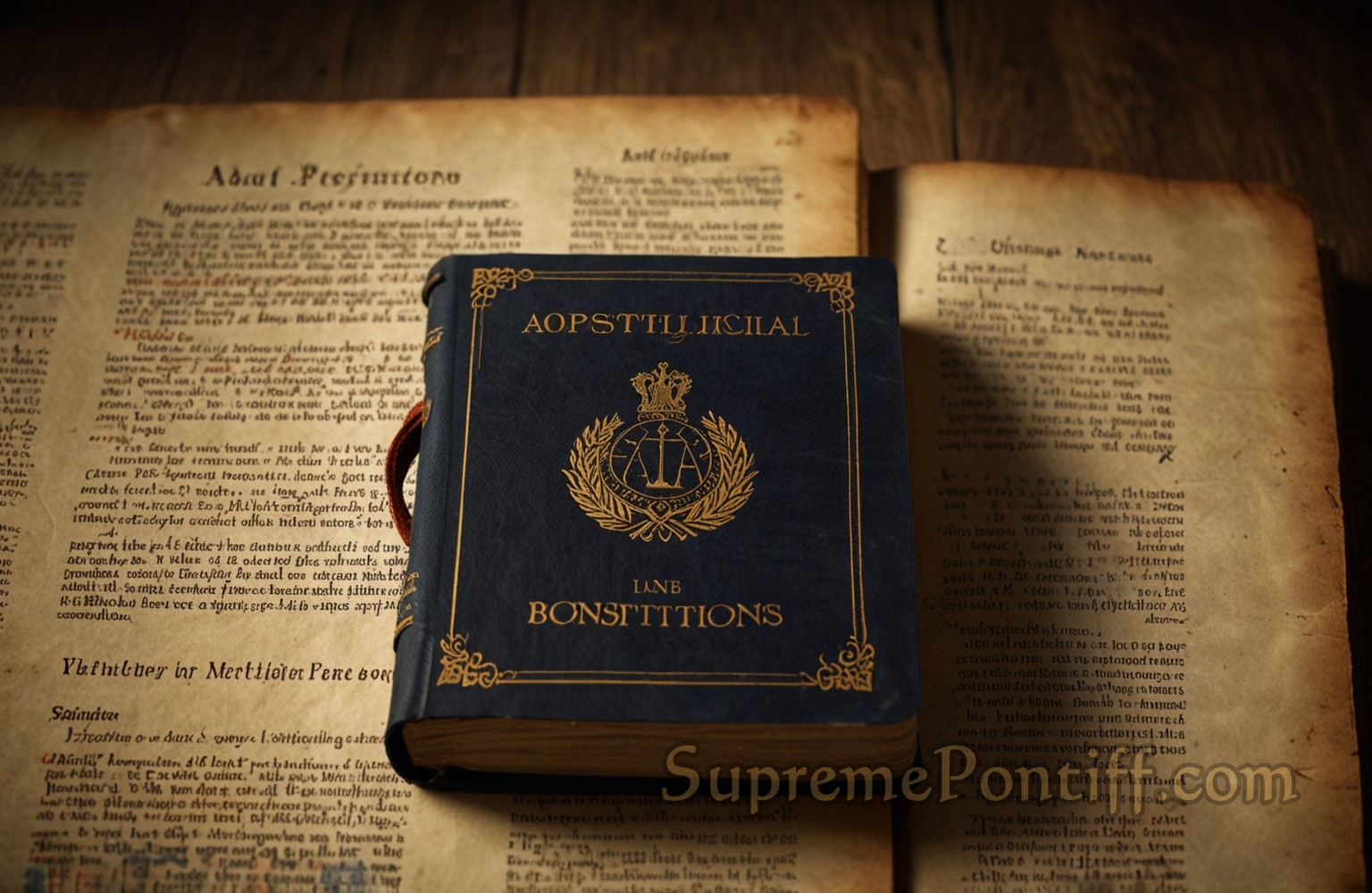
An Apostolic Constitution ranks among the most significant and authoritative forms of papal documents in the Catholic Church. Issued by the Pope himself, this type of decree embodies the fullness of his authority as the successor of St. Peter, the Apostle chosen by Christ to shepherd the faithful. Through Apostolic Constitutions, the Pope promulgates essential teachings, establishes Church laws, and provides pastoral guidance for Catholics around the globe. Steeped in biblical tradition and rooted in the unbroken lineage of apostolic authority, an Apostolic Constitution is both a powerful affirmation of Christian faith and a clear sign of the Church’s mission to guide souls into closer communion with God.
1. Definition and Historical Foundations
The term “Apostolic Constitution” refers to a solemn and official document issued by the Pope under his supreme jurisdiction. The word “Apostolic” underscores its connection to the Apostles and, most particularly, to the office of St. Peter, the rock upon which Jesus built His Church (Matthew 16:18). Historically, Apostolic Constitutions can be traced back many centuries, though their form and function have matured over time. Even the earliest councils and synods relied on foundational decrees later taken up by the Roman Pontiff. These early examples paved the way for modern Apostolic Constitutions, fostering a deep respect for divinely ordained leadership and unity under the Pope.
2. Nature and Authority of Apostolic Constitutions
As one of the highest expressions of the Pope’s teaching authority (the Magisterium), an Apostolic Constitution sits near the pinnacle of ecclesiastical legislation. When the Pope issues an Apostolic Constitution, it usually concerns matters of significant import for the universal Church. Such subjects might include defining new structures, clarifying doctrine, or introducing major liturgical reforms. Its authority stems from:
- Papal Jurisdiction: Rooted in the Pope’s role as Vicar of Christ, his capacity to legislate on faith and morals is biblically and theologically affirmed.
- Binding Force: Once promulgated, the document carries a binding force on all the faithful. As such, Catholic bishops, clergy, religious orders, and laypeople are obliged to observe the provisions set forth in the Apostolic Constitution.
- Unbroken Apostolic Succession: The Pope’s authority is inherited from the Apostles through the laying on of hands and the sacred offices maintained within the Church’s hierarchical structure.
3. Key Purposes and Functions
Apostolic Constitutions serve several core functions that uphold and strengthen the Church:
a) Clarifying Doctrine
They offer articulate explanations of Church teaching, helping Catholics discern and live out the truths handed down by Jesus Christ and the Apostles. In this way, these documents champion Christian orthodoxy, preventing erroneous interpretations or deviations from solid doctrine.
b) Establishing or Modifying Canon Law
Many Apostolic Constitutions involve the introduction or revision of canonical regulations. These are essential for fostering order, discipline, and harmony within the People of God, ensuring Catholics worldwide can live and worship in unity.
c) Confirming and Encouraging the Faithful
An Apostolic Constitution often aims to remind believers of their solemn responsibilities and privileges as members of the Body of Christ. It may challenge the faithful to deeper prayer, renewed devotion, or increased engagement with the mission of the Church to spread the Gospel.
d) Promoting Liturgical Harmony
The liturgy is a supreme expression of shared faith. Apostolic Constitutions have been used to standardize and reform liturgical practices so that Catholics can fully, consciously, and actively participate in the Holy Sacrifice of the Mass and other sacraments.
4. Examples of Notable Apostolic Constitutions
Over the centuries, several major Apostolic Constitutions have shaped the Church’s mission and identity. A few examples include:
- Fidei Depositum (1992): Issued by Pope St. John Paul II to promulgate the Catechism of the Catholic Church. This Apostolic Constitution reinforced the importance of nurturing the faithful with clear and comprehensive doctrinal teaching, uniting believers under a common standard of truth.
- Anglicanorum Coetibus (2009): Enacted by Pope Benedict XVI, it established Personal Ordinariates for groups of Anglicans who sought full communion with the Catholic Church, while preserving certain elements of their liturgical and spiritual heritage. This act of Christian unity highlighted the Church’s goal to unify believers under one apostolic faith.
- Pascite Gregem Dei (2021): Promulgated by Pope Francis, this Apostolic Constitution revised Book VI of the 1983 Code of Canon Law. It aimed at safeguarding ecclesiastical discipline and clarifying penalties within the Church’s legal framework.
5. Present-Day Relevance
Even in our modern age, Apostolic Constitutions continue fulfilling a vital role in guiding believers. As society evolves and new challenges emerge, these papal decrees ensure that the Church retains a unified voice. They demonstrate compassion, protect doctrinal purity, and strengthen the moral fabric of countless Christian communities. Moreover, in a world frequently marked by confusion and conflicting ideologies, Apostolic Constitutions stand as beacons of clarity. They call faithful Catholics to remain steadfast in prayer, charity, and evangelization, in accord with the enduring truths found in the Scriptures and the living apostolic tradition.
6. Upholding Catholic Unity Through Apostolic Constitutions
One of the greatest treasures of the Catholic Church is her visible communion under one Vicar of Christ. Apostolic Constitutions reinforce this unity by constantly recalling believers to the heart of the Gospel message and the bedrock of apostolic faith. Through these decrees, Catholics receive the moral and theological guidance they need to flourish, in both personal sanctity and ordinary life. Far from outdated formalities, Apostolic Constitutions encourage a vibrant, missionary spirit, reminding the faithful that the Church flourishes whenever Christians unite in fidelity to the Gospel, social justice, and charitable works.
Conclusion
An Apostolic Constitution remains an indispensable tool in the Church’s mission to safeguard and proclaim the truth of Christ. Rooted in the Apostles’ witness, supported by centuries of prayerful tradition, and wielded by the Pope under the divine mandate entrusted to St. Peter, this solemn document is a testament to the enduring power of the Holy Spirit in guiding the Church. From clarifying doctrine and unifying worship to inspiring deeper conversion, an Apostolic Constitution stands as a profound blessing for the faithful. In a world hungering for meaning, these vital papal decrees exemplify the unwavering Christian commitment to sharing the light of the Gospel with every generation — and to standing firm on the rock of apostolic faith.


Leave a Reply