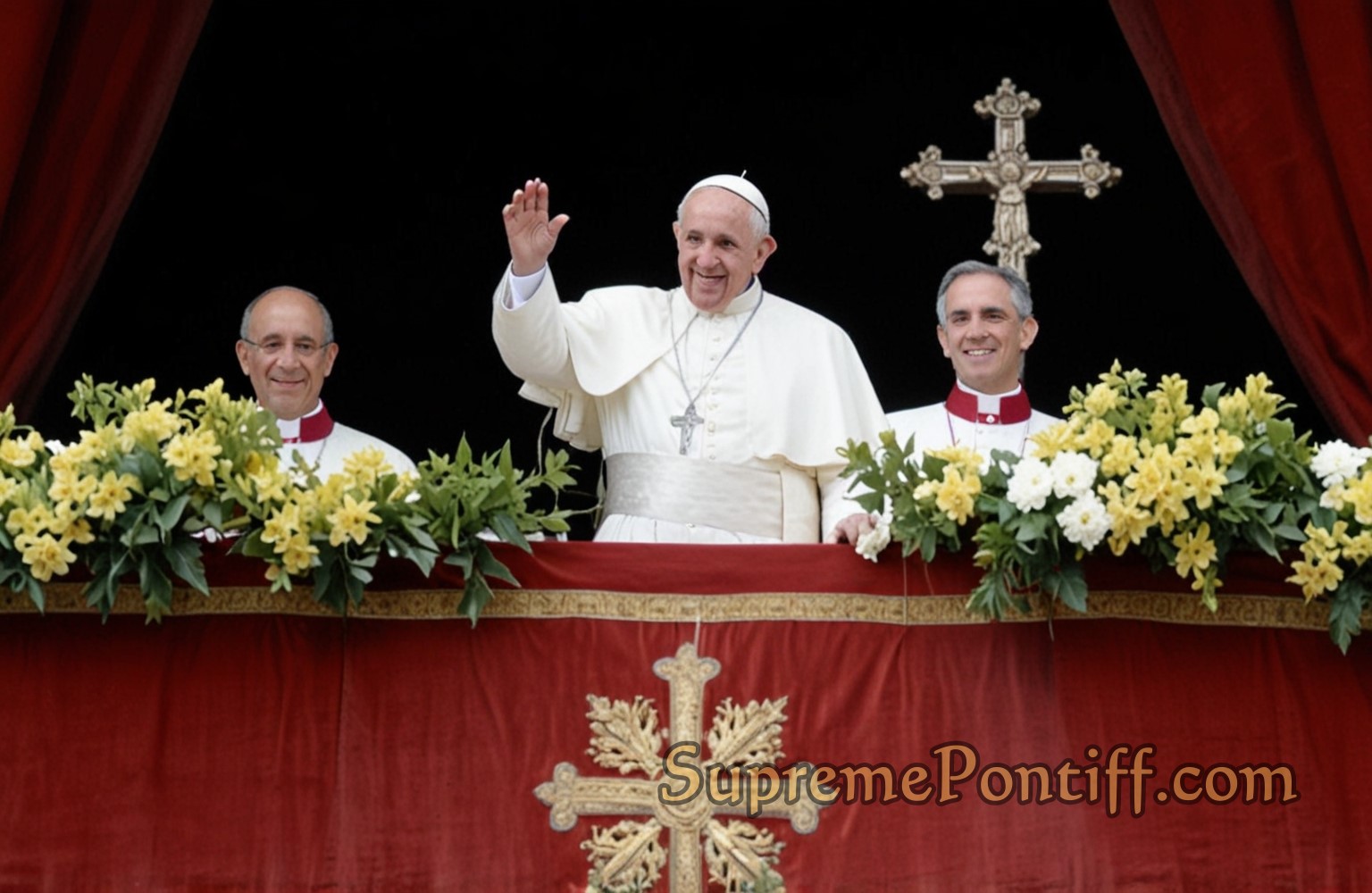
The “Urbi et Orbi” blessing stands as one of the most significant and uplifting ceremonial moments in the Christian tradition. Given by the Pope from the balcony of Saint Peter’s Basilica in Vatican City, this solemn yet joyous act represents the Holy Father’s spiritual address to both Rome (urbi) and to the entire globe (orbi). Steeped in centuries of tradition, the Urbi et Orbi blessing reflects the Catholic Church’s universal mission of charity, hope, and salvation in Jesus Christ.
1. Historical Background and Origin
The Urbi et Orbi blessing traces its origins back to the early centuries of the Catholic Church. While formal records show that Popes have bestowed blessings upon the faithful in Rome since the earliest papacies, the modern shape of the Urbi et Orbi blessing began taking form around the Renaissance. This public blessing quickly became a hallmark of the Pope’s pastoral outreach, signaling both continuity with age-old Christian tradition and a powerful reminder of the living presence of Christ in the world.
2. When and Where the Blessing Is Given
With its deep roots in Catholicism, the Urbi et Orbi blessing is typically delivered on very specific and sacred occasions:
- Easter Sunday: At the conclusion of Mass on the greatest feast of the Christian liturgical year, the Pope delivers the Urbi et Orbi blessing. Easter symbolizes the Resurrection of Jesus Christ and the triumph of life over death, making it a perfect moment for proclamations of hope and rejoicing for all believers.
- Christmas Day: Commemorating the Nativity of the Lord, Christmas is another principal feast when the Pope bestows the Urbi et Orbi to the faithful. This marks the joy of God’s Incarnation — an act of divine love that profoundly shapes Christianity and endows humanity with redemptive grace.
- Extraordinary Events and Anniversaries: Throughout history, Popes have occasionally given the Urbi et Orbi blessing during times of global crisis or for special events. For instance, Pope Francis offered an extraordinary Urbi et Orbi blessing during the COVID-19 pandemic to implore divine intervention for the suffering world.
3. The Significance of the Blessing
The Pope’s Urbi et Orbi blessing holds a unique and profound spiritual power within the Catholic faith. According to Catholic doctrine, this blessing carries with it a plenary indulgence — under certain conditions — for the faithful who devoutly receive it, whether physically present or following via modern communication channels (such as television, radio, or live streaming).
In a time marked by challenges and uncertainties, this papal blessing acts as a beacon of hope. It also reaffirms the unity of believers worldwide, reminding the faithful that they form a single family in Christ, under the guardianship of the successor of Saint Peter. The pro-Christian message found in Urbi et Orbi is an invitation to encounter the mercy of Christ and to spread His love in a world longing for peace and justice.
4. The Ceremonial Elements
Visually, the ceremony underscores the greatness and humility of the Catholic Church. The Pope usually appears on the central loggia of Saint Peter’s Basilica, dressed in vestments reflecting the tenor of the liturgical day. Surrounded by the grandeur of Renaissance art and architecture, the Holy Father greets the faithful gathered in Saint Peter’s Square. Through prayers and expressions of hope grounded in Holy Scripture, the Pope invites Christians worldwide to immerse themselves in the mysteries of Christ’s life, death, and resurrection.
5. The Message and Its Global Impact
The Urbi et Orbi blessing transcends time and geographical boundaries. Modern technology elevates its outreach, allowing Catholics and other Christians worldwide to feel the profound spiritual unity that the blessing fosters. Papal messages during the Urbi et Orbi often address pressing global issues — such as conflict, injustice, and poverty — while urging believers to find inspiration in the words and deeds of Christ.
This pro-Christian perspective emphasizes humanity’s need for reconciliation and spiritual renewal, offering a message of charitable service to one’s neighbor. As Christians draw closer to God, they are called to share the good news of salvation with the entire world, living out the Gospel values in every aspect of life.
6. Staying “Up-to-date” with a Timeless Tradition
Although the Urbi et Orbi blessing is firmly rooted in the centuries-old heritage of the Catholic Church, it remains strikingly relevant to the modern world. Each year, millions of faithful eagerly tune in to watch the live broadcasts, united by a common devotion to Christ and a hope for a better future.
In today’s digital culture, social media platforms further amplify these messages. The Pope’s reflections — often posted and shared in real-time — reach believers across countless digital communities. This expanding virtual presence reminds Christians that God’s love, given through Jesus Christ, transcends physical barriers, resonates with current global needs, and speaks to every generation.
7. Answering the Call of Christ
At its heart, the Urbi et Orbi blessing is an invitation to respond to the Gospel. As the Pope bestows his blessing “to the city and to the world,” he underscores the Church’s global focus—showing that there is neither an individual nor a community excluded from Christ’s message of mercy, hope, and love.
Whether one participates in Rome’s Saint Peter’s Square or watches from home, the Urbi et Orbi blessing illuminates the Catholic Church’s enduring role in an ever-changing world. Rooted in biblical truth and steeped in timeless Christian values, this Papal blessing kindles hearts and encourages believers to become agents of genuine peace, goodwill, and unity—the essence of truly living out the Christian faith.
Conclusion
In a world longing for reconciliation, the Urbi et Orbi stands as a bright testament to Christ’s enduring promise. This Papal blessing, filled with reverence and hope, presents a uniquely powerful moment where believers gather — spiritually and physically — to receive the grace of God through the successor of Saint Peter. As Christians look forward to each Easter, Christmas, and, whenever declared, extraordinary occasions, the Urbi et Orbi reminds the faithful of the universal Church’s mission to proclaim the Good News of salvation to every corner of the world. It remains a vibrant and essential part of Catholic tradition, uniting hearts and pointing souls to the transformative power of Jesus Christ.

Leave a Reply