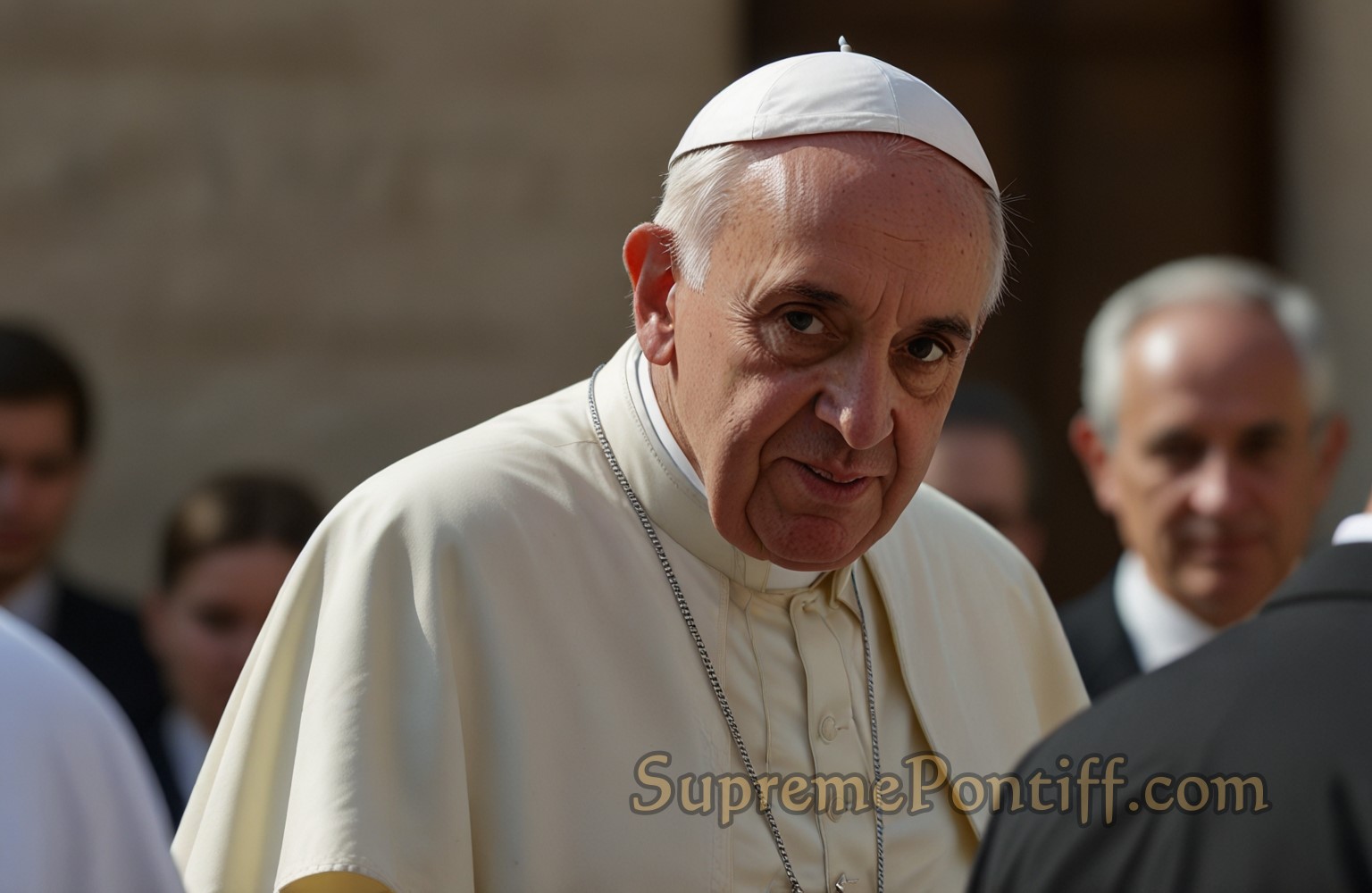
The world mourns the passing of Pope Francis, who died on April 21, 2025, at the age of 88. The announcement, delivered via a somber broadcast from the chapel of Casa Santa Marta, the Vatican guesthouse where he resided, marked the end of a transformative papacy characterized by its focus on social justice, humility, and a renewed emphasis on the core message of the Gospel.
The news of Pope Francis’ cause of death, a cerebral stroke, has resonated deeply with Catholics and non-Catholics alike. According to reports, including those from the Italian daily *Corriere della Sera*, the Pope awoke early on Monday morning, seemingly in good health. However, at approximately 7:00 a.m. local time, his condition deteriorated rapidly. The Vatican later confirmed that he suffered a cerebral stroke, leading him into a coma and irreversible cardiocirculatory collapse from which he did not recover. He passed away at 7:35 a.m. local time.
A cerebral stroke, also known as a cerebrovascular accident (CVA), occurs when the blood supply to the brain is interrupted, leading to damage or death of brain cells. Given Pope Francis‘ age and the potential for underlying health conditions, a stroke, unfortunately, became a plausible cause of death. While the Vatican hasn’t released further details about the specifics of the stroke, such as whether it was ischemic (caused by a blockage) or hemorrhagic (caused by bleeding), its sudden onset explains the swift and tragic turn of events.
The timing of his death, on Easter Monday, holds particular significance. For Catholics worldwide, Easter Monday is an extension of the joyous Easter Sunday celebrations, commemorating the resurrection of Jesus Christ and the promise of eternal life. Many theologians and commentators have already observed the poignant symbolism of Pope Francis’ passing during this time, a testament to his consistent emphasis on hope and the transformative power of faith.
However, as one considers the details surrounding Pope Francis’ death, it’s crucial to remember the broader context of his ministry. His papacy was not solely defined by uplifting messages but also by a deep empathy for the suffering and marginalized. He consistently championed the cause of the poor, refugees, and prisoners, often prioritizing their needs over those of political figures. This commitment to the “Way of the Cross,” the *Via Crucis*, was evident even in his final days, as he continued to dedicate his time to those living on the periphery.
Pope Francis’ health had been a subject of occasional speculation throughout his pontificate. While generally appearing robust, he had experienced some health challenges, including previous surgery for diverticulitis. These factors, while not directly contributing to the stroke, might have increased his vulnerability.
His legacy, however, remains undiminished. He leaves behind a Church more attuned to the needs of the vulnerable, more open to dialogue, and more committed to living out the Gospel message in its entirety. His death on Easter Monday, following a cerebral stroke, serves as a final, powerful reminder of the Christian narrative: that hope and resurrection follow suffering and sacrifice. He will be remembered as a pope who lived the *Via Crucis* for the world to see, leaving an indelible mark on the Catholic Church and the world stage.
The mourning period for Pope Francis will involve traditional Vatican rituals, including a series of masses and ceremonies culminating in his funeral. Cardinals from around the world will convene to elect his successor, ushering in a new era for the Catholic Church. But the spirit of Pope Francis, his compassion, and his unwavering commitment to the marginalized will undoubtedly continue to inspire generations to come.


Leave a Reply