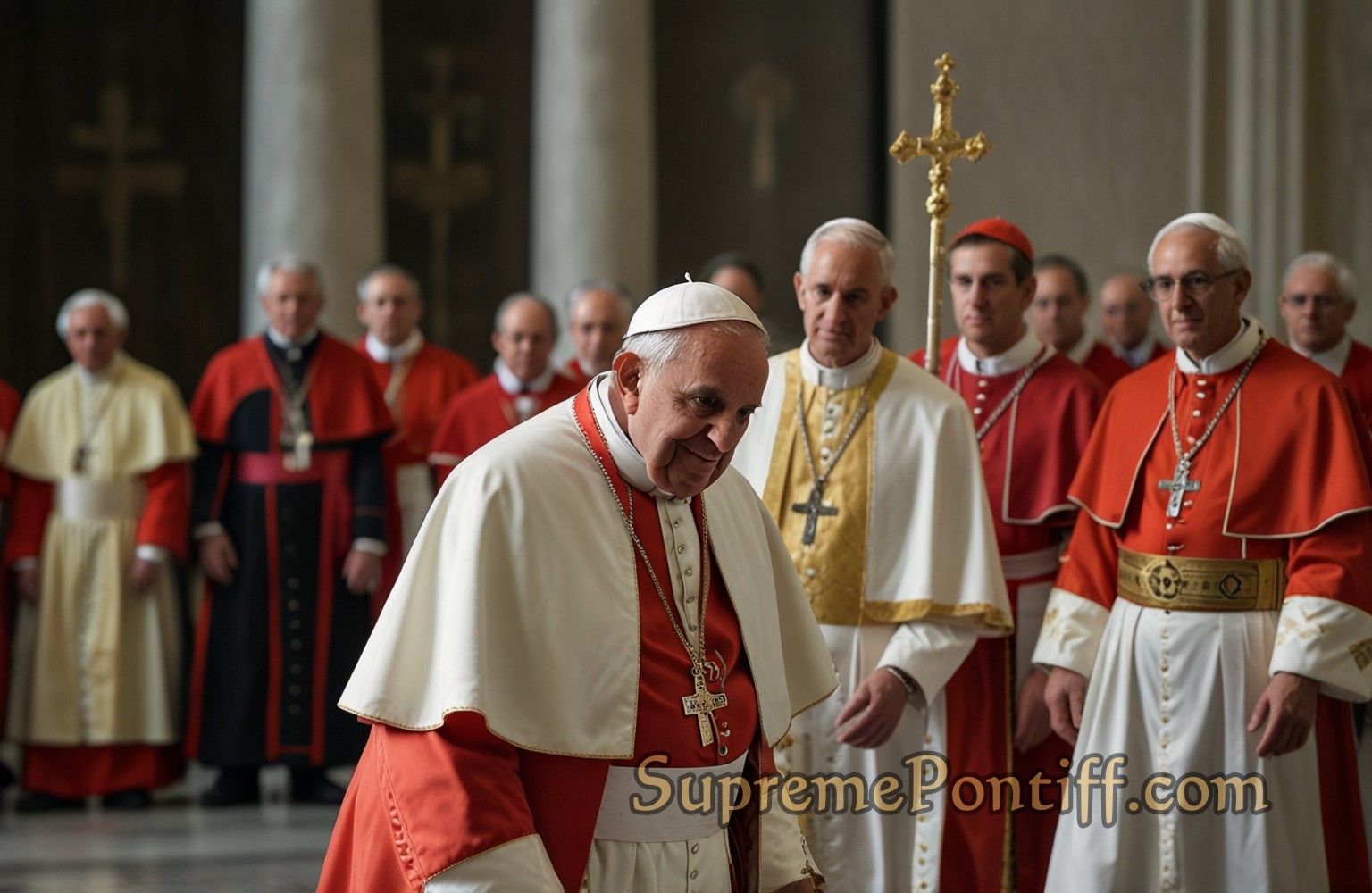
On Easter Sunday, April 20, 2025, an 88-year-old Pope Francis appeared on the central balcony (loggia) of St. Peter’s Basilica to greet the faithful gathered in St. Peter’s Square. Even after a lengthy hospitalization and weeks of uncertainty regarding his health, the beloved pontiff delivered his Easter blessing to tens of thousands — though in a markedly more fragile form than the characteristically energetic leader of the Catholic Church many had come to know.
A Maverick Pontiff’s Last Public Gestures
Known throughout his 12-year papacy for deviating from protocol and placing pastoral mission at the center of church life, Pope Francis surprised many by participating, in limited fashion, in the Easter Sunday liturgy. Until then, Vatican officials had been tight-lipped about his Holy Week schedule. The pontiff defied expectations by making brief appearances during the run-up to Easter, starting with his presence at a special Mass on April 6 for health care workers and the sick in St. Peter’s Square. His voice remained gravely, reflecting the toll of his recent battle with double pneumonia, yet his visible determination to be with his flock resonated deeply with believers.
Returning to Routine, Yet Markedly Changed
After being released from the hospital on March 23, he spent the following days resting under the care of his medical team at the Casa Santa Marta, the Vatican guest house he chose as his residence early in his pontificate. Observers noted a quieter demeanor, with an unspoken gravity that hinted at a changed pope —one more keenly aware of his own frailty.
Despite doctors advising a two-month convalescence, Francis insisted on maintaining his pastoral initiative. He privately received Britain’s King Charles III and Queen Camilla for an unannounced meeting not long after his discharge. In quick succession, he began popping into St. Peter’s Basilica, greeting pilgrims and tourists, often praying silently before the main altar. As these visits became more frequent, it became difficult to label them as “surprise appearances.” Rather, they showcased a renewed urgency in his desire to remain close to ordinary people.
Holy Week — and A Legacy of Compassion
Leading up to Easter, Pope Francis resumed two significant traditions that marked his pontificate: uplifting the marginalized and emphasizing pastoral care. On Holy Thursday, he visited Rome’s Regina Coeli prison, though he was unable to perform the ritual foot-washing due to mobility challenges. Still, the presence of the “pope of the people” among inmates underscored his consistent message that society should not forget those on the margins.
Likewise, during his Easter Sunday ride in the popemobile around St. Peter’s Square, he reached out to small children, briefly pausing to bless them and hand out candy. These gestures, albeit more subdued than in previous years, reflected a steadfast commitment to embrace “the least among us” right to the very end.
Signs of Declining Health
From afar, members of the media and Vatican watchers (vaticanisti) noted that the pontiff, who arrived in a wheelchair to offer the traditional Easter blessing, appeared disoriented and in visible discomfort. While mild confusion and physical pain may have simply stemmed from ongoing health issues, rumors circulated that these symptoms were indicative of a serious underlying condition. A senior Vatican source revealed that Pope Francis had “good days and bad days” since leaving the hospital. Plans for a potential trip to Turkey later in the year remained on the Vatican calendar — albeit with an adjusted timeline — fueling hope that the Holy Father might still recover.
Final Morning at the Casa Santa Marta
By Easter Monday, April 21, 2025, global media outlets had congregated around Vatican City, anticipating either a serene Pasquetta address (as Easter Monday is a public holiday in Italy) or perhaps some further update on his condition. Shortly after 9:45 a.m. Rome time, a brief announcement from the Vatican’s press office invited journalists to watch a sudden streaming from the chapel of the Casa Santa Marta.
What followed was a profoundly somber transmission. Four senior prelates, their faces grave, reported that Pope Francis had passed away that morning. According to early reports from Italian sources like Corriere della Sera, the pope had arisen at 6 a.m. feeling relatively well. By around 7 a.m., however, he experienced a suspected cerebral stroke. Within minutes, he fell into a coma and died a short time later.
Legacy and Reflection
Even amid shock and grief, Catholics worldwide immediately began reflecting on Pope Francis’ lasting impact. His papacy was marked by an openness that broke barriers — especially his emphasis on serving the poor, marginalized, and forgotten. From his early adoption of the name Francis, in homage to St. Francis of Assisi, to his spontaneous visits to refugee camps and prisons, he spent every possible moment championing a church “of the people, for the people.”
His final weeks, marked by hospital stays and decreasing strength, did not deter him from fulfilling what he saw as his pastoral obligation. In a poetic echo of his earliest gestures in 2013 — when, just days after his election, he spontaneously waded into the crowds to greet ordinary believers — he used those last public outings to confirm his deeply compassionate style of leadership.
“A Pope with a Pastor’s Heart”
From the vantage point of history, Pope Francis will be remembered for consistently putting love in action. He extended mercy and understanding to all, from traditional Catholics to those who felt estranged from the institution. Through frequent reminders to the faithful that “God never tires of forgiving us,” he made it clear that the Catholic Church should be a vehicle of God’s mercy rather than an impediment. While debates about church governance, doctrine, and policy sometimes overshadowed his message, his final weeks demonstrated a pope whose instincts to be with people did not diminish, even as his physical health declined.
Looking Ahead
Though the immediate period after Pope Francis’ death will be marked by the time-honored rituals of a papal funeral and the subsequent preparations for a conclave, many inside and outside the Church will focus on questions about Francis’ enduring influence. Will his vision of a more inclusive, mercy-centered Church continue? How will synodality — one of his favorite ideas for promoting dialogue and collaboration — shape Catholic life?
Such inquiries underscore the significance of his 12-year pontificate. His final Easter blessing, delivered in a soft yet determined voice before he passed away, encapsulated his approach: stand before the people, love them wholeheartedly, and trust in God’s grace above protocol. Even in his last hours on that fateful Easter Monday, the spirit of “the pope of the people” shone through, greeting the world in a final act of quiet faithfulness.

Leave a Reply