
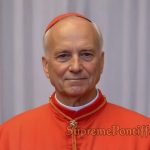
On May 8, 2025, during the second day of the papal conclave, the College of Cardinals made a momentous choice: Robert Francis Prevost, a Chicago-born prelate and longtime missionary in Peru, was elected as the 267th Pope of the Roman Catholic Church. Adopting the name Pope Leo XIV, he succeeds Pope Francis, who passed away on April 21, 2025. In this biography, we explore the life, background and career of the former prefect of the Dicastery for Bishops, delve into his Augustinian roots, and examine the significance of his election for Catholics around the world.
I. Early Like and Religious Formation
1. Childhood and Studies in Chicago
Robert Francis Prevost was born on September 14, 1955, in Chicago, Illinois, into a devout Catholic family. From a young age, he displayed an eagerness to serve and a natural inclination toward community life. After completing his early education in local Catholic schools, he pursued a Bachelor of Science in Mathematics from Villanova University in 1977 — an education that would later prove useful in administrative roles.
2. Entering the Augustinian Order
In 1977, Prevost entered the novitiate of the Order of Saint Augustine (OSA). He made his solemn vows in 1981, demonstrating a lifelong commitment to the Augustinian principles of community, prayer, and service. His path was shaped by the Augustinians’ emphasis on unity, humility, and a common life, ideals that he would later embody both in his missionary work and as a high-ranking Vatican official.
3. Advanced Theological and Canonical Studies
Keen to deepen his pastoral and academic formation, Prevost earned a Master of Divinity from the Catholic Theological Union in Chicago before traveling to Rome for further study. At the Pontifical College of St. Thomas Aquinas, he obtained both a licentiate and a doctorate in canon law. His doctoral thesis — “The role of the local prior in the Order of Saint Augustine” — underscored his dedication to effective leadership and governance grounded in the Augustinian tradition.
II. Missionary Labors in Peru
1. Early Assignments and Pastoral Outreach
Ordained to the priesthood in 1982, Robert Francis Prevost soon found his calling in missionary ministry. In 1985, he traveled to Peru, joining the Augustinian mission that primarily served the faithful in underprivileged regions. He initially took on roles such as chancellor of the Territorial Prélature of Chulucanas from 1985 to 1986, where he worked closely with local clergy to strengthen ecclesial structures.
2. Formation, Teaching, and Pastoral Work
After a brief sojourn back in the United States in 1987–1988, where he served as pastor for vocations and director of missions for the Augustinian Province of Chicago, he returned to Peru. Over the course of a decade in Trujillo, he headed the Augustinian seminary, taught canon law, and served as prefect of studies at the diocesan seminary. In parallel, he fulfilled multiple roles — parish pastor, diocesan official, judicial vicar — steadfastly focused on uplifting communities and forming strong local clergy.
III. Rise in Augustinian Leadership
1. Returning to Chicago and Becoming Provincial Prior
In 1999, Prevost returned to Chicago. He was elected provincial prior of the “Mother of Good Counsel” Province, overseeing his fellow Augustinian brothers’ spiritual and administrative well-being. A mere two and a half years later, his leadership qualities propelled him to a global stage.
2. Prior General of the Augustinians
Elected prior general of the Order of Saint Augustine, he then served two consecutive terms, from 2001 to 2013. Under his stewardship, the order’s worldwide footprint — encompassing nearly 2,500 priests and brothers in about 50 countries — continued to flourish. Dedicated to the Augustinian charism of community living and equality among members, Prevost guided the order in both spiritual depth and organizational stability.
IV. Episcopal Service in Peru
1. Appointment as Bishop of Chiclayo
A return to Peru in 2014 found him designated by Pope Francis as apostolic administrator of the Diocese of Chiclayo, where he would eventually be elevated to bishop in 2015. The move underscored his pastoral zeal and proven administrative talents. As Bishop of Chiclayo, he was deeply committed to social justice, serving the needy, and fostering solidarity among the faithful, all hallmarks of the mission focus that Pope Francis championed worldwide.
2. Leadership in the Peruvian Bishops’ Conference
From 2018 to 2023, Bishop Prevost endured the challenges of guiding the diocese during a time of social and economic change. Concurrently, he served as vice-president of the Peruvian Bishops’ Conference, helping shape the national Church’s pastoral strategies while promoting the Church’s crucial role in uplifting the marginalized.
3. Apostolic Administrator of Callao
Between 2020 and 2021, Bishop Prevost added another responsibility to his roster: apostolic administrator of the neighboring Diocese of Callao. Through hands-on governance, he ensured continued religious service to the faithful under difficult circumstances, all while maintaining his duties in Chiclayo.
V. Service in Rome: Prefect of the Dicastery for Bishops
1. Move to a High-Profile Vatican Role
In January 2023, Pope Francis appointed Bishop Prevost as prefect of the Dicastery for Bishops. This office is one of the most influential in the Catholic Church, charged with identifying, recommending, and overseeing the appointment of new bishops worldwide. Prevost’s open-hearted missionary experience, combined with his deep knowledge of canon law, earned him respect in Vatican circles.
2. Created Cardinal by Pope Francis
On September 30, 2023, he was elevated to the rank of Cardinal, reflecting the Holy Father’s trust in him. Despite this new status and influence, Cardinal Robert Francis Prevost remained distinguished by his characteristic discretion and humility. People close to him noted his ability to listen empathetically, coupled with a deep understanding of pastoral needs in diverse cultural settings.
3. Perspectives on Key Issues
Though soft-spoken, Cardinal Prevost emerged as a proponent of major themes that resonated with Pope Francis — environmental stewardship, outreach to the poor and migrants, and the idea of “meeting people where they are.” In an earlier interview, he stressed that “the bishop is not supposed to be a little prince sitting in his kingdom,” a statement encapsulating his vision of servant leadership.
VI. Election to the Papacy: MAY 8, 2025
1. Pre-Conclave Speculation
Following the passing of Pope Francis on April 21, 2025, speculation about possible candidates for the papacy ran high. While some observers considered the relatively recent cardinalate of Robert Francis Prevost a disadvantage, many cardinals found his universal perspective — shaped by years in Peru — quite compelling. Though there were lingering questions about his experience and the fact that he was American, those close to him pointed out his predominantly missionary and global outlook.
2. The Second Day of the Conclave
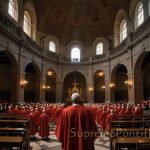
The papal conclave began on May 7, 2025, with no immediate consensus among the cardinal-electors. On the second day of deliberations, an unexpected momentum built behind Cardinal Prevost. A broad coalition — drawn from diverse ecclesial viewpoints — saw in him a pastoral heart, a capacity for constructive dialogue, and a readiness to continue Pope Francis’s focus on the poor, migrants, and environmental causes.
3. The Choice of the Name “Leo XIV”
When it became clear on May 8, 2025, that Robert Francis Prevost had secured the votes needed for election, he chose the name Pope Leo XIV. This name, seldom used in modern times, reflects his desire to evoke the spiritual vigor associated with earlier pontiffs named Leo, including Pope Leo the Great, who championed orthodoxy and pastoral care. Furthermore, his selection underscores his commitment to uniting strong tradition with renewed pastoral outreach.
VII. The Vision and Significance of Pope Leo XIV
1. Building on Pope Francis’s Legacy
From his earliest days as a parish priest in Peru, Pope Leo XIV (Robert Francis Prevost) shared many of Pope Francis’s priorities — especially in addressing poverty, evangelizing the peripheries, and protecting the environment. Famous for stating, “We do not rule but serve,” Leo XIV promises to deepen these commitments, striving to bring the Catholic Church closer to those on the margins.
2. Emphasis on Augustinian Spirituality
A member of the Augustinian family, Pope Leo XIV carries forward the hallmark emphasis on community life and equality among believers. His leadership style encourages synodality, inviting every rank of the Church — from laypeople to bishops — to engage in open and prayerful dialogue. Certainty, faith, and humility are at the core of this distinctly Augustinian approach, animating a new era of missionary zeal for the universal Church.
3. Global Engagement and Outreach
Pope Leo XIV is well acquainted with global realities, having lived both in the United States and in Peru. He has repeatedly advocated for collaboration between continents, forging strong ties with dioceses around the world. On contentious social matters, while his tone remains pastoral, he is also known for guiding the Church to stand firm on crucial moral teachings.
4. Administrative Strength and Canon Law Expertise
His doctorate in canon law adds weight to his capacity to streamline the administrative processes of Vatican dicasteries and diocesan structures. Observers believe that Pope Leo XIV’s background will enable him to maintain a delicate balance between the Church’s pastoral mission and its need for solid, ethical governance.
Conclusion
The election of Robert Francis Prevost as Pope Leo XIV represents a historic convergence of missionary experience, Augustinian spirituality, and Vatican-level administration. This Chicago-born churchman who spent decades dedicated to the people of Peru now sits on the Chair of Saint Peter, carrying forward the evangelical zeal of Pope Francis. Strongly grounded in a community-focused vision, Pope Leo XIV enters his pontificate amid high expectations. Catholics worldwide look to him for continuity in championing the poor, addressing ecological concerns, fostering unity, and upholding a profound respect for tradition infused with pastoral sensitivity.
From a young man who vowed a life of service in the Augustinian Order, to a bishop beloved in Peru, to a cardinal entrusted with the appointment of bishops, Pope Leo XIV’s journey embodies fidelity, humility, and an expansive love for humanity. His ascent to the papacy is a testament to the timeless Christian principle: “Whoever wants to be first must be the servant of all.”

Leave a Reply