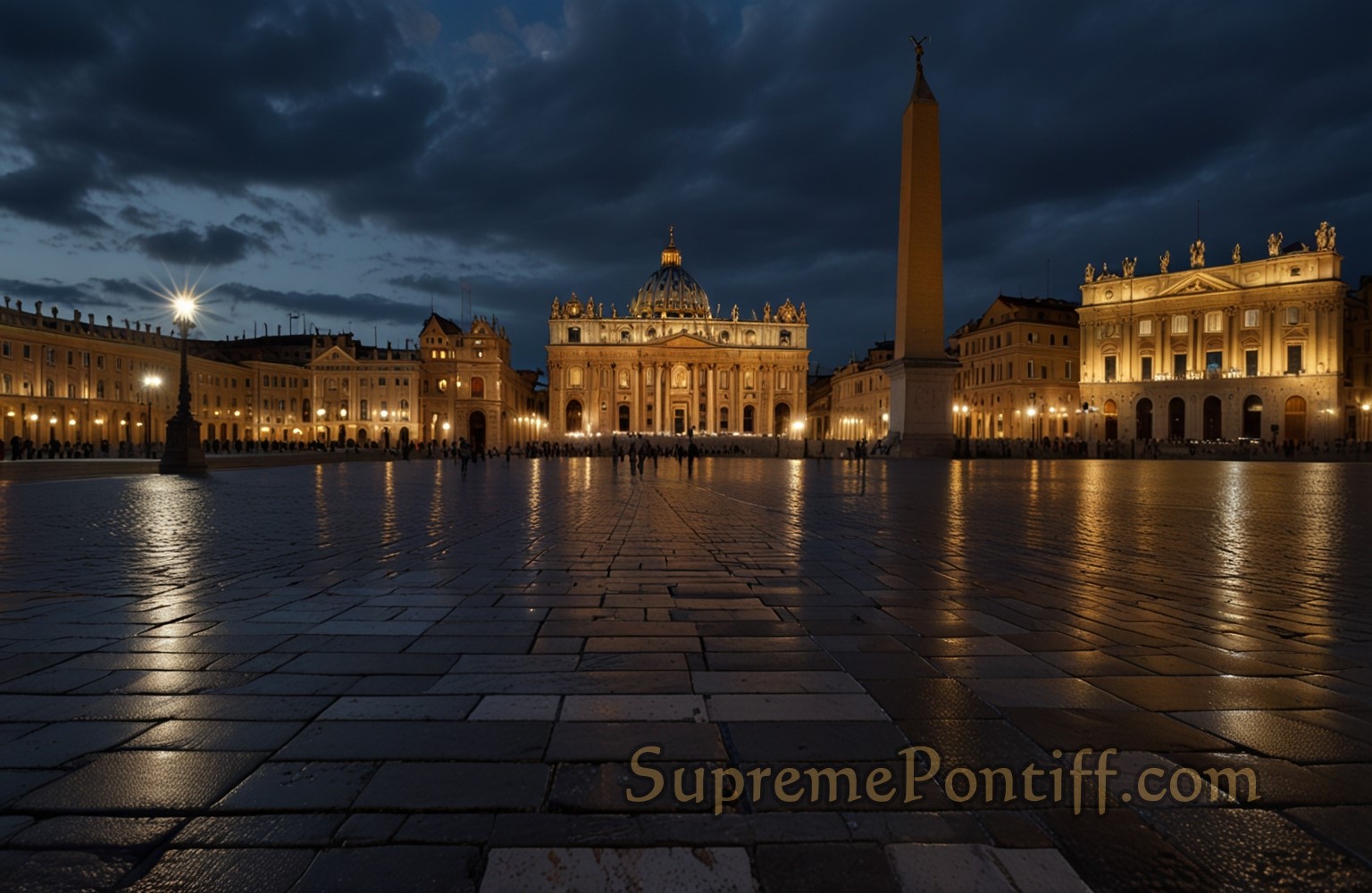
St. Peter’s Square in the Vatican stands as one of the world’s most revered centers of Christian faith, drawing countless believers and visitors eager to encounter the spiritual grandeur and sacred heritage of Catholicism. Rich in history, infused with divine significance, and crowned by some of the greatest artistic achievements in Western civilization, this majestic square pays tribute to the Christian message of holiness, unity, and everlasting hope. Below is a comprehensive exploration of St. Peter’s Square, its remarkable design, celebratory role in Catholic worship, and timeless importance to the Christian world.
1. Overview and Location
St. Peter’s Square, known in Italian as Piazza San Pietro, lies directly in front of St. Peter’s Basilica in Vatican City, an independent city-state enclaved within Rome. As the spiritual heart of Catholic Christianity, the Vatican is home to the Pope, the successor of Saint Peter, whose tomb is believed to rest beneath the basilica. The square’s immense open space allows the faithful to gather en masse, especially on significant liturgical occasions such as papal audiences, Easter celebrations or the elections of a new Pope, all in the shadow of Christ’s vicars and in the presence of God’s saving grace.
2. Historical Background
The history of St. Peter’s Square is deeply rooted in the growth of the early Church. Legend and tradition hold that the apostle Peter was martyred and buried nearby, inspiring early Christian pilgrims to visit the sacred ground. Over the centuries, church authorities and devoted believers beautified the area to honor St. Peter. The majesty we witness today is largely credited to Gian Lorenzo Bernini, the famed 17th-century Baroque architect and sculptor. Commissioned by Pope Alexander VII, Bernini designed the iconic colonnades and oversaw construction, which was completed around 1667. His vision served one ultimate purpose: to emphasize the majesty of God and invite pilgrims into the embrace of the universal Church.
3. Architecture by Bernini
Bernini’s architectural plan for St. Peter’s Square reveals a theologically inspired concept. The grand colonnades, composed of four rows of Doric columns, curve outwards in a welcoming gesture often interpreted as the “arms of Mother Church” reaching out to embrace all humanity. This design underlines the Catholic Church’s mission of evangelization — inviting people of all nations to encounter Christ and walk in fellowship with believers across the globe. Atop these colonnades stand 140 saints carved in stone, each representing a life dedicated to God, further highlighting the Catholic conviction that holiness is attainable for all who follow Christ in faith.
4. Central Obelisk and Fountains
At the very center of St. Peter’s Square stands an ancient Egyptian obelisk, brought to Rome by Emperor Caligula in the first century. Pope Sixtus V later had it moved to its current position in 1586. Not just an architectural marvel, the obelisk has a cross placed at its summit, symbolizing Christianity’s triumph over paganism and transforming it into a beacon of divine light in Christendom. Flanking the obelisk are two elegant Baroque fountains—one by Carlo Maderno and the other by Bernini — whose harmonious waters lend palpable serenity to all who visit.
5. Significance to the Christian Faithful
For Catholics worldwide, St. Peter’s Square brims with poignant spiritual meaning. It is where the Successor of St. Peter solemnly imparts blessings — such as the Urbi et Orbi (“to the city and to the world”) — on major Christian feasts like Christmas and Easter. During papal audiences, the faithful congregate joyfully, praying for unity in Christ and bearing witness to the living leadership of the Pope. St. Peter’s Square is also a place of pilgrimage, reflective prayer, and devotion, reminding every visitor of the steadfast roots of Christian teaching anchored in Apostolic tradition.
6. Religious Ceremonies and Events
- Papal Audiences: Formal gatherings where the Pope presents catechesis, offers blessings, and greets pilgrims from near and far. These weekly or bi-weekly events foster fellowship and a sense of belonging for Catholics.
- Canonization Masses: Celebrations in which individuals recognized by the Church for their heroic virtue are declared saints. This underscores the Church’s enduring connection to the holy men and women who exemplify Christ’s love.
- Eucharistic Celebrations: Major liturgies, such as Easter Sunday and Christmas Midnight Mass, are sometimes held in St. Peter’s Square when the crowds overflow the basilica. Faithful from every corner of the globe unite to celebrate the mysteries of Christ’s incarnation, passion, and resurrection.
7. Artistic and Cultural Legacy
Beyond its undeniable significance to the Catholic Church, St. Peter’s Square is admired for its artistic and architectural achievements. Its harmonious proportions, the interplay of light and shadow on the colonnades, and the timeless sculptures all speak to the glory of God broadcast through human creativity. Scholars of art history recognize it as a masterpiece of Baroque design, bearing the hallmark of Bernini’s genius and reflecting the deeper Christian narrative of God’s grace revealed through beauty.
8. Visiting St. Peter’s Square Today
In modern times, St. Peter’s Square continues to attract not just the devout, but also tourists seeking an encounter with Christian heritage. Entry is free, and visitors often marvel at the colonnades, the fountains, and the towering façade of St. Peter’s Basilica. Even on ordinary days, there is a sense of reverence that gently underscores the divine presence in this holy space. Pilgrims frequently take time for silent prayer, attend Mass inside the basilica, or reflect on the rich spiritual history that has shaped Catholicism and continues to inspire souls worldwide.
9. Practical Information for Pilgrims
- Papal Audience Tickets: These are free of charge but must be requested in advance from the Prefecture of the Papal Household or obtained through designated trustworthy church institutions.
- Security Checks: As one of Christendom’s most significant sites, security is a priority. Metal detectors and bag checks help safeguard this holy place for all.
- Dress Code: Out of respect for Christian tradition, modest attire is advised. Shoulders and knees should be covered to maintain the dignity of the sacred environment.
Conclusion
St. Peter’s Square in the Vatican is both a majestic tribute to the glory of God and a dynamic gathering place for adherents of the Christian faith. Centuries of Catholic tradition, superb artistry, and deeply rooted spirituality converge in this sacred location, offering a profound encounter with the living heritage of Saint Peter and his successors. Whether one seeks prayerful introspection, a glimpse of the Pope’s ministry, or simply the awe of witnessing some of the most important Christian landmarks in the world, St. Peter’s Square remains a timeless beacon. In its wide embrace, we see the heart of Catholicism extending its invitation to humanity: to come, see, and allow the Christian faith to illumine every soul with hope and divine grace.


Leave a Reply