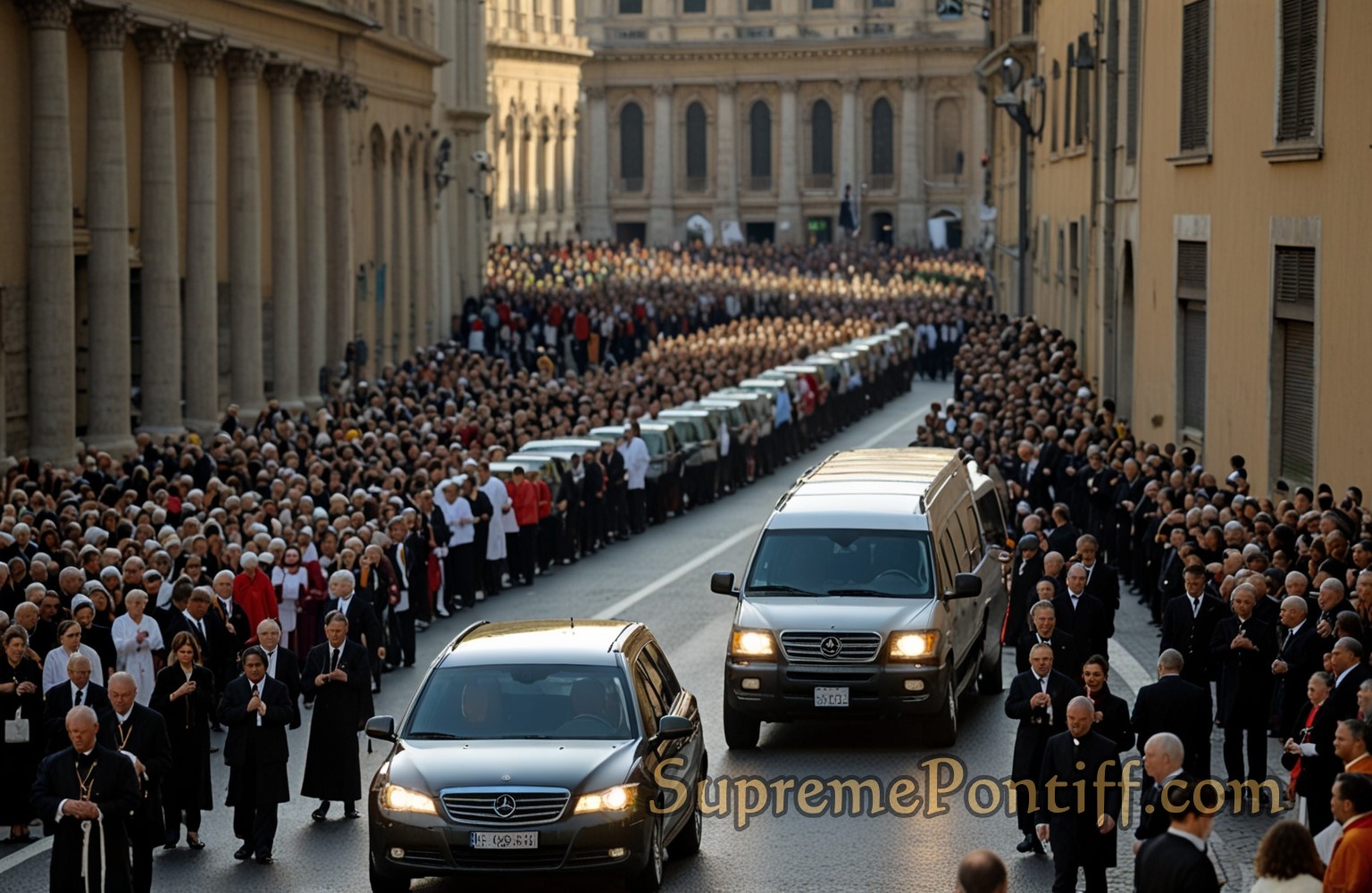
On April 21, 2025, the world received the somber news of Pope Francis’ passing. Almost immediately, questions flooded in regarding where the funeral of Pope Francis would be held and how the global Catholic community would pay its last respects. The Vatican later confirmed that the late pontiff’s funeral will mostly take place outdoors in St. Peter’s Square, continuing a longstanding tradition of opening papal services to the wider public. As Rome basks in unseasonably bright sunshine, the city prepares to welcome thousands of mourners, dignitaries, and pilgrims, all expected to gather under the blue Roman skies to celebrate the life and legacy of one of the most influential religious leaders in recent times.
Funeral Liturgy in St. Peter’s Square
Despite historic precedents of holding grand ceremonies both indoors and outdoors, it is now customary for the funeral of a pope to begin in the open air at St. Peter’s Square, providing ample space for the faithful. In previous eras, large crowds squeezed into or around the basilica, with lines of mourners wanting to pay final tribute. This year, attendees will be able to stand beneath the grand columns of the colonnades, with the Square’s beautiful fountains on either side, creating an atmosphere of solemnity and unity.
The funeral liturgy is set for 10:00 a.m. on April 26, 2025, and will be presided over by Cardinal Giovanni Battista Re, the dean of the College of Cardinals. Known for his deep pastoral experience and years of service at the Holy See, Cardinal Re will lead the Mass of Requiem — often referred to as the highest form of Catholic funeral rite. This ceremony symbolizes the Church’s collective prayer for the repose of the pope’s soul and marks the communal aspect of papal funerals, in which cardinals from around the globe unite to honor their late spiritual shepherd.
Adaptations and Simplifications to Papal Traditions
While papal funerals have long been recognized for their detailed rubrics and ceremonial flourish, Pope Francis had expressed a wish to simplify certain traditions. He approved modifications to the Ordo Exsequiarum Romani Pontificis, the formal handbook detailing the rites for a pope’s funeral, aiming to make the ceremony more austere and reflective of his own spiritual outlook. Notable changes include the use of a simple wooden coffin lined with zinc. In a break with centuries-old practices, Francis’ body was not placed on an elevated platform (Catafalque) for lengthy public viewing, a gesture signifying humility and solidarity with ordinary believers.
The Rite of Ascertainment of Death, performed under the guidance of the Camerlengo, Cardinal Kevin Farrell, took place shortly after the pontiff’s passing. This step officially verified the pope’s death in accordance with longstanding Church protocol. By giving the Church a precise framework for transition, these age-old rites ensure continuity of leadership and the commencement of an official mourning period.
Bringing the Coffin into St. Peter’s Basilica
Although the main liturgical events will be held outside under the Roman sun, protocol dictates that the coffin be brought back into St. Peter’s Basilica after the Eucharist, final commendation, and valediction. Within the basilica’s hallowed walls, the faithful and Church leaders will have the opportunity for a more intimate farewell before the pontiff’s remains are prepared for interment.
A Historic Burial at the Basilica of St. Mary Major
In keeping with his personal devotion to the Blessed Virgin Mary, Pope Francis left explicit directives specifying his final resting place: the Basilica of St. Mary Major in Rome, making him the first pope since Leo XIII in 1903 to be interred outside the Vatican. According to official reports, Francis will be laid to rest “in the burial niche in the side aisle between the Pauline Chapel (Chapel of the Salus Populi Romani) and the Sforza Chapel of the Basilica.”
This choice underscores Francis’ lifelong emphasis on humility and simplicity, as well as his special reverence for Marian devotion. The Basilica of St. Mary Major stands among Rome’s four major papal basilicas and houses the renowned icon of the Salus Populi Romani, a symbol of deep cultural and religious significance.
The Nine-Day Mourning Period (Novemdiales)
Immediately following the funeral Mass, the Church enters into novemdiales — a nine-day period of mourning and prayers. During these days, masses dedicated to the late pope will be celebrated, with cardinals representing various regions of the world. This interlude also serves a practical purpose for the College of Cardinals, which will later convene to elect a new pope once the official mourning practices have concluded.
Global Dignitaries and Pilgrims Converge on Rome
As with previous papal funerals, international dignitaries are expected to attend. Heads of state, religious leaders from different faith traditions, and countless faithful from across the globe will join the College of Cardinals, members of the Roman Curia, and the local populace. Traffic around Vatican City will be heavily regulated to accommodate the crowds, with security checks in place to ensure everyone’s safety and the dignity of the ceremonies. The city of Rome, a historical hub of Christian pilgrimage, will once again become the epicenter of global focus — yet this time with a subdued tone reflective of a community in mourning.
A Legacy That Lives On
“Where is the Funeral of Pope Francis?” has become a question echoing worldwide. The simple yet profound answer is: at the heart of the Catholic Church, in St. Peter’s Square, and within the Basilica of St. Mary Major — places that not only define centuries of faith and tradition but also resonate with the unique spirituality and humble leadership that Pope Francis exemplified throughout his pontificate. Although the universal Church now mourns, it also reflects on how Francis’ teachings on mercy, compassion, and inclusivity will continue to shape the Catholic community for generations to come.
As Rome’s bright skies seem to extend a gentle welcome to the pope’s final earthly journey, the faithful gather to celebrate his life in a manner that honors his core message: a simpler, more accessible Church focused on service, solidarity, and the Gospel. In that sense, the location of Pope Francis’ funeral is more than just a physical space; it symbolizes a universal spirit of unity and hope that this pontiff tirelessly sought to cultivate.


Leave a Reply