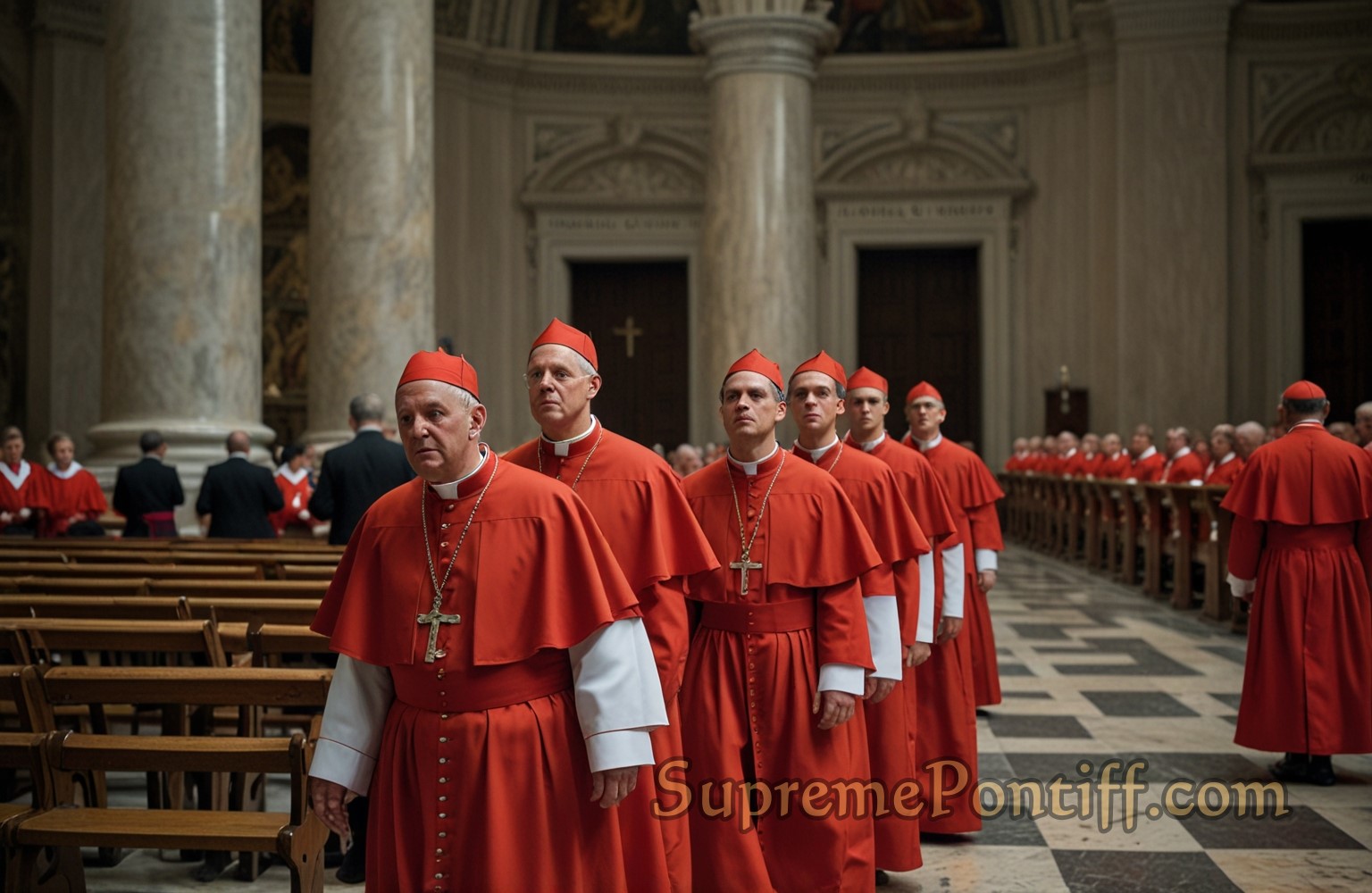
On May 7, 2025, 133 cardinal electors will enter the hallowed Sistine Chapel to perform one of the most solemn and significant acts in the life of the Catholic Church: choosing the next Roman Pontiff. This conclave, convened following the passing of Pope Francis on April 21 and his funeral on April 26, stands as a milestone in Church history. Of the 133 cardinals vested with the right to vote, fully 108 were created by Pope Francis. This influx of Francis-appointed princes of the Church reflects a dynamic shift in the global representation of the College of Cardinals — a testament to how the Church’s universal calling continues to unfold across traditional strongholds and emerging Catholic communities alike.
Elevating Distant Corners of the Church
One of Pope Francis’s most defining legacies is his decision to embrace the Church’s global nature by elevating bishops in regions previously overlooked. The late pontiff deliberately steered away from naming new cardinals in the historically “automatic” strongholds — archdioceses such as Sydney, Vienna, Genoa, Paris, Milan, Palermo, Armagh, and Krakow. Instead, he offered the red hat to bishops in far-reaching corners of the world, sometimes in nations that had never before been represented in the College of Cardinals.
This bold approach breathed fresh life into the College. The new papal conclave of 2025 will, for the first time, see Haitian, Mongolian, Myanmarese, Malaysian, Tongan, Cape Verdean, East Timorese, Swedish, Iranian, Luxembourgish, Singaporean, South Sudanese, Ghanaian, Rwandan, Salvadoran, Bangladeshi, Central African, Papua New Guinean, and Serbian cardinals enter the Sistine Chapel to elect the Supreme Pontiff. This extraordinary diversity testifies both to the enduring mission of the Church to evangelize all nations and to Pope Francis’s conviction that the Church must listen to voices from the “peripheries.”
Pope Francis’s Cardinal Appointments and the 120-Elector Limit
Over the course of his papacy, Francis consistently named new cardinals at a steady pace. In 2017, he surpassed the limit of 120 set by Pope Paul VI (and reaffirmed by Pope St. John Paul II) when he created five new cardinals, bringing the total to 121. By the time of Pope Francis’s death, the number of electors eligible for this conclave reached 135 (two will not participate for reasons of ill health), with 108 of them chosen during his pontificate.
This development underscores the spiritual vision Pope Francis had for the Church: to broaden the global perspective among the highest ranks of the clergy and to ensure that voices from every continent — no matter how small or remote — are heard. Underpinning this move is the principle put forth in the apostolic constitution Universi Dominici Gregis, stating that any cardinal under the age of 80 who has been “created and published before the College of Cardinals” holds the right to vote in a papal election.
Europe’s Reduced Share and the Universal Mission
In notable contrast to the 2013 conclave that elected Pope Francis, fewer than half of the current electors (52 in total) hail from Europe. Of these, 17 are Italians — significantly down from the 28 Italians who voted in 2013. Italy’s once-dominant role in papal elections has now been redistributed, part of the broader endeavor to represent the Church’s faithful around the world more proportionately.
Other European nations continue to have a presence in the conclave, though with smaller delegations than in previous decades. France will be represented by five disenfranchised sees, Spain and Portugal by four each, while Poland also has four, and Germany and the United Kingdom will be sending three each. Some countries, like Luxembourg and Sweden, have only one cardinal elector — yet it marks the first time these nations will be represented in the Sistine Chapel.
Rising Influences: Africa, Asia, and Oceania
The African Church has experienced a remarkable expansion in its cardinal electors. This year’s conclave includes 18 voting members from Africa, up from 11 in 2013. Their origins span the continent, from the Ivory Coast to South Sudan, and reflect the steady growth of Christianity across Africa.
Asia, too, has seen a notable rise in its representation, doubling its voting cardinals from 10 in 2013 to 20 for the 2025 conclave. Cardinals from India, the Philippines, Japan, China, East Timor, Indonesia, South Korea, Malaysia, Mongolia, Myanmar, Pakistan, Singapore, Sri Lanka, and Thailand will make their voices heard. Importantly, the number of Eastern Catholic Churches represented by cardinal electors has also grown under Pope Francis’s leadership, reflecting the pontiff’s desire for a united yet polyphonic “choir” within the universal Church.
From Oceania — a vast region often overlooked due to distance — four cardinals are eligible to vote: one each from Australia, New Zealand, Papua New Guinea, and Tonga. The mere presence of these Cardinals, many from dioceses that had never before worn the red hat, symbolizes the Church’s renewed commitment to hearing the voices of all its faithful.
The Americas: Steady but Transformed
In the Americas, the United States will be represented by 10 voting cardinals, Canada by four, and Mexico by two. Central America has four voting cardinals, one each from Cuba, Nicaragua, Guatemala, and Haiti, illustrating an increase in Caribbean and Central American representation. South America will be led by Brazil with seven elder statesmen, followed by Argentina with four — double its total from 2013 — and one each from Chile, Colombia, Ecuador, Paraguay, Peru, and Uruguay. Collectively, the Western Hemisphere remains a core pillar of the Church, though now balanced by the increasing influence of the Global South.
Faithful Unity in Diversity
For Catholics worldwide, these developments inspire hope and invigorate the faithful, as they confirm the universal nature of the Church and underscore that the Holy Spirit continues to guide believers in every corner of the globe. Pope Francis’s humble yet far-reaching vision has ensured that the Church hierarchy no longer relies solely on traditional centers of influence. While Europe’s contribution remains strong and historically rich, the growth in cardinals across Africa, Asia, Oceania, and the Americas draws attention to God’s active presence in these regions.
On May 7, 2025, as the College of Cardinals gathers beneath Michelangelo’s iconic frescoes, each voter will have been chosen through the prayerful discernment of the late Holy Father or his predecessors. At this monumental moment in the life of the Church, the voices of 133 men — 108 of whom were elevated by Pope Francis — will converge to elect the next shepherd of more than a billion Catholics. The Church now reflects, more than ever, a global tapestry of devout, passionate, and diverse believers committed to spreading the Gospel throughout the world.
A Universal Call for the New Age
The 2025 papal conclave, for all its unprecedented diversity, remains steadfastly rooted in its sacred mission: to ensure the continuity of leadership and to steer the barque of Peter with wisdom and faith. It is this calling that energizes the new cardinal electors, driven by the Holy Spirit and emboldened by Pope Francis’s example of humble outreach. Whatever the outcome on May 7, the direction is clear: to keep building a Church that shines forth as a beacon of Christ’s love, extends mercy to the world’s margins, and gathers together believers of every language, race, and culture in one holy family, united by faith in the Risen Lord.

Leave a Reply