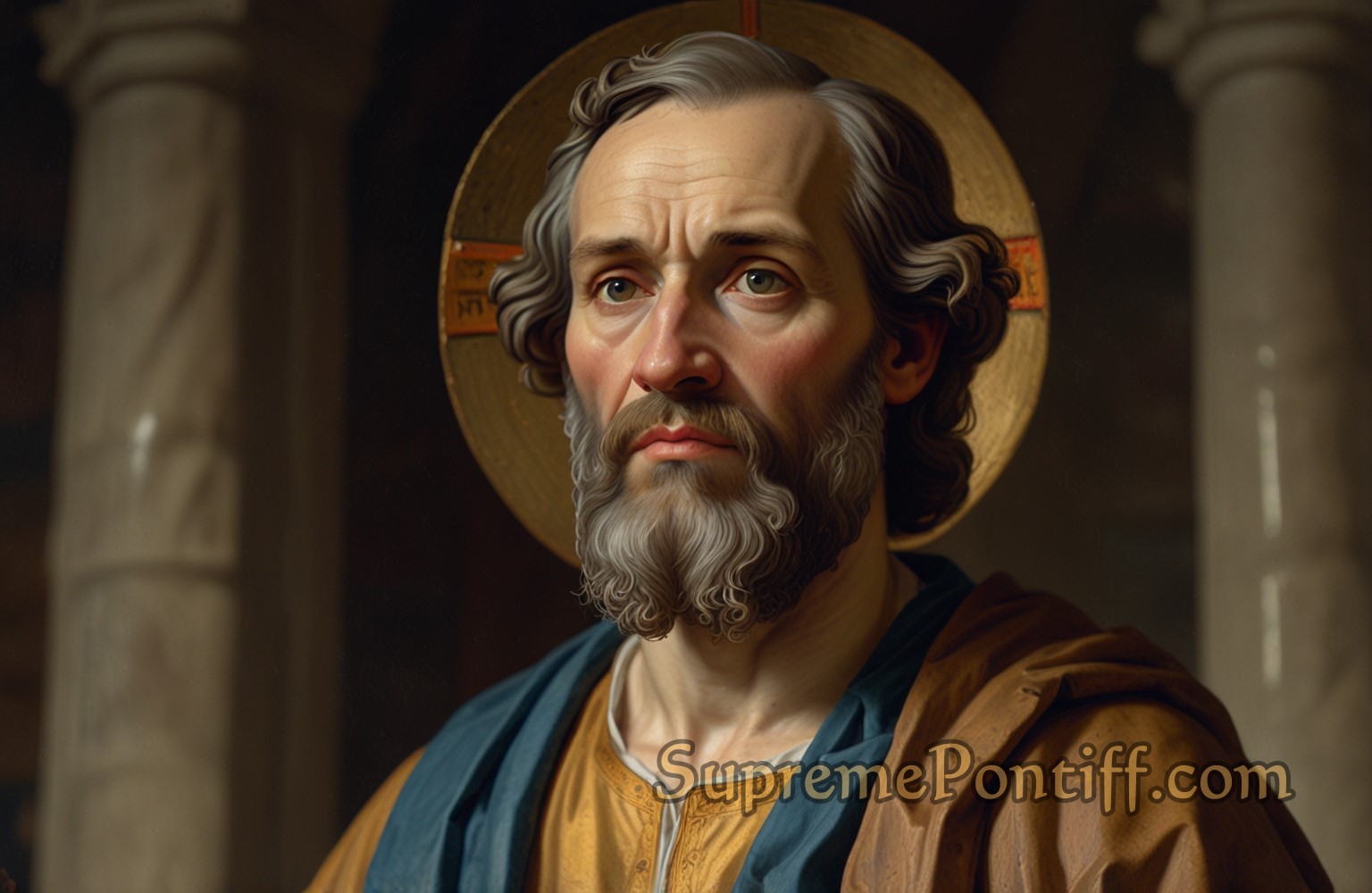
Saint Paul the Apostle, often referred to simply as Paul the Apostle or the Apostle Paul, stands as one of the most influential figures in the history of the Christian Church. As the “Apostle to the Gentiles,” Paul’s life, missionary work, and writings played a pivotal role in shaping Christian doctrine, worship, and global outreach. His dynamic transformation — from a fierce persecutor of Christians to an ardent follower of Jesus Christ — provides all believers with a powerful testimony of God’s grace and the transformative power of faith.
1. Early Life and Background
Born as Saul of Tarsus at the start of the first century AD, Saint Paul was both a Jew and a Roman citizen — an advantageous dual status that later facilitated his missionary travels. Raised by devout Jewish parents in Tarsus (modern-day Turkey), Paul was well-versed in the Law of Moses and the traditions of the Pharisees. His intense dedication to strict religious observance and his deep roots in Judaism formed a foundation that God would later use powerfully.
Jewish Heritage and Education:
- Paul’s upbringing in a cosmopolitan city like Tarsus exposed him to various cultures.
- He studied under Gamaliel, a respected Pharisaic leader in Jerusalem (Acts 22:3).
- His early zeal led him to become a staunch defender of traditional Jewish beliefs.
2. Paul’s Conversion on the Road to Damascus
Before becoming “Saint Paul the Apostle,” he was Saul, a zealous persecutor of the early followers of Jesus. His goal was to eradicate the nascent Christian movement, which he viewed as a dangerous sect. Everything changed, however, on the road to Damascus.
The Pivotal Moment:
- In Acts 9:3-6 (KJV), Scripture records: “And as he journeyed, he came near Damascus: and suddenly there shined round about him a light from heaven… And he fell to the earth, and heard a voice saying unto him, Saul, Saul, why persecutest thou me?”
- Saul was temporarily blinded by this divine encounter with the risen Christ. Three days later, following the Lord’s instruction, Ananias laid hands on Saul so that he might regain his sight and be filled with the Holy Spirit (Acts 9:17).
Why This Matters:
- Paul’s experience demonstrates that no one is beyond the reach of God’s mercy.
- His instantaneous change of heart stands as an enduring testament to Jesus’ saving power.
3. The Call to Apostleship
Following his conversion, Paul spent time in Damascus and later in Arabia, reflecting on his call and deepening his understanding of the gospel. He then returned to preaching Christ openly. Paul did not consider his apostleship to be of human origin but believed firmly that Jesus Himself had called and appointed him “to preach among the Gentiles” (Galatians 1:15-16).
Apostolic Authority:
- Unlike the original Twelve Apostles who walked with Jesus, Paul’s apostolic commission came through a personal revelation of the risen Christ.
- This unique calling validated his authority in teaching believers far and wide, guiding them in faith and practice.
4. Missionary Journeys and Evangelistic Work
Embarking on extensive missionary journeys throughout the Mediterranean, Paul proclaimed the Good News of Jesus Christ in Jewish synagogues, public forums, and private homes:
First Missionary Journey (c. AD 46–48):
- Accompanied by Barnabas, Paul traveled through Cyprus and parts of modern-day Turkey.
- They established local Christian communities, teaching both Jews and Gentiles.
Second Missionary Journey (c. AD 49–52):
- Paul, now with Silas and later Timothy, ventured into Greece, where he preached in Philippi, Thessalonica, Berea, Athens, and Corinth.
- In Athens, Paul famously addressed the philosophers at the Areopagus (Acts 17).
Third Missionary Journey (c. AD 53–57):
- Paul revisited earlier churches to strengthen and instruct believers.
- He spent significant time in Ephesus, forming a strong local church community.
These bold missionary endeavors led to spiritual revival, the establishment of numerous churches, and the spread of Christianity across the Roman Empire. Paul’s willingness to endure hardships — shipwrecks, beatings, and imprisonments — testified to his unwavering commitment to the gospel.
5. Writings and Epistles in the New Testament
A crucial aspect of Saint Paul the Apostle’s legacy is the collection of epistles (letters) he penned to the young churches and to fellow believers. These writings form a significant portion of the New Testament:
Romans, Galatians, and Corinthians:
- These letters offer profound theological insights into salvation by faith, the role of the law, Christian ethics, and the work of the Holy Spirit.
- “Therefore being justified by faith, we have peace with God through our Lord Jesus Christ…” (Romans 5:1).
Pastoral Epistles (1 & 2 Timothy, Titus):
- Paul encourages and advises young leaders on church governance, sound doctrine, and righteous living.
- These letters highlight Paul’s spiritual fatherhood and concern for the Church’s future.
Prison Epistles (Ephesians, Philippians, Colossians, and Philemon):
- Written while Paul was under house arrest, these letters reveal his pastoral heart and Christ-centered theology, emphasizing unity and humility within the body of Christ.
From doctrinal clarity to moral exhortation, Paul’s letters remain central to Christian theology and practice today.
6. Theology and Importance to the Christian Church
Saint Paul the Apostle taught that salvation comes through faith in Jesus Christ alone and is available to both Jews and Gentiles. He emphasized:
The universality of Christianity:
- Paul made clear that God’s grace is not restricted by ethnicity or tradition.
Justification by Faith:
- A hallmark of his teachings, Paul repeatedly declared that believers are justified — accounted righteous — by faith in Christ’s atoning sacrifice.
Christian Unity in the Body of Christ:
- Whether Jew or Gentile, slave or free, male or female, all are one in Christ (Galatians 3:28).
This robust theology undergirded the early Church and continues to shape Christian discipleship to this day. Paul’s letters, after almost two millennia, still guide and inspire believers to live sanctified lives, marked by love, service, and devotion to God.
7. Paul’s Imprisonments and Martyrdom
Paul’s unwavering commitment to the gospel eventually led to multiple imprisonments. He used these trials for further witness, writing letters and exhorting believers even as he faced adversity. According to tradition, Paul was martyred in Rome around AD 64–67 during the reign of Emperor Nero.
How Paul Died:
- Historical accounts suggest that, as a Roman citizen, Paul was likely beheaded rather than crucified.
- Although there is no certain date recorded in Scripture, Christian tradition consistently holds that he gave his life courageously for Christ.
Legacy of Martyrdom:
- By his willing sacrifice, Paul exemplified Jesus’ words: “For to me to live is Christ, and to die is gain” (Philippians 1:21).
- His martyrdom sealed his testimony and continues to inspire believers to remain steadfast in faith, no matter the trials.
8. Lasting Influence and Relevance
Saint Paul the Apostle’s significance to Christianity cannot be overstated. His missionary zeal spread the faith throughout the Gentile world, his pastoral concern built up churches, and his epistles laid profound theological foundations. Modern believers still rely on Paul’s inspired writings for spiritual guidance, doctrinal clarity, and a deeper understanding of the life-changing power of Jesus Christ.
Spiritual Formation:
- Many Christian devotional practices and theological constructs stem from Paul’s instructions on prayer, worship, and sanctification.
- His letters continue to be a primary resource for Bible study groups, seminaries, and individual believers worldwide.
Role Model of Transformation:
- Paul encourages all who seek spiritual renewal by demonstrating that God can redeem and transform even the hardest heart.
- His example motivates Christians to pray and labor for the salvation of others, trusting in God’s boundless grace.
Conclusion
Saint Paul the Apostle stands as a towering figure of faith, zeal, and intellectual might within Christian history. Once a persecutor, he became an enduring symbol of God’s ability to transform lives. Through harrowing journeys, heartfelt epistles, and fearless preaching, Paul expanded the reach of the Christian Church while articulating key doctrines that still resonate today. His story continues to inspire believers to follow Christ wholeheartedly and to share the gospel “to the end of the earth” (Acts 1:8).
The life of Saint Paul powerfully affirms that in Christ, there is hope, redemption, and a call to serve. His legacy invites all Christians to be steadfast in their own faith, standing boldly for the truth of the gospel and proclaiming it to a world in need.



Leave a Reply