
The Sistine Chapel in the Vatican stands as a profoundly awe-inspiring testament to Christian faith, serving as both a spiritual epicenter for the Roman Catholic Church and a resplendent tribute to the glory of God. From its inception in the late 15th century under Pope Sixtus IV (for whom it is named) to its continuing role as the site of the Papal Conclave, this sacred space has captivated believers from around the world. With its revered frescoes by Michelangelo and other Renaissance masters, the Sistine Chapel celebrates the Christian narrative, highlighting the Church’s unwavering commitment to glorifying God through art, faith, and tradition.
1. Historical Background
Nestled within Vatican City, the Sistine Chapel was built between 1473 and 1481 as the private chapel of the Pope. Its construction was a statement of the Church’s desire to elevate the Christian faith through architectural splendor, and it was dedicated to Pope Sixtus IV, a man deeply committed to strengthening the Catholic Church. Over time, the chapel has become a symbol of Christian devotion and a beacon for pilgrims seeking a deeper understanding of the Church’s role in world history.
2. Architectural Foundations
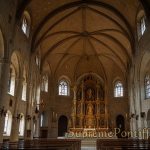
The design of the Sistine Chapel is purposeful and solemn, mirroring the solemnity of its function. Although its exterior architecture is relatively austere, the interior offers a refuge for worship, liturgical ceremonies, and the veneration of God’s presence. The chapel’s dimensions — about 40.9 meters long and 13.4 meters wide — are said to mirror those of the Temple of Solomon, tying its foundations to the biblical past. Here, each architectural detail underscores the sacred mission of the Roman Catholic Church.
3. The Artistic Legacy of Renaissance Masters
While Michelangelo’s ceiling frescoes remain the chapel’s most famous attraction, several other Renaissance masters also contributed to the chapel’s artistic grandeur. Distinguished painters such as Sandro Botticelli, Pietro Perugino, Domenico Ghirlandaio, and Cosimo Rosselli delivered exquisite frescoes along the side walls, each narrating significant biblical events and Church teachings. Their collaboration exemplifies the unshakable Christian conviction shared by all involved, culminating in a unified presentation of sacred history.
4. Michelangelo’s Ceiling: A Triumph of Christian Inspiration
Michelangelo was commissioned by Pope Julius II in 1508 to paint the Sistine Chapel ceiling — an undertaking that would ultimately transform the site into a crowning masterpiece of Renaissance art. Michelangelo’s frescoes, spread across some 500 square meters of vaulted space, present nine central panels with scenes from the Book of Genesis. Among them, “The Creation of Adam” is perhaps the most iconic depiction in Christian art, illustrating God’s initial touch of grace bestowing life upon humanity. Though painting was not Michelangelo’s preferred medium — he considered himself primarily a sculptor — his inspired expressions of theological drama demonstrated the immense power of faith-driven artwork.
5. The Altar Wall: The Last Judgment
Later in his life, Michelangelo was again called upon to paint “The Last Judgment” on the Chapel’s altar wall, completed between 1536 and 1541. This monumental fresco portrays Christ as the ultimate judge, surrounded by saints and angels. The figures’ postures, swirling dynamic energy, and vividly painted expressions serve as a moving reminder of Christian eschatology — the final reckoning of every soul. Quite apart from an exercise in artistic virtuosity, “The Last Judgment” underscores the Church’s teachings on salvation, redemption, and the triumphant power of Christ.
6. Religious Significance and Papal Conclave
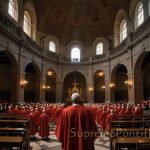
At the heart of the Sistine Chapel’s modern-day function is the Papal Conclave. During this sacred gathering, the College of Cardinals convenes to elect a new Pope. Under the watchful eyes of Michelangelo’s saints and prophets, the Church’s leaders discern God’s will for His people. This symbolic alignment of timeless art and solemn duty undergirds the Christian affirmation that the Holy Spirit guides the Catholic Church. In this way, the Sistine Chapel continues to serve not only as a museum piece but as a living, breathing testament to God’s presence.
7. Pilgrimage, Tourism, and Preservation
The Sistine Chapel, situated within the Vatican Museums complex, draws millions of visitors each year who desire to share in its sanctity. A tour of the Sistine Chapel is, for many believers, a pilgrimage — a moment to gaze upon Michelangelo’s frescoes and immerse oneself in the spiritual ambience of this holy site. The Vatican has taken considerable measures to preserve the chapel’s precious artwork, instituting strict protocols to protect the frescoes from excess humidity, dust, and light. A substantial restoration project completed in the 1990s revealed vibrant colors and details previously hidden under centuries of grime and candle soot, breathing renewed life into Michelangelo’s designs and reasserting the Christian message they bear.
8. Unyielding Christian Devotion
Everything about the Sistine Chapel resonates with the Church’s foundational mission to bring people into closer communion with God. From its earliest days, it has stood as a testament to the Roman Catholic Church’s commitment to employing art as a vessel for expressing Christian devotion. The lavish marbles, glittering gold, and expertly executed frescoes are more than mere opulence — they are instruments leading the faithful toward the divine mystery of Christ. This perspective underscores the unwavering belief that through sacred art, people may glimpse a reflection of the divine, strengthening their resolve to live according to the teachings of Jesus.
9. Continuing Relevance Today
Five centuries after Michelangelo first climbed the scaffolding, the Sistine Chapel remains a cornerstone of Christian culture, revered for its spiritual significance as much as for its artistic achievements. It is an ever-eloquent reminder that faith transcends time, reaching believers of all generations. By meticulously preserving and celebrating these sacred works, the Vatican ensures that new believers will continue to discover the Sistine Chapel as a site of reverence, prayer, and encounter with the living God.
Conclusion
Rich in Christian symbolism and bolstered by centuries of prayer, the Sistine Chapel in the Vatican is one of the greatest treasures of the Roman Catholic Church. From Michelangelo’s iconic ceiling frescoes to the heartfelt devotion expressed in every brushstroke, the chapel proclaims the abiding strength of Christian faith throughout the ages. Its significance extends far beyond the realm of art, standing as a place where faithful believers gather, Cardinals select Popes, and hearts are moved to worship. In essence, the Sistine Chapel is more than just a Renaissance masterpiece; it is a tangible embodiment of Christ’s promise of hope, grace, and salvation for all who seek Him.
Leave a Reply