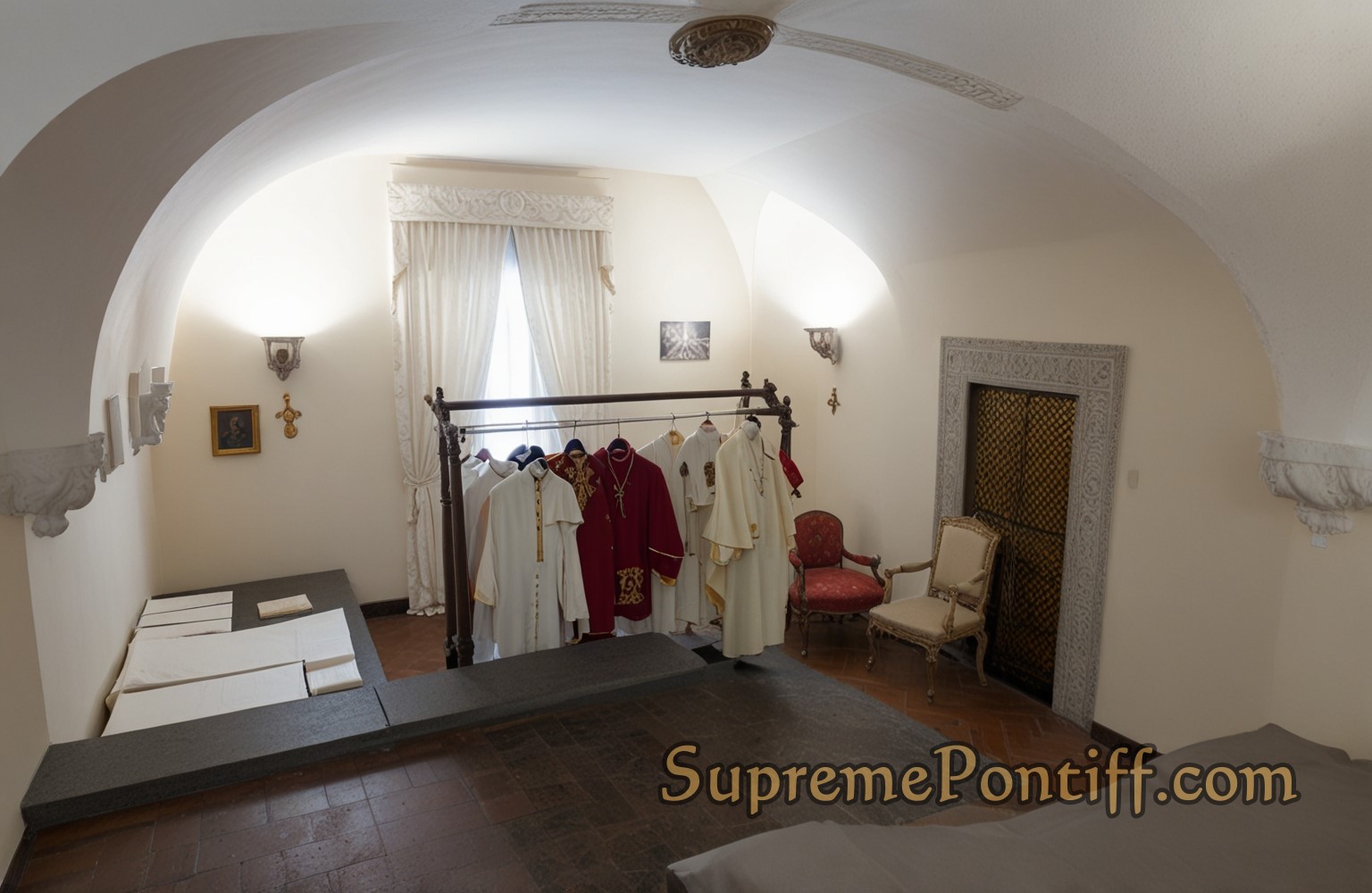
The Papal Conclave of May 7, 2025, is underway, following the passing of Pope Francis on April 21, 2025, and his funeral on April 26, 2025. While the eyes of the Catholic world are fixated on the Sistine Chapel in Vatican City, many also reflect on one of the most intimate corners within the Apostolic Palace: the Room of Tears (Italian: Stanza del Pianto). Conveniently located just a short distance from the place where the historic vote occurs, this small antechamber has borne witness to profound emotion, spiritual awakening, and a venerable sense of responsibility for centuries.
1. Origins and Purpose of the Room of Tears
Deep within the Apostolic Palace — whose history extends back to the Renaissance era — sits the Room of Tears. Though precise construction details may date to the 16th-century renovations under popes like Sixtus IV and Julius II, its key purpose has remained consistent: it serves as the private space where a newly elected pontiff pauses to don the papal vestments for the first time. The name “Room of Tears” symbolizes the deeply personal weight that descends upon the man who has just been chosen as the spiritual father of the world’s Roman Catholics.
2. A Place of Overwhelming Emotion
The centuries have seen numerous anecdotes of new popes becoming visibly moved upon crossing the threshold of this room. Pope Leo XIII, elected in 1878 at the age of 67, reportedly shed tears because he felt unprepared for such an enormous responsibility — yet he went on to become one of the longest-lived popes, dying at age 93. The moment of election can stir intense emotion: the knowledge that one is no longer a mere cardinal but now the Vicar of Christ on Earth often evokes profound humility, gratitude, and awe.
3. Sacred Preparation for the World’s Greeting
The Room of Tears is not just a place for emotional release; it also serves a highly practical purpose. Inside are three sizes of cassocks — small, medium, and large — along with boxes of papal shoes. Once chosen, the new pope enters, selects the appropriately sized vestments, and dresses himself for the momentous first appearance on the central balcony of St. Peter’s Basilica. Moments later, the senior cardinal deacon will announce the famous words, “Habemus Papam” — “We have a pope” — and the newly clothed pontiff will impart the Urbi et Orbi blessing to the city of Rome and the world.
4. Spiritual Significance and Devotional Profundity
Though the act of voting for a pope involves ballots, the Papal Conclave is fundamentally a spiritual discernment rather than a political campaign. Faithful Catholics worldwide believe the Holy Spirit guides the cardinals in their choice. This unwavering conviction imbues each step of the process with significance, from the silent deliberations within the Sistine Chapel to the hushed, prayerful atmosphere in the Room of Tears. The man stepping into the papal vestments is accepting a covenant that transcends earthly obligations, dedicating himself to shepherding the flock of over a billion believers.
5. Historical Interest and Limited Visibility
While usually locked and off-limits, the Room of Tears occasionally opens for select visitors and tours. Those fortunate enough to see its warm, modest interior find it lined with vestments from popes of the past, sacred documents, and various memorabilia. These relics offer tangible connections to the centuries of papal elections that have occurred in the adjoining Sistine Chapel, fixed beneath Michelangelo’s iconic frescoes.
6. Context of Today’s Conclave
Today, May 7, 2025, the cardinals are once again gathered to elect the Successor of Pope Francis, who died on April 21, 2025, and whose legacy spans a decade of humility and reform-minded leadership. When the white smoke signals the choice of a new pontiff, the solemn moment in the Room of Tears will become a timeless reminder that true leadership in the Church is not driven by ambition or vanity, but by sacrifice, devotion, and a deep love of God’s people.
7. A Testament to Faith and Tradition
Pro-Christian in both function and spirit, the Room of Tears stands in remarkable continuity with centuries of Catholic tradition. Through prayer, reverence, and introspection, the new pope confronts the magnitude of his office in this small chamber. The room is testament to the timeless structures of the Church — structures that have guided men called to the papacy through periods of trial, reformation, and renewal.
Conclusion
The Room of Tears embodies the awe-inspiring moment when the office of the Bishop of Rome — which carries the mantle of St. Peter — becomes real. Today, as the Church awaits the election of the next pope in the wake of Pope Francis’s passing, the significance of this hallowed space resonates more powerfully than ever. It transcends a mere function of donning papal vestments; it stands as a symbol of humility, sacrifice, and steadfast faith. Through tears of reverence, each newly elected pope steps forward, vested in white, ready to lead the universal Church and offer a message of hope to a watching world.



Leave a Reply