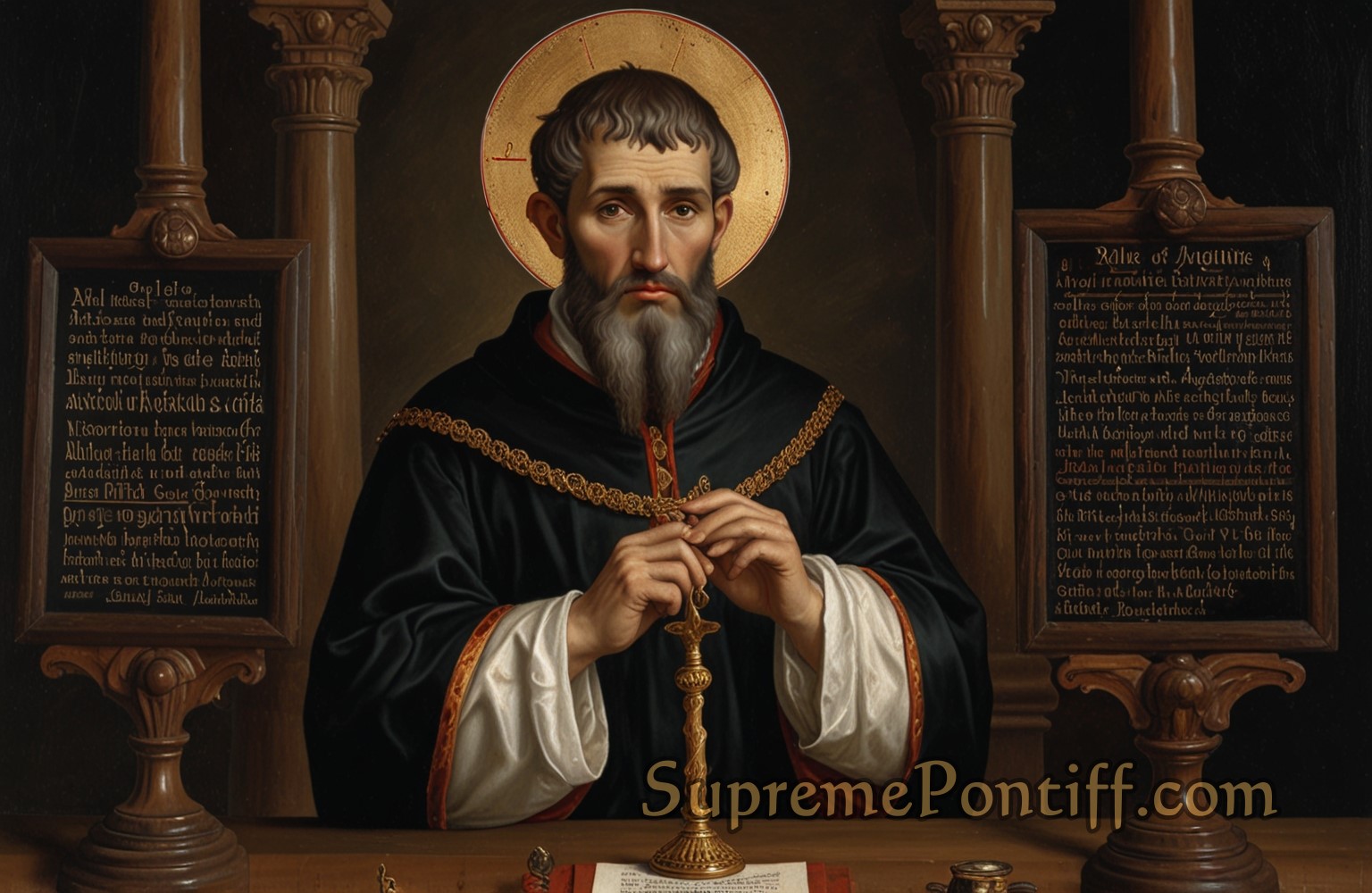
The Rule of Saint Augustine stands as one of the most significant monastic rules in the Western Church, guiding countless religious communities across centuries toward a life of holiness, service, and unity. Developed by Augustine of Hippo, this monastic rule offers a timeless framework built on the pillars of chastity, charity, and community – virtues that reflect the heart of Christian discipleship. Augustine’s vision transcends cultural and historical boundaries, reminding believers of every age that genuine spiritual growth is nurtured best in the shared life of faithful fellowship. In this article, we will explore the origins, principles, and lasting impact of the Rule of Saint Augustine, highlighting its continued relevance for Christians today.
1. Historical Context and Origins
Augustine of Hippo (354–430 AD) was not only a renowned theologian but also the Bishop of Hippo Regius in North Africa. His profound insights into the nature of grace, sin, and salvation shaped Christian thought for centuries. While his most famous works, such as Confessions and The City of God, are well-known among scholars and believers alike, the Rule of Saint Augustine emerged in a more communal context.
Although modern scholarship debates whether Augustine himself constructed the rule in a single document or whether it developed gradually from his homilies, letters, and sermons, there is no doubt that its core principles reflect his deep understanding of Christian community life. Written around the early 5th century, the Rule of Saint Augustine addresses the practical realities of living in a shared setting, instructing believers on how to grow in virtue and holiness through prayer, mutual support, and service.
2. A Monastic Rule in the Western Church
The Rule of Saint Augustine, along with the Rule of Saint Benedict, is foundational in shaping the monastic tradition of the Western Church. However, whereas Benedict’s rule is commonly associated with more structured observances and a solitary focus, Augustine’s guidance focuses on the relational component central to Christian living. His emphasis on communal love, humility, and spiritual fellowship stands at the heart of the monastic rule. Rather than prescribing a rigid set of rituals, his instructions aim to foster a culture rooted in the bonds of Christian charity.
3. Principles of the Rule of Saint Augustine
3.1 Living in Chastity
Chastity, as a central tenet of the Rule of Saint Augustine, is far more than mere abstention from sexual independence; it symbolizes single-hearted devotion to God. In Augustine’s view, authentic chastity radiates purity of intentions, language, and relationships. This virtue reminds believers that our hearts, minds, and bodies belong wholly to the Lord. By encouraging a focus on interior discipline and reverence before God, chastity in the Augustinian tradition humbles believers and draws them closer to Christ.
3.2 Practicing Charity in Community
Saint Augustine famously taught that love is the bedrock of all Christian virtue, derived from Christ’s greatest commandment — love God and love neighbor (cf. Matthew 22:37-39). Under Augustine’s rule, charity represents a willingness to serve, show hospitality, and care for the most vulnerable. Community life, therefore, becomes a living sermon, where believers witness to the transformative power of God’s grace through care and mutual edification. The Rule of Saint Augustine firmly upholds the notion that our common life is a place of grace where we learn to abide in humility, practice forgiveness, and pursue harmony.
3.3 Unity and Harmony in Shared Prayer
The Rule of Saint Augustine places significant emphasis on maintaining a life structured around the liturgy and seasons of daily prayer. Every aspect of community life — meals, worship, sleeping quarters — is designed to cultivate unity in Christ. Augustine encourages shared prayer as a means of strengthening community bonds, ensuring that the faithful remain rooted in the triune God. By uniting hearts and minds in worship, believers are continually reminded of their collective purpose and identity as the Body of Christ.
3.4 Cultivating Hospitality and Generosity
Hospitality and generosity flow naturally from a rule that esteems charity as its guiding principle. The Christian community living under Augustine’s instructions is called to welcome strangers, care for the sick, and bear one another’s burdens. Such an environment is deeply rooted in the conviction that Christ is present in every neighbor and especially in the marginalized. Hospitality thus serves as a beautiful expression of the love of Jesus at work, tangibly manifesting the Gospel’s call to look beyond personal interests.
3.5 Obedience and Humility
In contrast to the modern world’s inclination toward self-fulfillment, Augustine champions obedience to superiors as an act of reverence for God’s providential order. This obedience, however, is not blind submission but rather a humble posture of respect, grounded in love and trust. By valuing the insights of elders and superiors, believers imitate Christ’s own self-emptying (cf. Philippians 2:5-8). Through humble service, community members learn to prefer the needs of others before their own, living out Christ’s model of sacrificial love.
4. Lasting Influence on Religious and Lay Communities
4.1 The Augustinian Family and Beyond
Many religious orders identify themselves as part of the Augustinian Family, including the Augustinian Friars, the Augustinian Recollects, and the Augustinian Sisters. Additionally, congregations such as the Dominicans (Order of Preachers) and the Norbertines also structure their communal life partially on the Rule of Saint Augustine. The effectiveness of Augustine’s guiding principles in forging bonds of prayer and service has transcended geographical and denominational barriers. These communities continue to embrace the evangelical counsels of chastity, poverty, and obedience, enriched by Augustine’s distinct emphasis on brotherly (or sisterly) love.
4.2 Spiritual and Cultural Legacy
Over the centuries, the Rule of Saint Augustine has contributed to shaping Western monasticism, influencing spiritual practices and theological explorations. It touches not only monastic communities but also those living in secular contexts — lay Christians who seek ways to integrate prayer, charity, and humility into their families, workplaces, and neighborhoods. Artists, writers, and theologians alike have drawn inspiration from Augustine’s teachings, creating works that resonate with the spirit of communal life and divine intimacy.
4.3 A Contemporary Relevance
Even in an age increasingly shaped by individualism and self-promotion, the Rule of Saint Augustine speaks powerfully to the timeless Christian call of oneness in Christ. It invites both ordained and lay believers to resist constant consumerist pressures, turning instead to the riches found in shared faith and self-sacrifice. Though society has changed considerably since Augustine’s time, the human heart’s need for love and fellowship remains. In both digital and physical communities, Augustine’s counsel to be united in heart and mind with one another and with God has never been more pertinent.
Conclusion
From its origin in the early 5th century to its continued worldwide impact, the Rule of Saint Augustine remains an enduring beacon of Christian discipleship. Grounded in the teachings of Augustine of Hippo, this monastic rule calls believers to a life committed to chastity, charity, and community. Each of these virtues is interwoven with Augustine’s deep conviction that authentic Christian living requires unity rooted in Christ’s love.
For those seeking to grow deeper in faith, the Rule of Saint Augustine offers a spiritual foundation that is judicious, practical, and transformative. By embracing prayer, shared worship, selfless service, and welcoming hospitality, Christians embody Augustine’s vision of a believing community acting as the living Body of Christ. Through this monastic rule in the Western Church, the timeless God-given call for unity resonates across translations, cultures, and centuries — illuminating every age with the radiant beauty of the Gospel ideal. May the wisdom of Saint Augustine continue to guide and inspire each of us toward the fullness of life in Christ.




Leave a Reply