
The concept of “Atonement for Sin” lies at the heart of the Christian faith. It addresses how, through Jesus Christ’s sacrificial death on the cross, humankind is offered both the path to forgiveness and the promise of redemption. This doctrine teaches that God, in His boundless grace, provided Jesus as the ultimate offering for sin, making it possible for believers to be reconciled to their Creator. For centuries, this core Christian message has resonated with Christ’s followers, underscoring the central truth: that humanity, despite its sinfulness, can be made one with God through the sacrificial work of Jesus.
1. The Reality of Sin and the Need for Atonement
Scripture makes it abundantly clear that all people have sinned and thereby alienated themselves from God. “For all have sinned and fall short of the glory of God” (Romans 3:23). Sin is not merely an error in judgment; it is an offense against a holy God. As a result, humans find themselves spiritually separated from Him due to moral corruption. In the Old Testament, the shedding of blood — through animal sacrifices — symbolized the gravity of sin and the need to atone for it (Leviticus 17:11). However, these sacrifices were temporary and pointed toward a far greater and more permanent solution: the once-for-all sacrifice of Jesus Christ.
2. The Foreshadowing of the Ultimate Sacrifice
According to the Bible, the sacrificial system involving animals was never meant to be a long-term or complete resolution for sin. The Book of Hebrews explains, “It is impossible for the blood of bulls and goats to take away sins” (Hebrews 10:4). Instead, these rituals foreshadowed the coming of the Messiah, whose own sacrifice would be perfect and efficacious. Throughout the Old Testament, prophecies and types (symbolic patterns) pointed directly toward the necessity of a divine Redeemer. One of the most poignant is found in Isaiah 53:5, which describes the Suffering Servant: “He was pierced for our transgressions; he was crushed for our iniquities; the punishment that brought us peace was on him, and by his wounds we are healed.” Christians believe this prophecy was fulfilled in Jesus, who lay down His life for the sake of humanity.
3. Jesus Christ: The Perfect and Final Offering
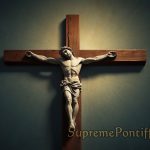
Christian theology holds that God, in His love, sent His only Son, Jesus, to the earth (John 3:16). Unlike the imperfect animal sacrifices of the Old Covenant, Jesus was without sin. He was fully divine and fully human, uniquely qualified to bridge the gap between God and humanity. The message of the Gospel proclaims that Jesus’s crucifixion on the cross served as the atoning sacrifice, satisfying the demands of God’s justice while simultaneously extending His mercy. This act was not merely symbolic; it was the once-for-all payment for sin that opened the door for reconciliation between fallen humanity and a holy God: “But God demonstrates his own love for us in this: While we were still sinners, Christ died for us” (Romans 5:8).
4. The Significance of the Resurrection
While the crucifixion underscores the necessity of Jesus’s death as payment for sin, the resurrection highlights His victory over sin and death. Christians celebrate Easter as the day Jesus rose from the grave, demonstrating that death no longer has dominion over Him — or over those who place faith in Him. “For if we have been united with him in a death like his, we shall certainly be united with him in a resurrection like his” (Romans 6:5). The resurrection is essential to the Christian understanding of redemption and atonement because it not only confirms Christ’s deity but also seals the believer’s hope of eternal life.
5. The Path to Forgiveness and Reconciliation
The Bible proclaims that through Jesus’s atoning sacrifice, believers can be declared righteous in the sight of God (2 Corinthians 5:21). This righteousness is not earned through human merit but is received by grace through faith (Ephesians 2:8–9). Repentance, turning away from sin, and trusting in Jesus’s work on the cross are therefore central to salvation. When a believer puts their faith in Christ, God no longer sees their sins but instead sees the righteousness of Jesus. This means that the fractured relationship between humanity and God is restored: “Therefore, since we have been justified by faith, we have peace with God through our Lord Jesus Christ” (Romans 5:1).
6. The Ongoing Importance of Christ’s Atonement
Although Jesus’s sacrifice on the cross was once-for-all, Christians believe it has ongoing impact in the life of every believer. First, it offers assurance of salvation. The Christian can trust that their sins are forgiven and that they stand reconciled before God (Hebrews 10:14). Second, it provides a foundation for holy living. Recognizing the high cost of sin and the lengths to which God went to save His people encourages believers to pursue a life that reflects His holiness (1 Peter 1:15–16). Finally, it empowers believers to extend forgiveness to others, just as they have been forgiven: “Be kind and compassionate to one another, forgiving each other, just as in Christ God forgave you” (Ephesians 4:32).
7. Contemporary Relevance and Application
Today, the world grapples with questions of guilt, forgiveness, and meaning. The message of “Atonement for Sin” through Jesus Christ remains profoundly relevant. People commonly seek a sense of absolution for wrongdoing and yearn for hope beyond the struggles of this life. Christ’s atoning work answers that longing by assuring believers that the debt of sin has been fully paid and that a new life in God’s presence is theirs to enjoy. Such promises speak powerfully to individuals who feel burdened by their past. Moreover, communities shaped by the reality of God’s forgiveness are often more gracious, just, and merciful, advocating Christian values in a world desperate for authentic love and compassion.
8. Conclusion
Atonement for Sin stands at the theological core of Christianity, emphasizing the unmatched gift of grace that God has given through His Son, Jesus Christ. His sacrificial death on the cross, followed by the triumph of the resurrection, showcases both God’s justice and mercy, providing an unshakable foundation for hope and reconciliation. From the sacrificial system of the Old Testament to the fulfilling work of the Messiah, the Bible consistently affirms that Jesus is the once-for-all solution to the problem of sin. When individuals respond in faith, they receive forgiveness, redemption, and a restored relationship with God.
As the Apostle Paul stated, “Therefore, if anyone is in Christ, the new creation has come: The old has gone, the new is here!” (2 Corinthians 5:17). This transformative reality underscores why Christians around the world continue to find purpose, meaning, and peace in Christ’s atoning sacrifice. It remains a living proclamation that invites all who are burdened by sin to come, be made one with God, and secure their place in His eternal kingdom.



Leave a Reply