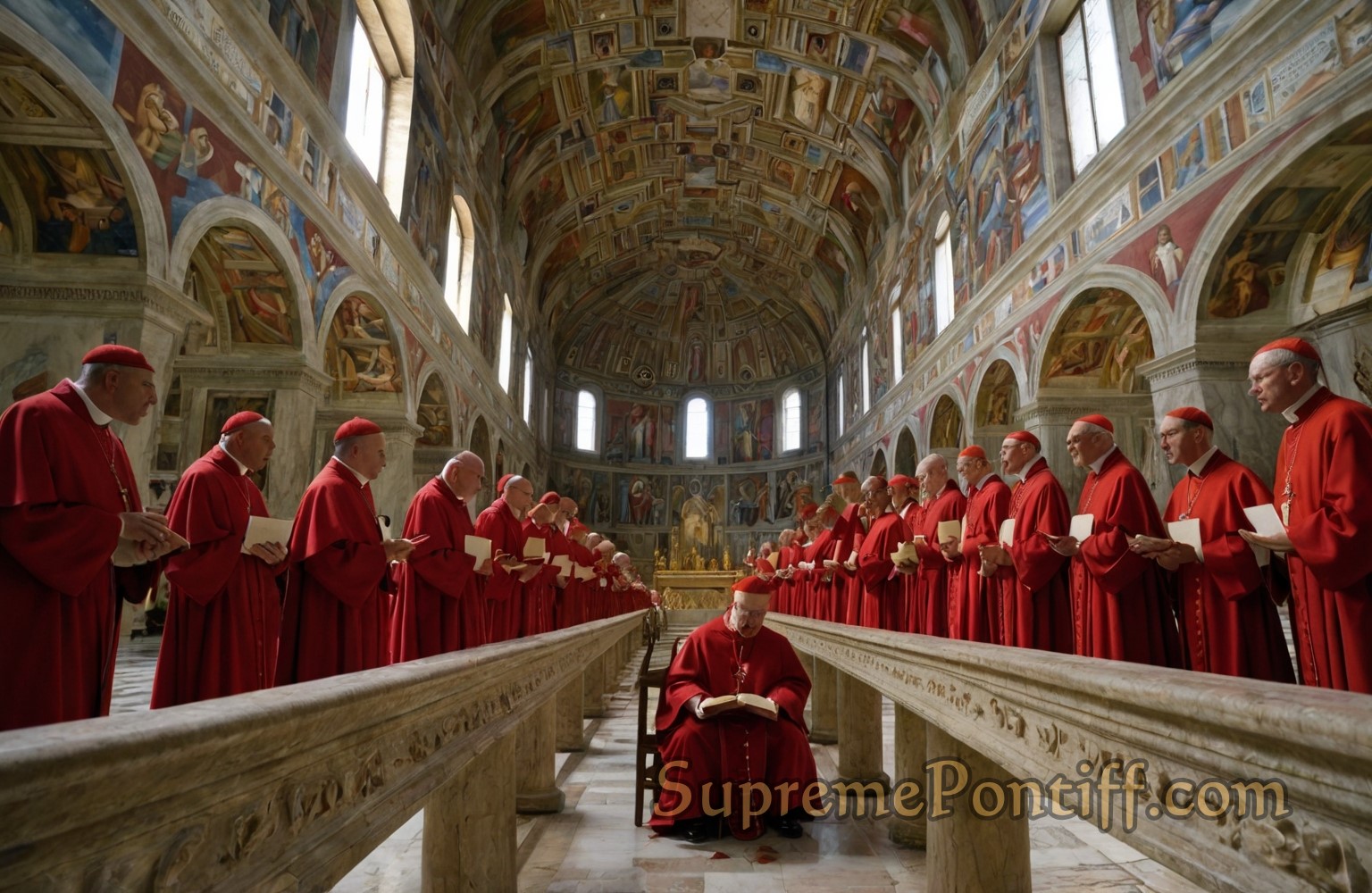
The College of Cardinals announced on Monday, April 28, 2025, that the papal conclave to elect the 267th pope will begin on May 7, 2025. This decision follows the solemn conclusion of Pope Francis’ funeral at the Basilica of St. Mary Major on April 26, and it marks the Church’s entry into the final phase of discernment and prayer before determining who will occupy the Chair of St. Peter. Below is a thorough examination of the developments leading to this critical juncture, as well as an overview of the processes, traditions, and deep spiritual significance behind the conclave.
1. Context and Timeline
Pope Francis died on April 21, at the age of 88, after a life and pontificate marked by calls for renewed evangelization, social justice, and Christian unity. His passing brought immense sorrow to the worldwide Christian community, and the ensuing days of mourning were observed with great reverence. Following his funeral, which took place on April 26 in the Vatican, the Next Pope’s election process moved swiftly, adhering to established Vatican protocols. According to the Apostolic Constitution and conclave regulations, the cardinal electors must convene within 15 to 20 days of a pope’s death. In this case, May 7 was chosen, falling well within the allotted timeframe.
2. Preparations Leading Up to the Conclave
- The “Novendiales” Period: As a testament to the Catholic Church’s tradition of solemnity and respect for a deceased pope, the days between a pope’s burial and the start of the conclave are traditionally dedicated to prayer, reflection, and commemorative Masses known as the “Novendiales.” During these nine days, cardinals gather in “congregations,” or formal sessions, at the Vatican to discuss both administrative details and broader questions facing the universal Church.
- Arrival of Cardinals: Of the 134 cardinals who are under the age of 80 and therefore eligible to vote, nearly all are already in Rome for the upcoming conclave. Each cardinal elector is entrusted with the sacred duty of prayerfully discerning the candidate whom he deems most worthy to guide the Church forward.
- Unexpected Absences: The Archdiocese of Valencia announced that Spanish Cardinal Antonio Cañizares will be unable to attend due to health reasons, and the Archdiocese of Nairobi similarly confirmed that Kenyan Cardinal John Njue will not participate due to medical concerns. This reduces the number of voting cardinals slightly, but does not diminish the gravity of their task.
3. The Role of the College of Cardinals and Its Leadership
- Cardinal Giovanni Battista Re, 91, is the current dean of the College of Cardinals, but he is beyond voting age and thus ineligible to enter the conclave. The same holds true for the vice dean, Cardinal Leonardo Sandri. Consequently, the conclave will be presided over by Cardinal Pietro Parolin, the Vatican’s secretary of state and the next eligible most senior cardinal bishop.
- Duties of the Cardinals’ Dean: Although in this instance the dean will not vote, typically the dean of the College of Cardinals leads the official proceedings, performs vital ceremonial functions, and guides the cardinals through the complexities of electing a new pope. In the upcoming conclave, Cardinal Parolin will oversee these responsibilities with reverence and dedication, ensuring that consensus is reached according to the Church’s customs and laws.
4. The Conclave Process and Its Sacred Tradition
- The Mass for the Election of the Roman Pontiff: On May 7, the day the conclave begins, the cardinals will celebrate a special Mass in St. Peter’s Basilica. Known as the “Mass for the Election of the Roman Pontiff,” this liturgy invokes the Holy Spirit’s guidance on the cardinal electors.
- Procession into the Sistine Chapel: Following the Mass, the cardinals will process into the Sistine Chapel, chanting the revered “Veni Creator Spiritus.” This ancient hymn is a plea to God to grant the wisdom and discernment necessary for the monumental decision at hand.
- Oath of Secrecy and Voting: Once inside, each of the voting cardinals will take an oath pledging to uphold secrecy and integrity throughout the electoral process. The chapel doors are then shut, and the cardinals will not emerge until a new successor to St. Peter has been chosen.
- The Two-Thirds Majority: A two-thirds majority — at least 90 of the 134 cardinal electors (adjusted for those absent due to health) — is required to elect the new pope. Ballots are held in silence, with each cardinal writing the name of his chosen candidate. The ballots are then counted, read aloud (with care to maintain anonymity), and tallied to determine if a candidate has secured the necessary votes.
- Black Smoke and White Smoke: The world traditionally awaits the telltale smoke signals from the Sistine Chapel chimney. Black smoke conveys that no candidate has yet met the required threshold, whereas white smoke announces that “Habemus Papam” — “We have a pope!”
5. Pope Francis’ Lasting Influence on the College of Cardinals
Pope Francis’ global outlook and penchant for diversifying the ranks of the Church were evident throughout his pontificate. During his time as pontiff, Francis appointed 108 of the current cardinal electors, many hailing from nations with smaller Catholic populations or regions historically underrepresented in Vatican leadership. This reflected Pope Francis’ emphasis on the Catholic Church as truly universal and missionary in nature, promoting a collegiality that transcends boundaries and fosters unity.
6. The Significance of This Conclave for the Faithful
As the Church seeks a new shepherd, this moment stands as a profound testament to the promise of Christ that the gates of the netherworld shall not prevail against His Church. Catholics and Christians worldwide look on with deep prayerful expectancy, trusting that the Holy Spirit will guide the conclave toward a leader who fulfills the Church’s evangelical mission.
- Spiritual Dimensions: For believers, the papal conclave is more than just a formal election. It is a spiritual encounter, rooted in centuries of sacred tradition, and guided by the Holy Spirit. Cardinals do not simply choose; they discern what Christ intends for His Church at this time in history.
- Call for Unity and Evangelization: The next pope will inherit the Holy See at a moment marked by significant cultural, social, and technological shifts. Many see these challenges as opportunities for renewed evangelization — spreading the Gospel boldly in an ever-changing world and standing as a moral compass for believers and nonbelievers alike.
7. Looking Forward
Although the Church mourns the loss of Pope Francis, the fervent hope is that the selection of a new pope will bring fresh inspiration, unity, and vitality to the faithful. The Catholic Church, deeply rooted in two millennia of tradition, stands always with Christ at its center. As the cardinal electors gather in the Sistine Chapel, hearts and minds everywhere will be united in prayer, trusting that God, in His wisdom and mercy, will provide a shepherd to guide now and for generations to come.
In the days ahead, all eyes will remain fixed on the Vatican, from which black or white smoke will signal the momentous announcement. And, once again, the faithful will celebrate the abiding promise that the Lord continues to watch over His Church, just as He promised the Apostle Peter. With resolute confidence and pronounced pro-Christian conviction, believers across continents and cultures eagerly await the revelation of the new pontiff — the 267th successor of St. Peter — on May 7, 2025.


Leave a Reply