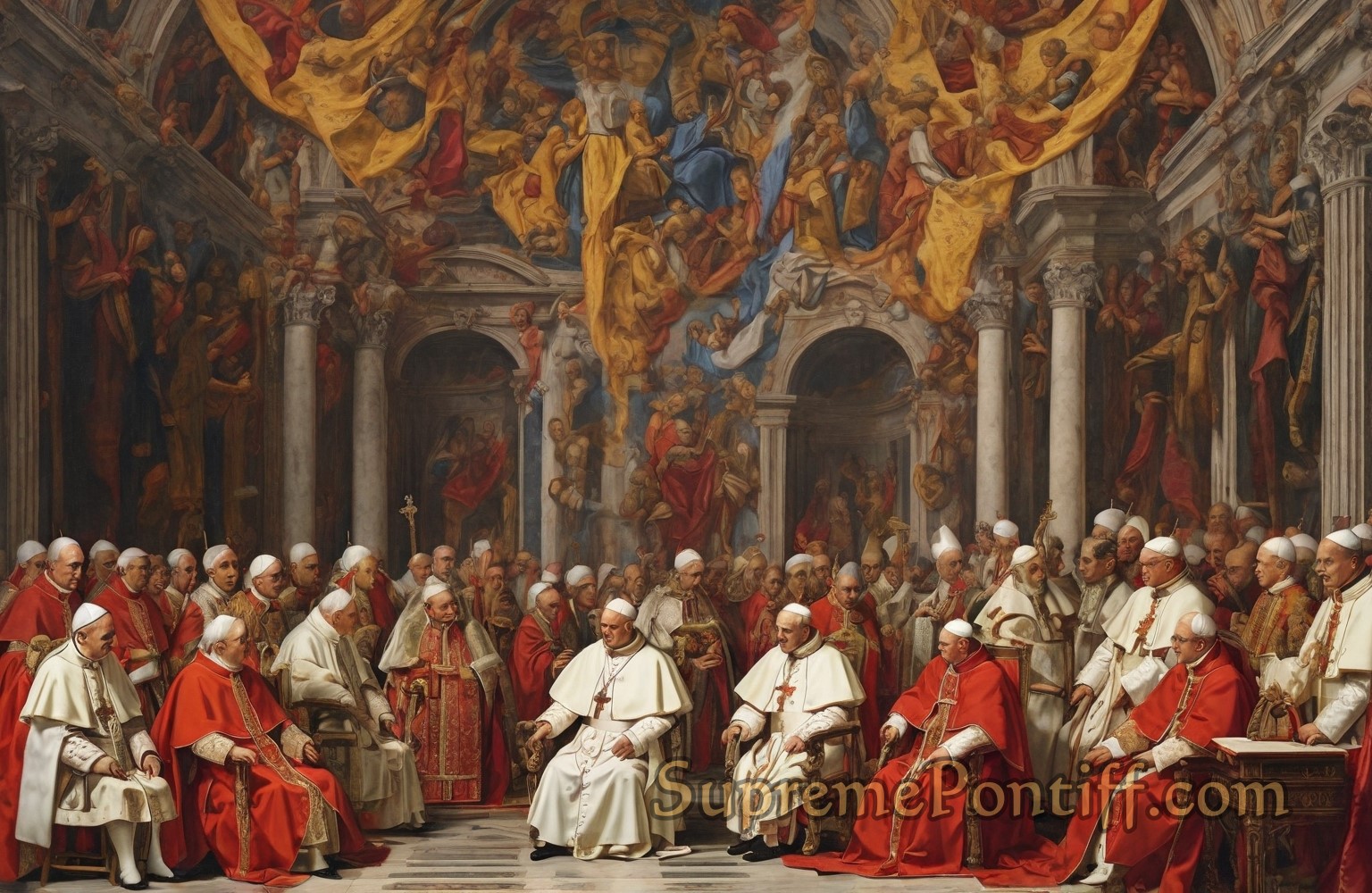
The term “Interregnum,” derived from the Latin inter regna (“between the reigns”), is used to signify a period of transition between two rulers. Within the Catholic Church, “Interregnum” specifically denotes the timeframe between the death (or resignation) of one pope and the election of his successor. This period is also officially referred to in Church documents (for example, Pope John Paul II’s Universi Dominici Gregis) as the “vacancy of the Apostolic See,” often popularly called Sede Vacante. With the death of Pope Francis on April 21, 2025, Catholics around the world now find themselves in this solemn and spiritually rich time.
Below is a comprehensive guide to understanding the Papal Interregnum, reflecting both historical practice and up-to-date considerations surrounding Pope Francis’s passing.
1. Defining the Interregnum
- Literal Meaning and Context: Interregnum literally means “between the reigns” in Latin. When applied to the papacy, it underscores the sacred gap from the day the Supreme Pontiff dies (or resigns) until a new pope is elected.
- A Time of Reverence and Governance: Even though the seat of the Bishop of Rome is vacant, administrative activities and essential decision-making processes continue, overseen by the College of Cardinals. During the Interregnum, no radical changes in Church governance occur; it is primarily a time of mourning, reflection, and preparation for the next leader of the Catholic Church.
2. Historical Roots and Significance
- Early Church Traditions: Since the earliest centuries, the Church has recognized that the interlude between pontificates must balance solemn respect for a deceased pontiff with the practical need to elect a new shepherd for the faithful. In the Middle Ages and Renaissance periods, the length of an Interregnum varied, sometimes stretching for months or even years.
- Modern Standardization: The papal constitution Universi Dominici Gregis (1996) by Pope John Paul II standardized and codified procedures to ensure clarity and unity during the Interregnum. Subsequent popes, including Benedict XVI, made minor adjustments to accelerate or slightly delay the start of the conclave (the gathering to elect the new pope) for serious reasons.
3. Difference Between Interregnum and Sede Vacante
- Interregnum: While “Interregnum” highlights the broader concept of leadership between reigns, it often takes on the solemn specificity of referring to the period after a pope’s death or resignation in a distinctly Catholic context.
- Sede Vacante: From the Latin for “vacant seat,” Sede Vacante denotes the vacancy of the Apostolic See — the seat of the Bishop of Rome. Strictly speaking, Sede Vacante is the official canonical term referenced in documents like Universi Dominici Gregis.
- Common Usage: Catholics typically use “Sede Vacante” to discuss liturgical and canonical implications of the vacancy. At the same time, “Interregnum” can be a more general expression of the transition period. Both terms, however, ultimately underscore that the seat of Saint Peter is unoccupied, carrying significant spiritual importance for Catholics worldwide.
4. Three Phases of the Papal Interregnum
A) The Nine Days of Mourning (Novendiales)
- The Funeral of Pope Francis (April 26, 2025): Guided by Church tradition, Pope Francis’s body lay in state in St. Peter’s Basilica prior to the funeral. The faithful from around the world paid their respects, expressing profound gratitude for his years of pastoral service. On the day of the funeral, the Dean of the College of Cardinals presided, joined by cardinals who gathered in Rome to bid farewell to the Holy Father.
- The Novendiales: Following the funeral, the College of Cardinals proclaimed a nine-day period of official mourning known as the Novendiales. Each of the nine days featured a specific liturgical commemoration according to the Ordo Exsequiarum Romani Pontificis (2024). These solemn rites focused on prayers for the repose of the departed pope’s soul and reflection on his pastoral legacy.
- Pope Francis’s Chosen Burial Site: Departing from a custom that had endured for over a century, Pope Francis requested to be buried at the Basilica of St. Mary Major rather than the Vatican, highlighting the special Marian devotion that characterized his pontificate.
B) Preparation for the Conclave
- Gathering the Cardinals: After the nine days of mourning concluded, the next step involved assembling the College of Cardinals. Cardinals who were eligible to elect the new pope began arriving in Rome to participate in the forthcoming conclave.
- Setting the Conclave Date: Under normal circumstances, the conclave starts on the 15th day after the death of a pope (16th of the Interregnum). However, according to Universi Dominici Gregis, the cardinals may decide to delay or expedite this process if serious reasons exist or if all cardinal-electors are already present.
- Ensuring Confidentiality and Security: Even in the modern era, Vatican officials meticulously maintain confidentiality around the conclave’s logistics. Strict regulations ensure the security of cardinals, and the cardinals themselves take an oath of secrecy.
C) The Conclave
- Venue and Secrecy: Once the conclave commences, it is held in the Sistine Chapel. Access is tightly restricted, and any cardinal who discloses proceedings from inside the conclave risks automatic excommunication.
- Voting Procedure and Rituals: Each voting day begins with a Mass of the Holy Spirit, invoking divine guidance in selecting the next Vicar of Christ. The cardinals then process to the Sistine Chapel, where they cast secret ballots. A two-thirds majority is typically required to elect a new pope.
- The Announcement: When a cardinal receives the necessary votes and accepts election, the new pope is announced with the words “Habemus Papam!” (“We have a Pope!”). This heralds the end of the Interregnum and the official beginning of a new pontificate.
5. Spiritual Dimensions and Pro-Christian Reflection
- A Moment of Collective Prayer: For Catholics, the Interregnum is a solemn reminder of the Church’s reliance on the Holy Spirit’s guidance. It invites the entire faithful to unite in prayer for the repose of the late pope, and for the divine assistance in choosing his successor.
- Continuity in Leadership: Despite the pope’s passing, the Church remains guided by the abiding presence of Christ and the stewardship of the College of Cardinals. This ensures that, even in a time of uncertain transition, the Catholic Church stands firm in its mission of evangelization and charitable service.
- Honoring Tradition, Embracing Hope: The Interregnum, culminating in the election of a new pontiff, accentuates both the Church’s deep respect for venerable traditions and its collective hope for vibrant future leadership.
Conclusion
The Interregnum following a pope’s death is a profound and carefully orchestrated period in the life of the Catholic Church. From Pope Francis’s funeral on April 26, 2025, through the nine-day Novendiales and into the solemn conclave that will choose his successor, the Church experiences a sacred interval of both mourning and anticipation. “Interregnum” and “Sede Vacante” each highlight different dimensions of this vacancy, but the essence is the same: the seat of Saint Peter is temporarily unoccupied, waiting to be filled by the next chosen successor of the apostles. Throughout this extraordinary time, the faithful find renewed unity in prayer and gather with a pro-Christian spirit to uphold the richness of the Church’s mission — secure in the promise that the Holy Spirit continues to guide and protect the flock of Christ.


Leave a Reply