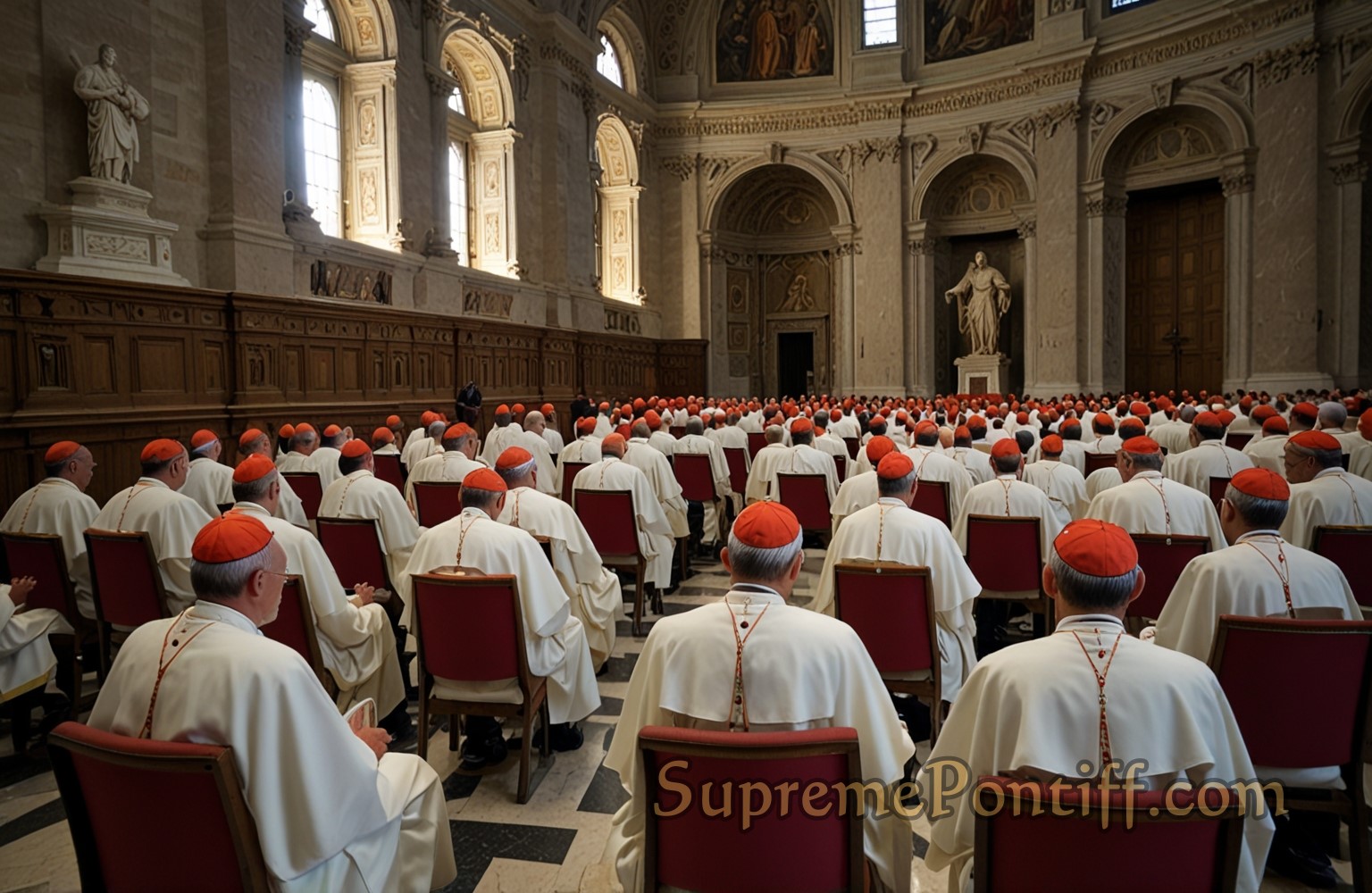
The Roman Catholic Church treasures its rich and sacred traditions, which have guided Christians for centuries. Among these hallowed customs is the General Congregation of Cardinals, convened during the interregnum — also called the Sede Vacante — when the See of Rome is temporarily without a Pope. These gatherings are critical to the preparation of the Papal Conclave, where a new Supreme Pontiff is chosen to continue the historic mission of shepherding the Church. Deeply rooted in Christian devotion and fidelity, the General Congregation of Cardinals stands as a testament to the unity, prayerfulness, and disciplined governance that characterize the Catholic faith.
1. Defining the General Congregation of Cardinals
The General Congregation of Cardinals is a series of daily sessions that begin after the death or voluntary resignation of the Pope. Each session is attended by all cardinals present in Rome — both cardinal electors (those under 80 years of age, eligible to vote in the Papal Conclave) and non-electors (those 80 or older, who may participate but not vote). These assemblies continue until the Papal Conclave begins.
The primary focus of the General Congregation is twofold:
- To manage the daily affairs of the Church during the interregnum.
- To organize the practical and spiritual aspects of the Papal Conclave, ensuring that every step reflects faithful adherence to canon law and unwavering devotion to Christ.
2. Historical and Canonical Foundations
The practice of convening the General Congregation of Cardinals is anchored in Church law and centuries of precedent. The apostolic constitution Universi Dominici Gregis, promulgated by Pope St. John Paul II in 1996 and updated subsequently, outlines the procedures for papal elections and governs every stage of the interregnum. These guidelines ensure continuity and maintain the sanctity, decorum, and profound Christian character of this vital process.
3. Initial Steps in the Interregnum
When the Holy Father’s seat becomes vacant — either through death or resignation — the Camerlengo of the Holy Roman Church declares the vacancy and formally begins the interregnum. The College of Cardinals convenes within a day or two to hold the first General Congregation. During these initial meetings, the cardinals take important preliminary actions:
- Verification of the papal vacancy and official documentation.
- Arrangements for the funeral rites of the deceased Pope, if applicable.
- Taking an oath of secrecy regarding the forthcoming papal election.
- Addressing any urgent administrative or pastoral matters necessary for the Church’s governance.
4. Spiritual Emphasis and Prayerful Reflection
A strong hallmark of the General Congregation of Cardinals is the emphasis on prayer and discernment. Catholics universally believe that the Holy Spirit guides the Church at all times, and especially during the election of a new Pope. Consequently, daily Masses, individual prayer, and collective invocations of the Holy Spirit help the cardinals nurture a deep spiritual unity, humbly seeking divine light as they prepare for the Papal Conclave.
5. Preparations for the Papal Conclave
A major function of the General Congregation is determining the start date of the Papal Conclave. While the constitution Universi Dominici Gregis stipulates basic guidelines, the cardinals have some discretion in setting an appropriate date. In addition to calendrical considerations, they attend to the following:
- Logistical Arrangements: Managing accommodations, security, and communication protocols to protect the sanctity and confidentiality of the Conclave.
- Ceremonial Details: Finalizing liturgies, including the Mass for the Election of the Roman Pontiff.
- Spiritual Readiness: Calling the faithful worldwide to join in prayer, recognizing that this moment is of profound importance for Catholics everywhere.
6. The Role of the College of Cardinals
During the General Congregation, the unity of the College of Cardinals is on full display. Each cardinal — regardless of rank — can offer insights and recommendations, upholding true collegiality in the Church. While only the cardinal electors will enter the Sistine Chapel for the actual Papal Conclave, the presence and counsel of older, non-voting cardinals testifies to the Church’s esteem for the wisdom of her shepherds, even beyond the age limit for voting.
7. Secrecy and Confidentiality
Maintaining secrecy is paramount to safeguarding the integrity of the Papal Conclave. The oath of secrecy taken during the General Congregation ensures that the cardinals can speak freely in a spirit of trust and charity, wholly dedicating themselves to prayerful discernment. The entire world waits in hope, trusting that the future of the Church rests in the hands of these faithful stewards guided by the grace of God.
8. The Spiritual Heart of the Process
At its core, the General Congregation of Cardinals is profoundly Christian in nature. Gathered in the name of Jesus Christ, the cardinals entrust the governance of the Church to divine providence and strive to mirror the love and humility of the Gospel. Every discussion, debate, and decision is preceded by heartfelt prayer and a longing to fulfill the will of the Holy Spirit.
9. Contemporary Relevance and Lessons for Today
In recent decades, the General Congregation of Cardinals has convincingly demonstrated the Church’s capacity to respond to modern challenges while remaining anchored in timeless Christian values. The swift and seamless transition from Pope Benedict XVI’s resignation in 2013 to the election of Pope Francis exemplified the cardinals’ unity, pastoral concern, and reliance on God’s guidance. This continuity resonates with Catholics worldwide, affirming the Church’s steadfast mission to preach the Good News of Jesus Christ in every corner of the globe.
10. Conclusion: Faithful Vigilance for a New Era
The General Congregation of Cardinals remains a shining example of how deeply rooted Christian faith informs and shapes the governance of the Church. By safeguarding Church tradition, respecting canon law, and placing unwavering trust in the Holy Spirit’s wisdom, the cardinals gather during the interregnum to ensure a seamless transition toward a new era of papal leadership. For the Catholic faithful, this prayerful assembly is a profound reminder of the Church’s unity, her devotion to God’s plan of salvation, and her Christ-centered mission to bring hope and light to the world.
As believers look to the horizon of each new papacy, the General Congregation of Cardinals stands as a beacon of hope, persistence, and trust, rooting the Church firmly in her sacred heritage and guiding her forward by the power of the Gospel. Through this sacred process, the bride of Christ remains vigilant, ever prepared to continue proclaiming salvation to every nation and every soul who seeks the glorious truth of Jesus Christ.
Leave a Reply